
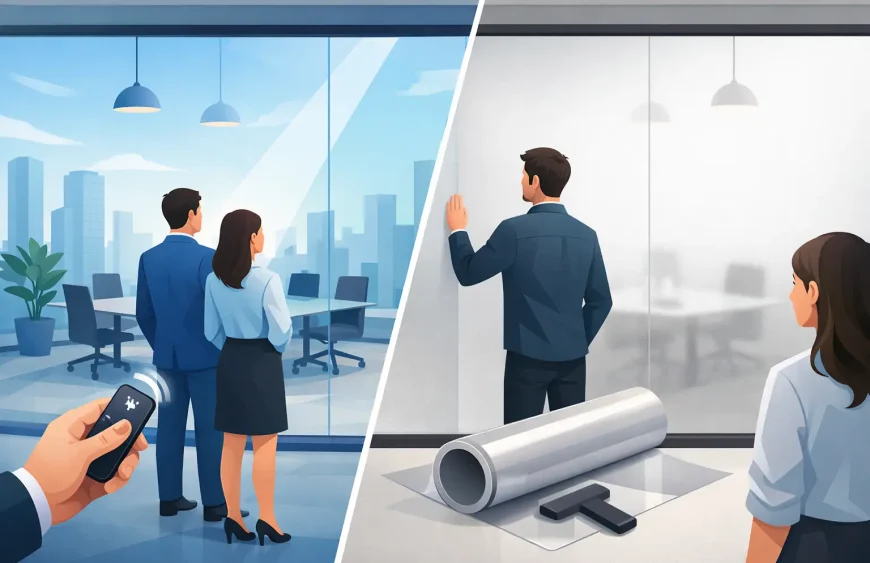
A glass meeting room that turns opaque before a client call has obvious appeal. So does a frosted bathroom window that gives permanent privacy without changing the glass itself. When comparing smart glass versus privacy film, the better choice is rarely about which option sounds more advanced. It comes down to how often you need privacy to change, how the glass is built, whether solar heat is also a problem, and what level of disruption the property can accommodate.
For villas, offices, clinics, hotels, and marine interiors across the UAE, both solutions can be appropriate. They solve different problems, carry very different budgets, and need to be specified carefully around the existing glazing.
Smart Glass Versus Privacy Film: The Core Difference
Smart glass is glass manufactured with an integrated technology layer, most commonly a liquid-crystal privacy layer or an electrochromic system. With privacy-focused smart glass, electricity changes the panel from clear to frosted. In its clear state, occupants can see through it; when activated, the glass diffuses light and blocks direct views. Electrochromic glass changes tint level gradually to manage daylight and glare, but it does not usually create the fully private frosted effect people expect from a switchable partition.
Privacy film is applied to existing glass. In many projects, this means a static frosted, patterned, or tinted film that remains the same at all times. It is a practical way to obscure a bathroom, street-facing window, glass partition, or office door while retaining daylight.
There is also a middle ground: switchable smart film. This is a retrofit film installed on compatible existing glass and connected to power. It provides the same clear-to-private effect people associate with smart glass, without replacing the complete glass unit. The term “privacy film” can mean either a static film or switchable smart film, so that distinction should be clear before any quotation is compared.
Privacy Is Not the Same as Solar Control
This is where many specifications go wrong. A frosted privacy film blocks a direct view, but it is not automatically designed to reject significant solar heat. It may soften glare by diffusing light, yet a sun-facing wall of glass can still transfer substantial heat into a room.
Likewise, switchable smart glass and smart film are primarily privacy products. In their opaque state, they scatter light. They do not replace a dedicated solar-control strategy on heavily exposed glazing. A villa living room facing strong afternoon sun may need a solar-control film, shading solution, or a glazing upgrade in addition to privacy treatment.
For an office in Business Bay or DIFC, the decision may involve two separate needs: employees need visual privacy during meetings, while workstations need reduced screen glare and less solar load. One film should not be assumed to solve both jobs unless its tested specifications support both requirements.
At Dr SunShield, the first question is not whether smart film is the premium option. It is whether the glass needs permanent privacy, switchable privacy, heat reduction, glare control, UV protection, or a combination of those outcomes.
Cost and Project Scope Are Very Different
Factory-made smart glass is generally the highest-cost route. It requires replacing the panel or incorporating the glass into a new fit-out, plus electrical coordination, controls, and sometimes custom fabrication. It makes the most sense when glazing is already being replaced, such as during a major villa renovation, a new office build, or a purpose-designed hospitality project.
Static privacy film is usually the most cost-conscious option because it uses the existing glass. There is no wiring, switch, transformer, or control system. A well-chosen frosted film can give a polished result for office partitions, sidelights, bathroom windows, and overlooked areas without the expense of a glass replacement project.
Switchable smart film falls between the two. It avoids replacing structurally sound glass but still needs professional preparation, electrical access, discreet cable routing, and appropriate controls. The cost can be justified where a room must alternate between openness and confidentiality, such as a boardroom, clinic consultation room, executive office, or yacht cabin.
The lowest upfront price is not always the best value, but neither is the most expensive technology. If a window must remain private every hour of every day, paying for a powered switching system adds cost without adding much practical benefit.
Installation Conditions Matter More Than Most People Expect
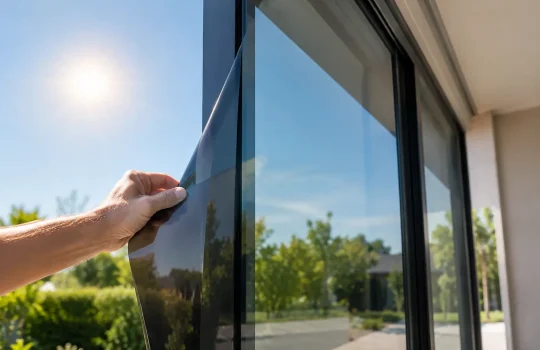
Static privacy film can often be installed with relatively little disruption, provided the glass is in good condition and accessible. Installers inspect for chips, sealant issues, existing coatings, edge clearance, and surface contamination before work begins. Old adhesive residue, construction dust, or damaged seals can affect the finish and should not be ignored.
Switchable smart film requires more planning. The glass must be suitable for the product, measurements must allow for connection points, and a qualified electrical plan is needed. Wires need a clean route to a power source, while controllers and transformers need a practical location for access and future service. A beautiful glass partition can look compromised if cable concealment is treated as an afterthought.
Smart glass has its own coordination requirements. The panel dimensions, framing system, electrical connections, lead times, and replacement process should be settled before fabrication. For a completed property, replacing glass may also affect access logistics, façade rules, permits, and the performance of the existing window system.
This is why a site assessment matters. Photos and dimensions are useful at the quotation stage, but they do not always reveal whether a frame can conceal wiring, whether double-glazed units can be replaced easily, or whether a glass panel is safely accessible.
What Each Option Looks Like in Daily Use
Static frosted privacy film offers consistency. It is always private, needs no power, and is simple for occupants to understand. It is often the sensible solution for en-suite bathrooms, service areas, street-level windows, and office partitions where visibility is never needed. Patterned or banded designs can also preserve an open feel while obscuring eye-level views.
Switchable smart film gives flexibility. Clear glass can make a compact office, clinic, or villa room feel larger and brighter, then change to opaque at the touch of a switch when privacy is needed. It suits spaces where both transparency and discretion genuinely have value. Keep in mind that the opaque state is typically translucent rather than blacked out. It prevents a clear view through the panel but still allows light to pass.
Smart glass delivers a more integrated, purpose-built finish. For high-end renovations and new projects, that can be a major advantage. There is no applied film edge or exposed retrofit layer, but the technology comes with a greater commitment to fabrication, coordination, and budget.
Choosing for UAE Heat, Light, and Interiors
UAE projects need a realistic view of solar exposure. A north-facing internal partition has very different demands from west-facing villa glazing in Palm Jumeirah, Dubai Hills Estate, or Arabian Ranches. The first may need privacy alone. The second may require a plan for heat, glare, furniture fading, and daylight comfort before privacy is even discussed.
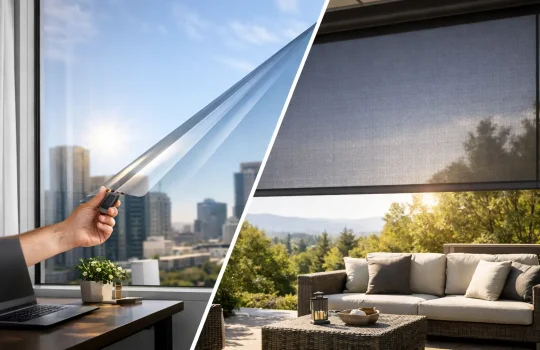
If solar control is part of the brief, ask for measurable performance information rather than relying on appearance. A darker-looking film is not automatically the best heat-control choice, and a clear solar film may provide meaningful comfort benefits while preserving the exterior look. Live solar-meter demonstrations can help compare how selected samples transmit energy, but they demonstrate the sample under test, not the complete comfort of a room. Glass type, orientation, shading, air conditioning, and window area all affect real-world results.
For bedrooms and media rooms, remember that privacy is different from blackout. Frosted film and switchable products still admit light. Curtains, blinds, or other shading may be required where darkness is the goal.
A Practical Way to Decide
Start with the behavior you need from the glass. If privacy should be permanent, static privacy film is often the direct answer. If a room needs to change from open to private several times a day, switchable smart film or smart glass deserves consideration. If the glass is already scheduled for replacement and the project has electrical and fabrication coordination in place, integrated smart glass can be a strong long-term choice.
Then separate privacy from heat control. Identify sun-facing elevations, hours of uncomfortable glare, screen use, interior finishes, and any existing window treatment. Finally, assess the actual panel: its condition, dimensions, access, frame detail, and electrical options.
The right solution should make the space work better without adding unnecessary complexity. A careful glass assessment and an honest discussion of how the room is used will usually point to the option that earns its place.





Best Heat Control Options for Dubai Glass - Dr SunShield
September 3, 2026 at 9:40 am[…] conventional solar-control film. At the press of a switch, compatible glass can change between a clear and private frosted state. It is particularly useful for meeting rooms, clinic spaces, bathroom glazing, internal […]
Office Tint: A Practical Guide for UAE Workplaces - Dr SunShield
September 4, 2026 at 7:07 am[…] internal partitions, clinics, or areas requiring dependable privacy at any hour, frosted film or switchable Smart Film may be more suitable than reflective solar […]
Villa Glass Protection Guide for UAE Homes - Dr SunShield
September 10, 2026 at 1:58 am[…] gives a consistent level of obscurity, but it also permanently changes the view through that glass. Switchable Smart Film can be a stronger fit where you want transparent glass at some times and privacy on demand, such as […]
Villa Tinting Results: What Changes After Installation - Dr SunShield
September 15, 2026 at 3:51 am[…] Film does not replace curtains, blinds, or other privacy measures after dark. For spaces that need privacy on demand, such as bathrooms, meeting rooms, or internal glass partitions, switchable Smart Film may be the […]