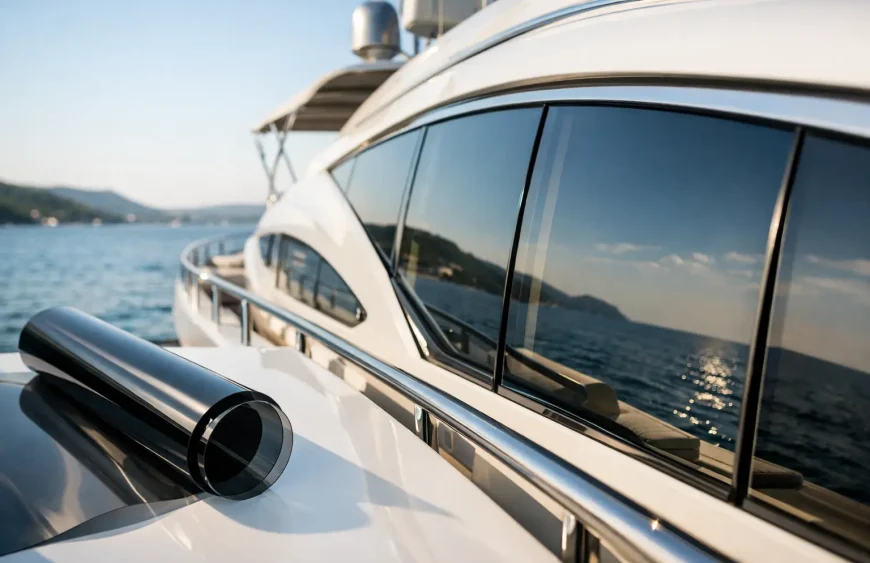
A yacht cabin can look bright and open at the marina, then become uncomfortably hot once sunlight starts hitting the windscreen and side glazing. The issue is not only cabin temperature. Glare off the water, fading upholstery, screen reflections, and reduced daytime comfort can all affect how the boat is used. Yacht tint can help, but marine glazing needs a more careful approach than a typical vehicle window.
The right film depends on the glass or plastic substrate, the location of each panel, the visibility required at the helm, and the conditions in which the vessel operates. A darker film is not automatically a better film, and the highest heat-rejection specification is not always appropriate for every piece of marine glazing.
What yacht tint is designed to improve
Quality marine window film is usually selected to manage solar exposure without making the cabin feel closed in. Depending on the film and glazing, it can reduce perceived heat from direct sun, soften harsh glare, filter a substantial portion of UV radiation, and help protect interior finishes from fading.
For many owners, the most noticeable change is comfort at anchor or while cruising during the day. Sunlight entering through a large forward windscreen can create intense heat around seating and helm areas. Side windows can also throw reflections onto navigation displays, glossy trim, and television screens. A suitable film can make those areas easier to use while preserving a clean, factory-appropriate appearance.
Privacy may be part of the request, particularly for saloon windows or areas close to neighboring berths. However, privacy film should be discussed honestly. Most standard tints provide daytime privacy because exterior light is brighter than interior light. At night, when cabin lights are on, people outside may still be able to see in. If privacy is the main goal, the location and lighting conditions matter as much as the shade of the film.
Why marine glass needs an assessment first
Not all yacht windows are conventional tempered glass. Marine glazing may include laminated glass, acrylic, polycarbonate, curved panels, coated glass, or a combination of materials across the same vessel. Each can react differently to film, heat, cleaning products, adhesives, and installation methods.
Acrylic and polycarbonate deserve particular care. They are more prone to scratching than glass and may have coatings that affect film compatibility. Some panels can also expand and contract more noticeably with temperature changes. Applying the wrong product, or preparing the surface incorrectly, can lead to adhesion issues, visual distortion, or damage to an existing finish.
The glass location matters too. A small fixed side window, a large curved windshield, a skylight, and a sliding cabin door do not carry the same practical requirements. A windshield may demand maximum optical clarity and higher visible light transmission for safe operation. A roof panel may be a stronger candidate for solar-control film because it receives direct overhead sun and is less central to navigation visibility.
Before recommending a film, the installer should inspect the glazing material where possible, look for manufacturer markings, consider the age and condition of the panels, and ask how the yacht is used. A boat that regularly cruises at night requires a different visibility balance from one used mostly for daytime entertaining at a marina.
Heat rejection, glare control, and visible light
Film specifications can be confusing because they describe different things. Infrared rejection, UV rejection, total solar energy rejection, and visible light transmission are related, but they are not interchangeable.
Visible light transmission, often called VLT, describes how much visible light passes through the glazing after film installation. Lower VLT generally means a darker appearance. This can reduce glare and increase daytime privacy, but it may also make the cabin feel darker and affect outward visibility in low-light conditions.
Heat performance is more nuanced. A high-quality ceramic or spectrally selective film may reject a meaningful amount of solar heat while remaining relatively light in appearance. This is often valuable on yachts, where preserving views and helm visibility can be just as important as reducing glare. Conversely, a dark dyed film may look effective but not offer the same solar-control performance or long-term stability.
A live solar-meter demonstration can help compare how samples transmit certain parts of the solar spectrum. It is useful for showing relative differences between film options. It is not a guarantee of the final cabin temperature, because cabin size, ventilation, engine heat, insulation, curtains, glass angle, and sun direction all influence the result on the water.
Selecting the right yacht tint for each area
A whole vessel does not always need one film shade. Matching film to the job can produce a better result than applying the darkest available option everywhere.
Helm and forward windscreen
The helm is usually the most sensitive area. Clear outward vision, readable displays, and safe operation should come first. A light, high-performance film may be appropriate if the glass type and vessel requirements allow it, but a dark windshield treatment can create problems during dusk, night cruising, or poor weather.
Reflections also need attention. Sometimes the better solution is a light film paired with changes inside the cabin, such as reducing reflective items near the dash. The goal is not simply to make the glass darker. It is to improve usable visibility in real operating conditions.
Side windows and saloon glazing
Side windows often offer more flexibility. Owners may choose a medium shade to control glare, reduce daytime visibility into the cabin, and improve comfort around seating. The best shade depends on how much natural light the interior already receives and whether the vessel is primarily used during the day or evening.
Large saloon windows can bring excellent views, but they also act like solar collectors. A high heat-rejection film with a neutral appearance can reduce that load without making the interior look heavily tinted from inside.
Skylights, roof glass, and aft glazing
Overhead and rear-facing glass can contribute significant heat, especially on yachts moored under direct UAE sun. These areas may be strong candidates for solar-control film, provided the glass construction is suitable. The intended look matters here as well. Some owners want a subtle neutral finish, while others prioritize stronger glare reduction for lounging and dining spaces.
Installation quality matters as much as film choice
Marine installations come with practical constraints that do not exist in a workshop. Access around curved glazing, tight interior spaces, trim details, moisture, salt residue, and vessel movement can all affect the process. The installation environment needs to be clean, dry, and stable enough for careful surface preparation and proper application.
Preparation is especially important on a yacht. Salt spray, sunscreen residue, cleaning chemicals, silicone products, and airborne dust can interfere with adhesion or leave contamination beneath the film. An experienced installer takes time to clean and inspect the surface rather than treating marine glass as a quick, standard tint job.
Curved windows may also require more careful film handling. Some shapes can be covered cleanly, while others may require a different approach or may not be suitable for a particular film. A candid recommendation should include these limits before work begins, not after the vessel has been booked in.
After installation, the film needs time to cure. Small water pockets or a slightly hazy appearance can be normal during the drying period, particularly in thicker films or humid conditions. Owners should follow the aftercare guidance provided and avoid aggressive cleaning until curing is complete. Once cured, use soft materials and film-safe cleaning methods rather than abrasive pads or harsh chemicals.
Questions to ask before approving a yacht tint job
A useful consultation should make the decision easier, not bury it in technical language. Ask what glazing material is being filmed, whether the proposed shade is suitable for helm visibility, and how the film will perform in both bright daytime and low-light use. It is also sensible to ask about warranty coverage, exclusions related to the marine environment, and the installer’s approach to curved or coated glass.
If a mobile installation is requested, confirm that the berth or location provides suitable working conditions. Space, shade, access, power availability, and protection from windblown dust can all affect whether the work should be completed on site or scheduled elsewhere.
For yacht owners in Dubai and across the UAE, the strongest result usually comes from treating tint as a glazing decision rather than a cosmetic add-on. Dr SunShield assesses the glass, the onboard use case, and the balance between heat control, glare reduction, privacy, appearance, and safe visibility before suggesting an option.
The most useful yacht tint is the one you stop noticing after installation: the cabin is more comfortable, the glare is less distracting, and the view through the glass still feels right for the way you use your boat.