A west-facing room in Dubai can feel uncomfortable long before the thermostat suggests there is a problem. The glass may be admitting intense sun, reflected glare, and UV exposure that fade furnishings over time. When comparing interior film versus exterior shade, the right answer depends less on which product sounds stronger and more on what the glass, facade, room use, and building conditions will allow.
Exterior shading usually has the advantage for stopping solar energy before it reaches the glass. Interior solar-control film is often the more practical retrofit because it can improve comfort without changing the building exterior. Both can be good solutions, but they solve the same problem from different positions.
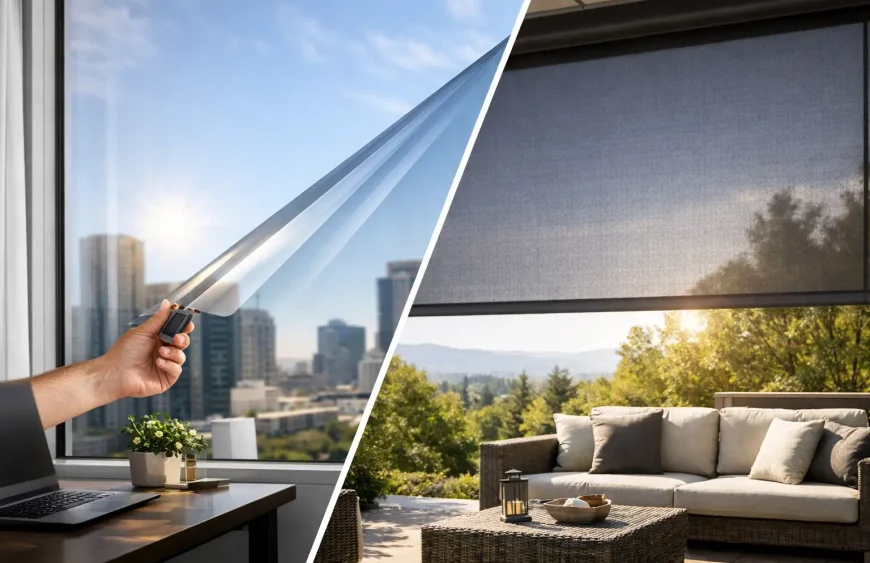
Interior Film Versus Exterior Shade: The Core Difference
An exterior shade intercepts direct sunlight outside the building. This can include fixed louvers, awnings, shutters, tensile screens, pergola structures, or exterior roller blinds. By shading the glass itself, it reduces the solar energy that enters and heats the glazing.
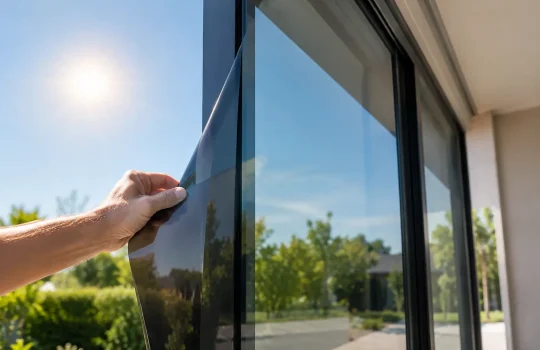
Interior window film is applied to the inside surface of compatible glass. High-quality solar-control films reject a portion of solar energy, including infrared heat, while also reducing glare and UV transmission. The sunlight has already reached the glass, but the film can still significantly reduce how much energy continues into the room.
That distinction matters most on large, sun-exposed elevations. If a new villa is being designed from the ground up, properly planned exterior shading is often the more effective architectural heat-control measure. If a completed villa, office, retail unit, or apartment needs a practical upgrade, interior film may achieve meaningful improvement with far less disruption.
When Interior Film Is the Better Fit
Interior film is frequently the sensible choice when the facade cannot be altered. Apartment owners, commercial tenants, and businesses in districts with managed building exteriors may not have approval to install awnings or external blinds. A carefully selected film changes the glass performance without adding brackets, fabric, motors, or external hardware.
It also suits clients who want a clean appearance. Modern spectrally selective films can remain relatively light in color while helping reduce heat and screen glare. That is useful in offices where staff need daylight but struggle with reflections on monitors, or in living rooms where dark glass would feel out of place.
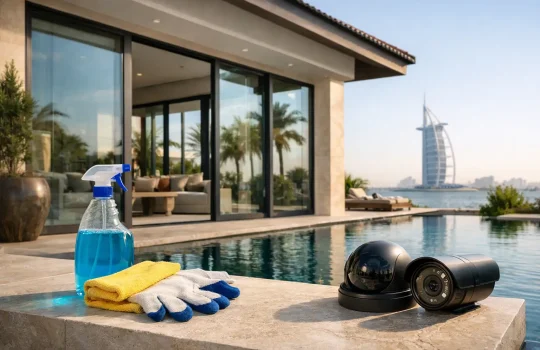
Film has practical installation advantages as well. It is installed from inside the property, so external access equipment is often unnecessary. This can make a major difference on upper floors, waterfront properties, and glazed areas where exterior access is restricted. Installation is still site-dependent: furniture clearance, working room around the glass, existing blinds, and the condition of the surface all affect what can be completed properly.
For many UAE properties, UV protection is another strong reason to consider film. It helps limit the UV exposure that contributes to fading of flooring, artwork, fabrics, and interior finishes. It should not be presented as a cure for all fading, since heat, visible light, and material quality also play a role, but it is a useful layer of protection.
Film performance is not just about darkness
A darker film may reduce glare and provide privacy, but darkness alone does not determine heat rejection. Ceramic and spectrally selective films are designed to manage solar energy without necessarily making the room look heavily tinted. The best choice depends on whether the priority is maximum heat rejection, a lighter appearance, daytime privacy, glare control, or a balance of all four.
This is why a sample and a live solar-meter demonstration can be helpful. A meter can show comparative transmission through glass and film samples, but it does not promise a specific indoor temperature reduction. Actual comfort also depends on glass size, orientation, air conditioning performance, insulation, curtains, occupancy, and how long the sun hits the space.
Where Exterior Shade Has the Clear Advantage
Exterior shade is usually the stronger option when direct sun is the main issue and the property can accommodate it. A deep overhang, correctly sized louver system, or external blind can prevent much of the direct solar load from striking the glass in the first place. On a broad west-facing elevation, that can be highly effective.
It can also preserve a clearer view through the glass than a darker solar-control film. For homeowners who value an unaltered view of a garden, golf course, marina, or skyline, external shading may provide a better visual result when the shade can be retracted or designed to block high-angle sun while leaving sightlines open.
The trade-off is that exterior shading is a building element, not just a window treatment. It needs to withstand heat, wind, dust, and regular cleaning. Motorized systems require power, controls, maintenance, and occasional repair. Fixed systems need sound detailing, particularly around waterproofing and facade attachment points.
For villas, exterior shade may also require community approval. For offices and apartments, landlord or building-management approval can be the deciding factor. A good-looking concept on paper is not helpful if the facade rules, access constraints, or structural conditions make it impractical.
Glass Compatibility Must Be Checked Before Film Installation
Window film is not a one-film-fits-all product. The existing glass type matters because some films can increase thermal stress in certain glazing configurations. Large panes, partially shaded windows, tinted glass, insulated glass units, laminated glass, and glass with existing coatings all require consideration before a recommendation is made.
Thermal stress does not mean film is unsafe by default. It means the installer should assess the glass rather than simply apply the darkest or highest-performing film requested. The wrong combination can raise the risk of glass cracking or, in some cases, affect the expected performance of sealed units.
A professional assessment should identify what is known about the glazing, inspect for existing damage or failed seals, consider frame coverage and shadow lines, and confirm whether the target outcome is realistic. If the glass cannot be verified or the risk is not acceptable, it is better to say so plainly and consider exterior shading, internal blinds, or another approach.
Privacy, Glare, and Daylight Change the Decision
Heat control is rarely the only concern. In a ground-floor villa or a street-facing office, daytime privacy may matter just as much. Reflective or darker films can make it harder to see into a bright interior from outside during the day, but they do not create complete privacy at night when the interior is brighter than outdoors. Curtains, blinds, or switchable privacy solutions may still be needed after sunset.
Exterior shades can improve daytime privacy too, especially screens and shutters, but they may reduce outward visibility and daylight more noticeably. Retractable systems offer flexibility, although that flexibility comes with more moving parts and maintenance.
For screen glare, both options can work well. Film creates a consistent reduction across the entire glazed surface. Exterior blinds can be adjusted throughout the day, which is useful where the sun angle changes dramatically. The better option often depends on whether occupants want a fixed, low-maintenance result or active control over light.
A Practical Way to Choose
Start with the problem, not the product. If the main complaint is harsh afternoon heat through existing glass and the facade cannot change, interior solar-control film is usually the first option worth assessing. If a new build or major renovation has large areas of direct sun, external shading should be considered early in the design process.
Then look at the room itself. A media room may tolerate a darker film or denser shade. A formal living area, showroom, or office may need more natural light. A yacht or waterfront property also brings added questions around access, glazing type, marine exposure, and the desired look from both inside and outside.
Finally, consider ownership and maintenance. Film is a relatively contained installation with no motors or exterior fabric to clean. Exterior shade can deliver excellent solar control, but it asks more from the building and from the owner over time.
What a Proper Site Assessment Should Settle
Before choosing either solution, the assessment should clarify the glass type, sun direction, size of the affected area, interior use, facade restrictions, access conditions, and visual priorities. It should also distinguish between a desire for lower heat, lower glare, UV protection, privacy, or safety. Those goals can overlap, but they are not identical.
At Dr SunShield, the most useful recommendation is not automatically the highest tier of film or the most elaborate shading system. It is the option that fits the glazing and solves the actual complaint without creating a new issue around appearance, compatibility, or building approval.
A room that feels exposed to the afternoon sun does not always need a major exterior alteration. Equally, a heavily sun-facing facade may deserve more than a darker window. The best next step is to assess the glass in place, observe how the sun reaches it, and choose the measure that will still make sense after the hottest months arrive.