
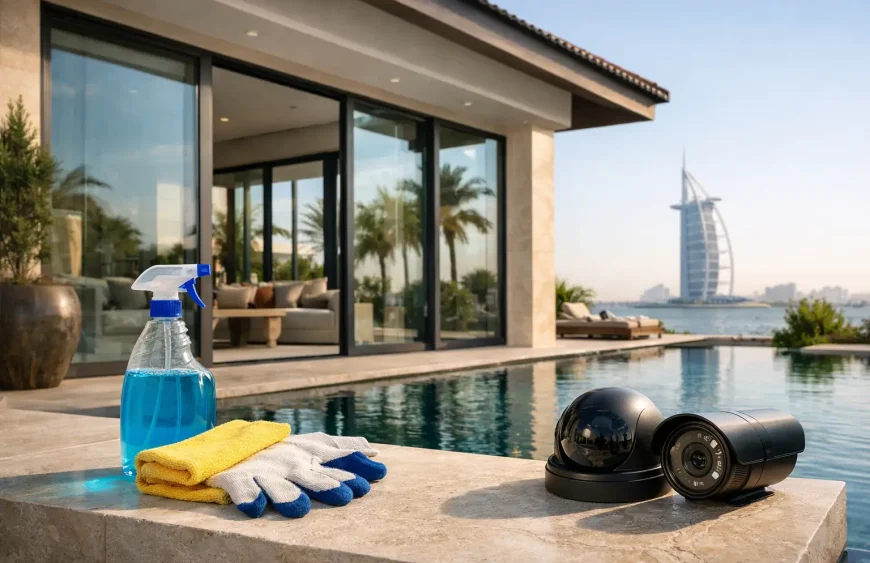
Floor-to-ceiling glazing can make a villa feel open, bright, and connected to the garden or sea. It can also become the room’s largest source of afternoon heat, harsh glare, fading furnishings, and unwanted visibility. This villa glass protection guide is designed for UAE homeowners who want to solve a real glass problem without turning a well-designed home into a dark, reflective box.
The right solution depends on where the glass sits, how it is built, what happens behind it, and what you want to preserve. A media room with west-facing windows has different needs from a sun-filled kitchen, a double-height entrance, or bedroom doors facing a neighboring villa. Good advice starts with those differences, not with the darkest film available.
Villa Glass Protection Guide: Start With Exposure
Before selecting any film, assess the glass by orientation and use. East-facing windows usually bring strong morning light, while west-facing glass often creates the most difficult late-afternoon heat and glare. South-facing elevations in the UAE can receive sustained solar exposure, particularly where there is little shading from landscaping, overhangs, or adjacent buildings.
Walk through the villa at the time the issue is most noticeable. Look for rooms where the AC runs constantly, screens become difficult to read, flooring feels hot underfoot, or curtains stay closed despite the view outside. These are useful clues because they identify whether the priority is solar control, glare reduction, UV filtering, privacy, safety, or a combination of them.
Protecting comfort without losing the view
Solar-control window film is usually the first option for villas with excessive sun exposure. It can reduce solar energy entering through glass and help moderate the radiant heat felt near windows. The result is often most noticeable in rooms with large exposed panes, especially where direct sun falls on sofas, dining tables, home offices, or children’s play areas.
However, heat rejection is not the only specification that matters. A very dark film may reduce glare, but it can alter the character of the room, make landscaping appear less vivid, and create a more reflective appearance after dark. For many villas, a clear or lightly tinted ceramic film is a better starting point because it aims to retain natural light and outward visibility while reducing a meaningful share of infrared heat and UV exposure.
The appropriate tier depends on the performance gap you are trying to close. A moderate-performing film can be sensible for shaded rooms with occasional discomfort. Higher-performance ceramic films are better suited to broad west-facing elevations, glass-heavy living areas, and rooms where cooling demand is consistently high. The most expensive film is not automatically the right answer if the room has external shading, low exposure, or a limited comfort issue.
Glare is a separate decision
Heat and glare often arrive together, but they should be considered separately. A room may remain reasonably cool while still making a television, laptop, or polished stone surface uncomfortable to use. In that case, visible-light transmission and reflectivity deserve as much attention as solar figures.
For a home office, cinema room, or kitchen with a strong view, the aim is usually to soften the harshness of direct sunlight without making the room feel dim. A sample applied to a small section of glass or reviewed against the actual window can be more useful than judging a film from a brochure alone. The same shade can look different depending on interior wall colors, exterior landscaping, and the direction of light.
Choose Protection by the Problem You Need Solved
A villa may need more than solar film, but each protective film performs a distinct job. Combining needs is possible in some cases, yet the final recommendation must account for glass type and the expected appearance.
UV protection is particularly valuable near expensive flooring, artwork, curtains, leather furniture, and wood finishes. Window film can significantly reduce ultraviolet transmission, but no film can stop all fading. Visible light and heat also contribute to material aging, so protecting valuable interiors may still require sensible placement, blinds, or UV-resistant furnishings.
Privacy film is useful for ground-floor bathrooms, dressing rooms, staff areas, side-facing windows, and villas with close neighboring sightlines. Frosted or decorative privacy film gives a consistent level of obscurity, but it also permanently changes the view through that glass. Switchable Smart Film can be a stronger fit where you want transparent glass at some times and privacy on demand, such as internal partitions, bathroom glazing, or selected entrance features. It requires appropriate electrical planning and is not a substitute for a solar-control solution on heavily exposed exterior glass.
Safety film addresses a different concern. Its purpose is to help retain broken glass fragments after impact, reducing the risk of dangerous shards scattering into the room. It can be considered for low-level glazing, doors, children’s areas, vulnerable sidelights, and certain security-conscious applications. Safety film does not make every window unbreakable, and the level of protection depends on the film specification, glass construction, frame condition, anchoring method, and type of impact expected.
For villas near active roads, construction areas, or locations where security is a priority, safety-film options should be discussed with clear expectations. A professional assessment should distinguish between fragment retention, delay against forced entry, and protection against blast-related glass hazards. These are related objectives, but they are not interchangeable claims.
Check Glass Compatibility Before Installation
The most overlooked part of villa glass protection is compatibility. Not every film should be installed on every pane, particularly insulated glass units, laminated glass, tinted glass, low-emissivity coatings, older glazing, and large panels that receive intense direct sunlight.
When film absorbs or reflects solar energy, it can change the temperature distribution across the glass. In unsuitable conditions, that may increase thermal-stress risk. Existing edge damage, chips, poor seals, partial shade, internal blinds close to the glass, and uneven framing can all affect the assessment. This is why a responsible installer asks questions about the glazing rather than recommending a film based only on a photo of the room.
Exterior access matters too. High windows, double-height voids, skylights, and pool-facing facades may require specialist access planning. Mobile installation can be practical for many villas, but site conditions must allow safe preparation, clean working areas, and appropriate access to the glass. The fastest quote is not always the most accurate quote when a property includes complex glazing.
If your villa is newly built, check whether there are developer, contractor, or glass-manufacturer requirements that affect film installation or warranty coverage. A film installer can advise on the application, but they should not claim to replace the glazing manufacturer’s own specifications.
Plan the Look From Inside and Outside
Performance should not come at the cost of a finish you dislike. During daylight, some solar films create a subtle external reflectivity that can be attractive on contemporary villas but may not suit every facade. At night, when interior lights are brighter than outdoors, reflective film does not provide one-way privacy. People outside may still see in unless curtains, blinds, landscaping, or another privacy measure is used.
Ask to compare film samples in the actual setting whenever possible. Consider the view from the living room, the curbside appearance, the color of stone and aluminum frames, and the difference between daytime and nighttime conditions. This is especially worthwhile for full-height sliding doors and glass balustrade-adjacent windows, where appearance is highly visible.
A live solar-meter demonstration can help compare how different films affect measured transmission. It is a useful practical reference, particularly when comparing tiers, but it is not a promise of an exact indoor temperature drop or a replacement for assessing the whole room. AC capacity, insulation, roof exposure, curtains, air leakage, and the amount of glass all influence the final comfort level.
What a Proper Villa Installation Should Include
A reliable installation is a process, not simply cutting film and applying it to glass. The installer should identify the glass, discuss the priority for each area, confirm access and finish expectations, and provide a clear quotation that states the selected film and applicable warranty.
Surface preparation is central to the result. Glass must be cleaned carefully so dust, silicone residue, paint overspray, or construction debris do not compromise the finish. Large villa windows also need measured, controlled handling to keep edges neat and avoid unnecessary disturbance to surrounding finishes.
After installation, the film needs time to cure. Small water pockets or a slightly hazy appearance can be normal during the initial drying period, particularly in certain weather conditions and with thicker films. Avoid abrasive cleaners, rough cloths, or scraping tools. A soft microfiber cloth and suitable non-abrasive glass cleaner are normally the safer choice once curing guidance has been followed.
Dr SunShield approaches this work as an installer-led consultation: the aim is to recommend the film that addresses the actual issue, explain the trade-offs clearly, and assess whether the requested application is suitable for the glass and site.
The best place to start is the room you avoid using at a certain time of day. Once you can describe what makes that space uncomfortable – heat on the sofa, glare on the screen, fading near the window, or a lack of privacy – the right glass-protection decision becomes far clearer.
Related Articles

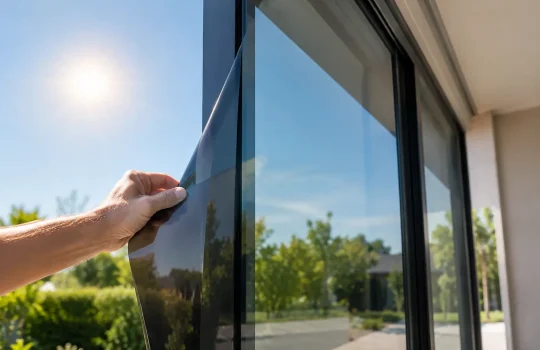


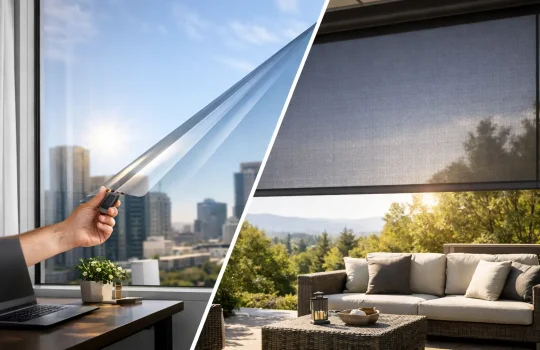
Floor-to-ceiling glazing can make a villa feel open, bright, and connected to the garden or sea. It can also become the room’s largest source of afternoon heat, harsh glare, fading furnishings, and unwanted visibility. This villa glass protection guide is designed for UAE homeowners who want to solve a real glass problem without turning a well-designed home into a dark, reflective box.
The right solution depends on where the glass sits, how it is built, what happens behind it, and what you want to preserve. A media room with west-facing windows has different needs from a sun-filled kitchen, a double-height entrance, or bedroom doors facing a neighboring villa. Good advice starts with those differences, not with the darkest film available.
Villa Glass Protection Guide: Start With Exposure
Before selecting any film, assess the glass by orientation and use. East-facing windows usually bring strong morning light, while west-facing glass often creates the most difficult late-afternoon heat and glare. South-facing elevations in the UAE can receive sustained solar exposure, particularly where there is little shading from landscaping, overhangs, or adjacent buildings.
Walk through the villa at the time the issue is most noticeable. Look for rooms where the AC runs constantly, screens become difficult to read, flooring feels hot underfoot, or curtains stay closed despite the view outside. These are useful clues because they identify whether the priority is solar control, glare reduction, UV filtering, privacy, safety, or a combination of them.
Protecting comfort without losing the view
Solar-control window film is usually the first option for villas with excessive sun exposure. It can reduce solar energy entering through glass and help moderate the radiant heat felt near windows. The result is often most noticeable in rooms with large exposed panes, especially where direct sun falls on sofas, dining tables, home offices, or children’s play areas.
However, heat rejection is not the only specification that matters. A very dark film may reduce glare, but it can alter the character of the room, make landscaping appear less vivid, and create a more reflective appearance after dark. For many villas, a clear or lightly tinted ceramic film is a better starting point because it aims to retain natural light and outward visibility while reducing a meaningful share of infrared heat and UV exposure.
The appropriate tier depends on the performance gap you are trying to close. A moderate-performing film can be sensible for shaded rooms with occasional discomfort. Higher-performance ceramic films are better suited to broad west-facing elevations, glass-heavy living areas, and rooms where cooling demand is consistently high. The most expensive film is not automatically the right answer if the room has external shading, low exposure, or a limited comfort issue.
Glare is a separate decision
Heat and glare often arrive together, but they should be considered separately. A room may remain reasonably cool while still making a television, laptop, or polished stone surface uncomfortable to use. In that case, visible-light transmission and reflectivity deserve as much attention as solar figures.
For a home office, cinema room, or kitchen with a strong view, the aim is usually to soften the harshness of direct sunlight without making the room feel dim. A sample applied to a small section of glass or reviewed against the actual window can be more useful than judging a film from a brochure alone. The same shade can look different depending on interior wall colors, exterior landscaping, and the direction of light.
Choose Protection by the Problem You Need Solved
A villa may need more than solar film, but each protective film performs a distinct job. Combining needs is possible in some cases, yet the final recommendation must account for glass type and the expected appearance.
UV protection is particularly valuable near expensive flooring, artwork, curtains, leather furniture, and wood finishes. Window film can significantly reduce ultraviolet transmission, but no film can stop all fading. Visible light and heat also contribute to material aging, so protecting valuable interiors may still require sensible placement, blinds, or UV-resistant furnishings.
Privacy film is useful for ground-floor bathrooms, dressing rooms, staff areas, side-facing windows, and villas with close neighboring sightlines. Frosted or decorative privacy film gives a consistent level of obscurity, but it also permanently changes the view through that glass. Switchable Smart Film can be a stronger fit where you want transparent glass at some times and privacy on demand, such as internal partitions, bathroom glazing, or selected entrance features. It requires appropriate electrical planning and is not a substitute for a solar-control solution on heavily exposed exterior glass.
Safety film addresses a different concern. Its purpose is to help retain broken glass fragments after impact, reducing the risk of dangerous shards scattering into the room. It can be considered for low-level glazing, doors, children’s areas, vulnerable sidelights, and certain security-conscious applications. Safety film does not make every window unbreakable, and the level of protection depends on the film specification, glass construction, frame condition, anchoring method, and type of impact expected.
For villas near active roads, construction areas, or locations where security is a priority, safety-film options should be discussed with clear expectations. A professional assessment should distinguish between fragment retention, delay against forced entry, and protection against blast-related glass hazards. These are related objectives, but they are not interchangeable claims.
Check Glass Compatibility Before Installation
The most overlooked part of villa glass protection is compatibility. Not every film should be installed on every pane, particularly insulated glass units, laminated glass, tinted glass, low-emissivity coatings, older glazing, and large panels that receive intense direct sunlight.
When film absorbs or reflects solar energy, it can change the temperature distribution across the glass. In unsuitable conditions, that may increase thermal-stress risk. Existing edge damage, chips, poor seals, partial shade, internal blinds close to the glass, and uneven framing can all affect the assessment. This is why a responsible installer asks questions about the glazing rather than recommending a film based only on a photo of the room.
Exterior access matters too. High windows, double-height voids, skylights, and pool-facing facades may require specialist access planning. Mobile installation can be practical for many villas, but site conditions must allow safe preparation, clean working areas, and appropriate access to the glass. The fastest quote is not always the most accurate quote when a property includes complex glazing.
If your villa is newly built, check whether there are developer, contractor, or glass-manufacturer requirements that affect film installation or warranty coverage. A film installer can advise on the application, but they should not claim to replace the glazing manufacturer’s own specifications.
Plan the Look From Inside and Outside
Performance should not come at the cost of a finish you dislike. During daylight, some solar films create a subtle external reflectivity that can be attractive on contemporary villas but may not suit every facade. At night, when interior lights are brighter than outdoors, reflective film does not provide one-way privacy. People outside may still see in unless curtains, blinds, landscaping, or another privacy measure is used.
Ask to compare film samples in the actual setting whenever possible. Consider the view from the living room, the curbside appearance, the color of stone and aluminum frames, and the difference between daytime and nighttime conditions. This is especially worthwhile for full-height sliding doors and glass balustrade-adjacent windows, where appearance is highly visible.
A live solar-meter demonstration can help compare how different films affect measured transmission. It is a useful practical reference, particularly when comparing tiers, but it is not a promise of an exact indoor temperature drop or a replacement for assessing the whole room. AC capacity, insulation, roof exposure, curtains, air leakage, and the amount of glass all influence the final comfort level.
What a Proper Villa Installation Should Include
A reliable installation is a process, not simply cutting film and applying it to glass. The installer should identify the glass, discuss the priority for each area, confirm access and finish expectations, and provide a clear quotation that states the selected film and applicable warranty.
Surface preparation is central to the result. Glass must be cleaned carefully so dust, silicone residue, paint overspray, or construction debris do not compromise the finish. Large villa windows also need measured, controlled handling to keep edges neat and avoid unnecessary disturbance to surrounding finishes.
After installation, the film needs time to cure. Small water pockets or a slightly hazy appearance can be normal during the initial drying period, particularly in certain weather conditions and with thicker films. Avoid abrasive cleaners, rough cloths, or scraping tools. A soft microfiber cloth and suitable non-abrasive glass cleaner are normally the safer choice once curing guidance has been followed.
Dr SunShield approaches this work as an installer-led consultation: the aim is to recommend the film that addresses the actual issue, explain the trade-offs clearly, and assess whether the requested application is suitable for the glass and site.
The best place to start is the room you avoid using at a certain time of day. Once you can describe what makes that space uncomfortable – heat on the sofa, glare on the screen, fading near the window, or a lack of privacy – the right glass-protection decision becomes far clearer.

