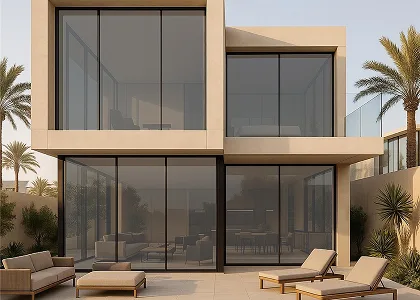
Pricing from AED 90/m²

On-site residential window film

Home & Villa Window Tinting in Dubai

Dr SunShield provides on-site ceramic window tinting for homes and villas, helping reduce heat, glare and UV while improving daytime privacy. We assess your glass first, then recommend what genuinely suits your property.

Genuine customer reviewsBefore-and-after workLive meter demonstration where available

What residential window tinting helps with

More Comfortable Rooms, Without Replacing the Glass

Window film can make bright, sun-facing rooms more comfortable by tackling several everyday problems at once.

01

Heat

May help reduce solar heat gain through treated glass.

02

Glare

Can reduce glare on screens and across bright living spaces.

03

UV

Can help reduce UV exposure and slow UV-related fading of furniture, floors and fabrics.

04

Daytime Privacy

Can make it harder to see in during the day, depending on the film and lighting conditions.

05

Comfort

May improve comfort near large, west-facing or heavily exposed windows.

06

Appearance

Creates a cleaner, more finished look inside and outside the property.

Window film may also reduce demand on air conditioning depending on the property and how it is used, but we do not promise a fixed temperature drop or a specific electricity saving.

Where residential film can be used

From Villa Windows to Balcony Glazing

We install residential film across a wide range of homes and glass types, subject to a suitability check.

  • Villas and townhouses
  • Apartments
  • Residential towers
  • Balcony glazing
  • Sliding glass doors
  • Skylights
  • Feature windows
  • Living rooms
  • Bedrooms
  • Home offices

What is suitable depends on the glass and property, which is why we assess the windows before recommending a film.
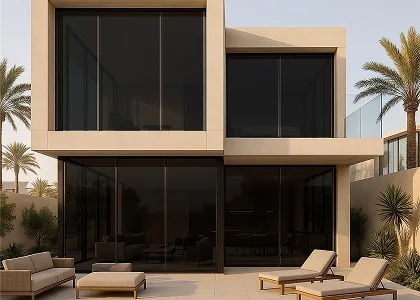
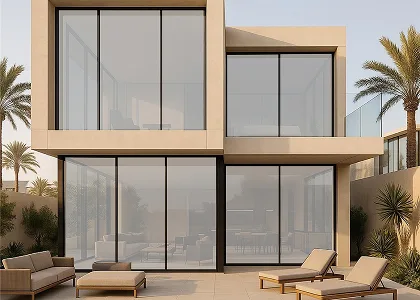
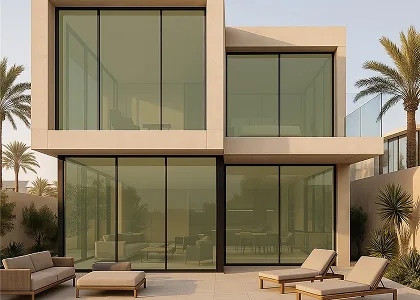
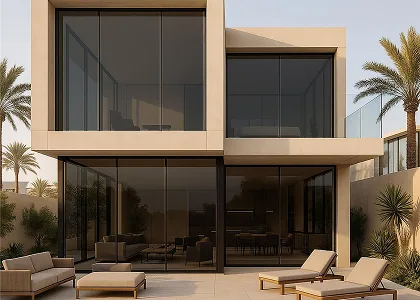
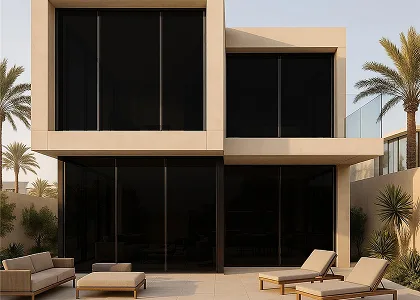
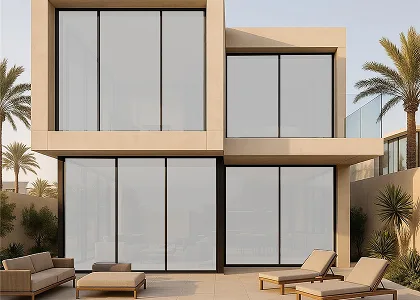
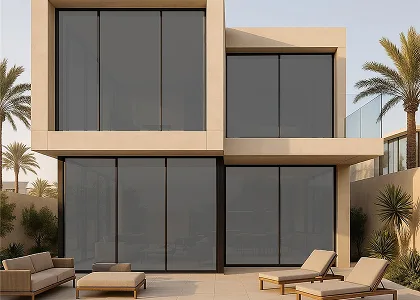
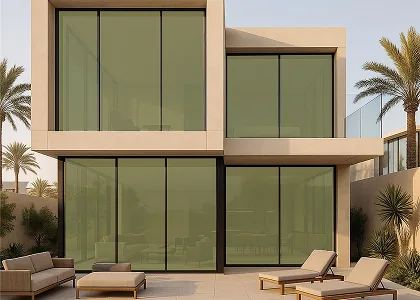
Villa window tinting appearanceReflective home window filmChameleon home window tint appearance

Existing appearance previews

Compare Tint Colours and Visual Shades

Explore the current Black, Silver, Grey and Chameleon looks. These previews help with appearance; they do not replace a film and glass assessment.
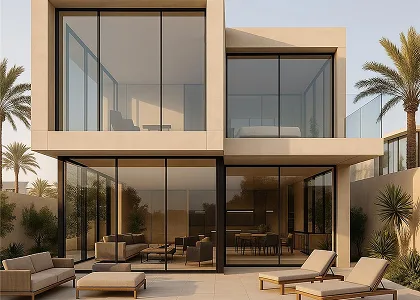
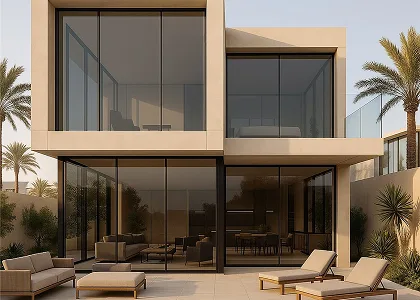
Finish and shade availability varies by film and glass type. Final options, performance and suitability are confirmed during the survey. Visible darkness and heat rejection are separate characteristics.
Black residential tint visual shade 0 percent

Black 0%

Lightest visual preview

From AED 90/m²Book Survey
Black residential tint visual shade 10 percent

Black 10%

Light visual preview

From AED 90/m²Book Survey
Black residential tint visual shade 30 percent

Black 30%

Mid-tone visual preview

From AED 90/m²Book Survey
Black residential tint visual shade 50 percent

Black 50%

Darker visual preview

From AED 90/m²Book Survey
Black residential tint visual shade 70 percent

Black 70%

Darkest visual preview

From AED 90/m²Book Survey

Glass compatibility and realistic expectations

Assessed Window by Window

Before recommending a film we confirm what your glass is, what your property allows, and what the film can realistically do — including how privacy changes between day and night.

Glass and Property We Check First

Glass type matters, and existing cracks, worn seals, coatings and glazing construction need to be considered before a recommendation.

Double-glazedLow-ECoated glassLaminatedTemperedExisting film
Suitability Comes First

Different glass types behave differently with film. We assess the windows and installation conditions before suggesting a product.

No Shatterproof Claims

We do not claim ordinary tint makes glass shatterproof, storm-proof or impact-proof, and we do not guarantee it prevents breakage or thermal stress.

Property Approval May Apply

Apartments, rented homes and some communities may require landlord, building-management or community approval before external-facing glass is treated. Vehicle tint limits do not automatically define residential glass, but property and local requirements still need to be checked.

Daytime Privacy Is Not Nighttime Privacy

Reflective or tinted film can make it harder to see in during the day when it is brighter outside. After dark, with interior lights on, that effect can reverse and people outside may be able to see in.

Reflective residential film in daytimeDay: privacy can improve when it is brighter outside
Residential tinted windows after interior lighting changesNight: interior lighting can reverse the privacy effect
Privacy depends on the film and the light levels on each side.
Viewing angle, distance and time of day also affect the result.
We set clear expectations and help balance privacy, light and appearance.

Residential films and performance

Three Ceramic Film Tiers

All three films are stated to offer up to 99% UV protection and up to 97% glare reduction. Infrared heat rejection and warranty length rise by tier.

Maximum performance

DS-MAX

10-year product warranty
UV protectionUp to 99%
Glare reductionUp to 97%
IR heat rejectionUp to 98%
Essential ceramic

DS-ONE

3-year product warranty
UV protectionUp to 99%
Glare reductionUp to 97%
IR heat rejectionUp to 67%
Finishes and shade options vary by film. A darker or more reflective appearance is not automatically better at rejecting heat, so the recommendation should balance performance, privacy, natural light, style and glass compatibility.
Live on-site reading: direct sun, then the same sensor behind Nano Ceramic film.

First-hand comparison

Solar Transmission Meter Demonstration

Where available or applicable, we use an EDTM SP2065 solar transmission meter, made in the USA, so you can view a live comparison before deciding.

The device is reported to show heat-related and UV-related readings and can compare an untreated sample with a treated one.

What it can showA live, in-person view of how a film performs on the demonstration sample.
What it does not showIt is not laboratory, government or building certification and does not prove an exact room-temperature drop, electricity-bill saving or suitability for every glass type.

How the residential process works

The Right Film on the Right Glass

Our process is built around understanding the property before recommending or installing a film.

Phase01

Discover

Contact Us

Tell us what you want to improve.

Share Details

Send property and window information.

Photos or Survey

Provide photos or arrange a site visit.

Phase02

Assess & Recommend

Assess the Glass

We check glass and installation conditions.

Recommend Film

We match a suitable film to the property.

Phase03

Quote & Schedule

Receive a Quote

Get a clear price for the agreed scope.

Book Installation

Choose an agreed installation date.

Phase04

Install & Support

Prepare & Install

We prepare the glass and fit the film.

Final Inspection

We check the completed installation.

Aftercare

Receive care and warranty guidance.

Residential pricing

Home and villa tinting fromAED 90/m²

The final price is confirmed after we understand the glass, film, access and installation conditions.

Pricing and quote factors

What Shapes Your Final Quote

For an accurate figure, we assess the total glass area and the practical details of the installation.

01

Project Scope

Total glass area
Number and size of panes
Property location
02

Film & Glass

Selected film tier
Glass type
Interior or exterior installation
03

Site Conditions

Access and working height
Old-film removal
Minimum-order and site conditions

Book On-Site Survey

Warranty, aftercare and real results

Support Beyond Installation Day

We explain the applicable warranty, provide care guidance and let customers judge our work through genuine feedback and residential results.

01

Film and Installation Warranty

Coverage runs for 3 years with DS-ONE, 6 years with DS-PRO or 10 years with DS-MAX. It covers the film and our installation, with exact terms explained before booking.

02

Clear Aftercare Guidance

We explain how the film settles, how to clean it and what to avoid after installation.

03

Reviews and Real Results

Our work speaks through genuine customer reviews and before-and-after results from real homes and villas.

Home and villa tinting questions

Frequently Asked Questions

Clear answers about heat, light, privacy, glass compatibility, pricing, energy use, approvals and tenants.

How much heat can home window tinting reduce?

Our ceramic films are stated to offer up to 98% infrared heat rejection on the top tier, but the exact result depends on the film and your glass.

Will residential window tint make my rooms dark?

Not necessarily. Film comes in different appearances and light levels, so you can keep more natural light with a lighter option or choose a darker, more private look. We help balance heat, glare, privacy and brightness during the survey.

Does one-way privacy film work at night?

Daytime and nighttime privacy are different. Reflective film can improve privacy during the day when it is brighter outside, but after dark with interior lights on, that effect can reverse. Privacy also depends on the film, lighting, viewing angle and distance.

Can film be installed on double-glazed or Low-E glass?

Sometimes, but it depends on the glass. Double-glazed, Low-E, laminated, tempered and coated glass can behave differently with film, so we assess the windows before recommending a product.

Does window film help protect furniture from UV fading?

It can help. Our films are stated to offer up to 99% UV protection, which can help slow UV-related fading of furniture, floors and fabrics, although no film stops fading completely.

How much does villa window tinting cost in Dubai?

Home and villa tinting starts from AED 90 per square metre and is confirmed after assessment because the cost depends on the total glass area, selected film and access.

Does home tinting lower my DEWA or AC bill?

It may help by reducing solar heat gain through treated glass and lowering the cooling load. Real savings vary by home, glass, orientation and use, so we focus on comfort rather than promising a guaranteed bill reduction.

Do I need building or landlord approval for home tinting?

It depends on the property. Vehicle tint limits do not automatically apply to residential glass, but apartments, rented homes and some communities may require building-management, landlord or community consent because the external appearance changes. We recommend checking before installation.

Can tenants install window film and remove it later?

Yes. Film is applied to the existing glass and can usually be removed later, making it suitable for tenants who want more comfort during a lease. We recommend checking with the landlord first.

BOOK NOW