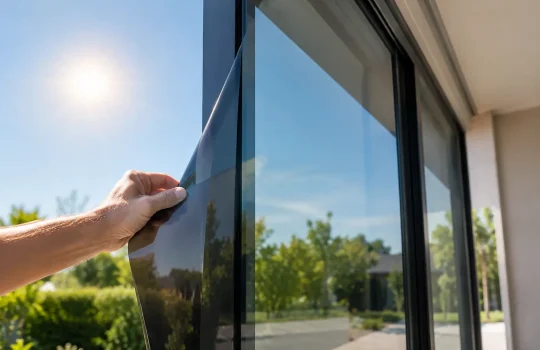
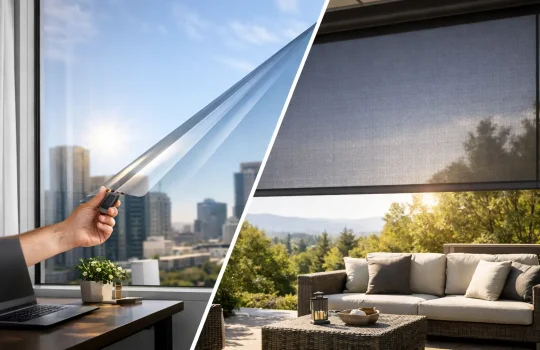
A west-facing living room at 3 p.m. tells you more about villa tinting results than a film sample ever can. Before installation, the glass may look attractive while the sofa feels too warm to use, the TV is hard to see, and the blinds stay closed for most of the afternoon. After the right film is installed, the goal is not to make the room dark. It is to make the glass work harder without changing how you enjoy the space.
For villa owners, the best results are usually felt before they are noticed. Rooms become more comfortable near large windows, screen glare becomes easier to manage, and valuable interiors receive better protection from UV exposure. The visible finish matters too, but a successful result starts with matching the film to the glass, orientation, room use, and priorities.
Villa Tinting Results That Matter Day to Day
The most immediate change is often the reduction in direct solar discomfort. Solar-control window film reduces the amount of solar energy entering through the glass, which can help rooms heat up less quickly in strong sun. That is particularly relevant for villas with broad sliding doors, double-height glazing, skylights, and windows facing west or south.
This does not mean every room will suddenly feel air-conditioned by the film alone. A villa’s cooling performance also depends on the AC system, insulation, air leakage, curtains, roof exposure, and how long the sun reaches the glass. Film is one part of the comfort picture, but it addresses a major source of localized heat: solar gain through glazing.
Glare reduction is another result people appreciate quickly. In a family room, home office, or media area, glare can make a bright room less usable even when the temperature is acceptable. A suitable film softens the harshness of sunlight while preserving useful daytime light. The exact balance matters. A film chosen only for maximum heat rejection may be too dark for a shaded room or a homeowner who values a bright, open look.
UV protection is less dramatic, but it is valuable over time. Quality window films help reduce UV exposure that can contribute to fading and deterioration in furnishings, wood flooring, artwork, fabrics, and rugs. No film can guarantee that interiors will never fade, since visible light, heat, and material quality also play a role. Still, reducing UV transmission is a sensible layer of protection for high-value interiors.
What You Will See From Inside and Outside
A common concern is whether tinting will make a villa look dark from indoors. The answer depends on film selection, the existing glass, and the time of day. Many modern solar-control films are designed to remain relatively clear while rejecting a meaningful amount of heat and glare. These are often a good fit for homeowners who want comfort improvements without a heavily tinted appearance.
From outside, some films add a subtle neutral, gray, blue-gray, or reflective character. That can look clean and consistent on a modern facade, but it should be chosen carefully for villas with specific architectural finishes, community guidelines, or a particular exterior aesthetic. A sample viewed against a small piece of glass is helpful, yet it cannot fully replicate the look across an entire elevation in changing daylight.
Nighttime privacy deserves a direct explanation. Standard reflective or tinted film can improve daytime privacy because the brighter exterior makes it harder to see inside. At night, when interior lights are on, that effect reverses. Film does not replace curtains, blinds, or other privacy measures after dark. For spaces that need privacy on demand, such as bathrooms, meeting rooms, or internal glass partitions, switchable Smart Film may be the more suitable solution.
Why Results Vary From One Villa to Another
Two villas can use the same film and experience different results. One may have clear single-pane glass exposed to afternoon sun, while another has factory-tinted, insulated, laminated, or low-emissivity glass. Their window sizes, shading, interior finishes, and AC performance may also be entirely different.
This is why a recommendation-led assessment is more useful than choosing by a headline percentage. Infrared rejection figures can be useful for comparing film tiers, but they do not tell the whole story. Total solar energy rejection, visible light transmission, glare reduction, UV filtering, the existing glass specification, and the room’s solar exposure all deserve consideration.
For example, a bright, west-facing family room may justify a stronger solar-control film than a shaded bedroom. A glass staircase or entrance may need a lighter appearance. A villa office may prioritize screen comfort, while a formal lounge may prioritize maintaining a clear view. The right answer is often a mix of film choices across the property rather than one specification everywhere.
The Installation Details That Protect the Finish
Good villa tinting results rely on preparation as much as film performance. Glass must be assessed for condition, access, size, edge details, old coatings, and compatibility. Large panes, high windows, tight corners, and exterior access can affect the installation plan and timing.
The installation team cleans and prepares the glass carefully before applying the film. During fitting, a water-based mounting solution is used, so a temporary haze, small water pockets, or a slightly uneven appearance can be visible while the film cures. This is normal. As the moisture evaporates, clarity improves over the curing period.
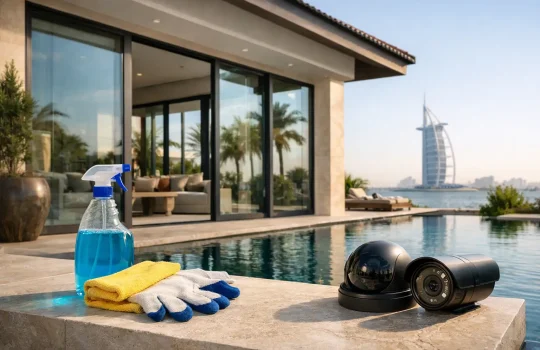
Drying time varies with film type, weather, glass size, and indoor conditions. It is sensible to avoid touching edges, cleaning the film too soon, or judging the final appearance on the same day. Once cured, clean the interior surface with a soft cloth and a mild, ammonia-free cleaner. Abrasive pads, blades, and harsh chemicals can damage the film surface.
Glass Compatibility Is Not a Box-Ticking Exercise
The strongest possible film is not always the safest choice. Some glass types can face thermal stress when a dark or highly absorptive film changes how the pane absorbs heat. This can be especially relevant with certain double-pane units, laminated glass, older glazing, patterned glass, or glass with pre-existing edge damage.
A proper assessment considers the glass construction, pane size, shading patterns, frame condition, and whether the film is intended for interior or exterior application. If a requested film carries an avoidable compatibility risk, a responsible installer should explain it and recommend a safer alternative. That conversation may feel less exciting than a maximum-performance claim, but it protects the property and the long-term result.
Safety film is a separate consideration. It is designed to help retain broken glass fragments after impact, but it is not the same as solar-control film and should not be presented as a complete security system. Where both solar control and fragment retention matter, the glass and use case need careful review before selecting a product.
How to Evaluate Your Own Villa Tinting Results
Start with the rooms that were causing the problem. Sit near the glass at the same time of day when heat or glare was most noticeable. Check whether blinds can stay open longer, whether screen visibility has improved, and whether the area closest to the windows feels more usable.
Then look at the visual result under normal conditions. Are the views still comfortable? Does the exterior finish suit the facade? Is daytime privacy meeting expectations without making the room feel closed in? These practical observations are more meaningful than judging the project by one performance number alone.
Where available, a live solar-meter demonstration can show relative transmission differences between untreated glass and a film sample. It is a useful way to compare materials, but it does not predict the exact temperature of every room or replace a full glass assessment. Dr SunShield uses this kind of demonstration as supporting evidence, alongside a clear explanation of what the meter can and cannot prove.
The most satisfying villa tinting result is usually a quieter kind of upgrade: sunlight still fills the room, but it no longer dictates how the room is used. When the film suits the glass and the way your family lives, comfort, appearance, and protection can improve without asking the villa to look like a different home.