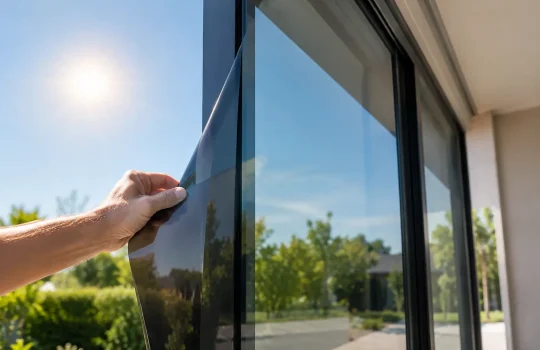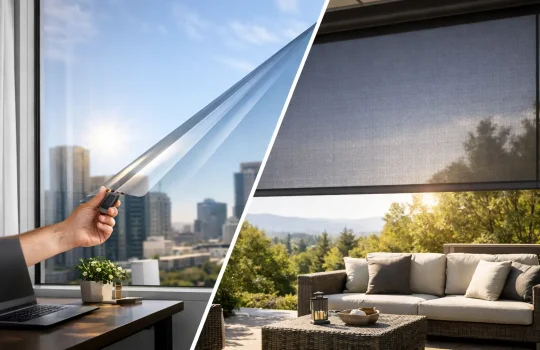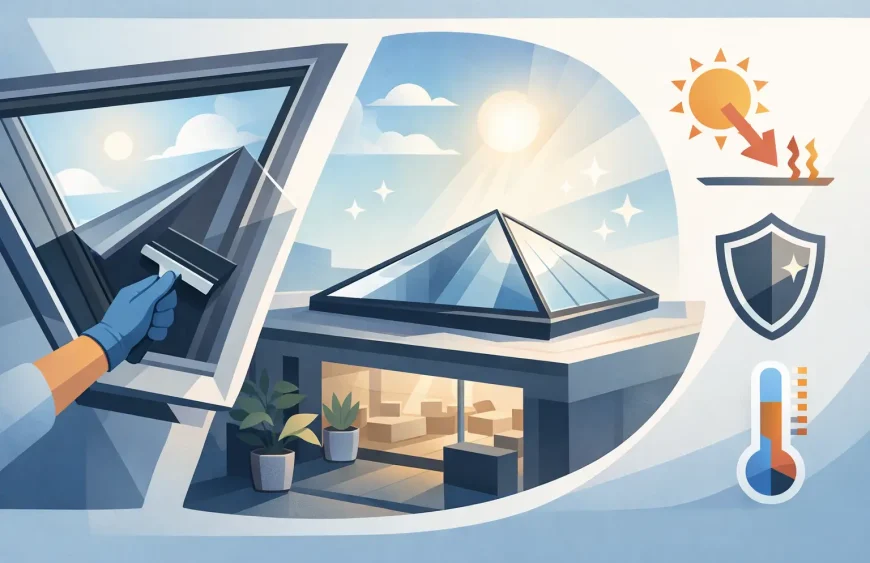
A skylight can make a villa, office, atrium, or stairwell feel exceptional – until the afternoon sun turns the space below it into the warmest room in the building. In the UAE, the best films for skylights are not simply the darkest films or those with the highest advertised heat-rejection figure. They are films selected for the exact glass, roof angle, exposure, interior use, and heat or glare problem you are trying to solve.
Skylight film deserves more care than a standard side-window installation. Overhead glass receives direct solar load for longer periods, is harder to access, and can be more sensitive to heat absorption. A good recommendation starts with the glass itself, not a generic product brochure.
Why skylights need a different film recommendation
Vertical windows benefit from shade angles, neighboring buildings, curtains, and the changing position of the sun. Skylights have far less protection. A horizontal or steeply sloped pane can receive intense direct sunlight across much of the day, particularly on unshaded roofs in Dubai and across the UAE.
That exposure creates several distinct problems. The room may feel hot even when the air conditioning is running. Glare can make a kitchen island, desk, television area, or meeting table uncomfortable. UV exposure can contribute to fading in flooring, upholstery, artwork, and joinery. Some homeowners also want less visibility from surrounding towers or neighboring properties.
Film can help with each of these concerns, but not every film solves them in the same way. A darker, more reflective film may reduce visible light and glare effectively, yet change the appearance of the roof glass more than the owner expects. A clear, high-performance solar-control film may preserve a brighter interior while offering strong infrared and UV reduction, but it may not provide meaningful daytime privacy. The right answer depends on the priority.
The best films for skylights by performance goal
Spectrally selective solar-control film for heat with daylight
For many homes and offices, a light, neutral solar-control film is the strongest starting point. This type of film is designed to reject a portion of solar energy while keeping the glass relatively clear. It suits rooms where natural light is a key part of the design, such as living rooms, entrance atriums, stairwells, galleries, and open-plan workspaces.
The benefit is balance. You can reduce the harshest solar load without making a bright room feel closed in. In premium interiors, neutral color rendering also matters. A film that looks too blue, bronze, gray, or mirrored can alter the look of stone, paint, timber, and furnishings below the skylight.
Performance should be assessed beyond a single infrared-rejection number. Infrared readings can be useful in a controlled demonstration, but they do not represent every condition on a roof. Total solar-energy rejection, visible-light transmission, UV reduction, and the glass construction all need to be considered together.
Medium-tint solar film for glare-heavy rooms
Where glare is the main complaint, a medium-tint solar-control film may be more suitable. This is often practical above media rooms, workstations, dining areas, reception desks, gyms, or spaces with polished floors and reflective surfaces.
The trade-off is straightforward: stronger glare control usually means lower visible light. That may be welcome in a room that feels washed out for several hours a day, but less suitable in a shaded room that only becomes uncomfortable during a short afternoon window. A site assessment should look at when the glare occurs, not only how bright the room appears during a midday visit.
For offices in areas such as Business Bay, DIFC, Dubai Marina, and Downtown Dubai, the issue is often screen visibility rather than room temperature alone. In that case, selecting a film around actual desk positions and screen angles is more useful than choosing the darkest available shade.
Reflective film for stronger solar control and daytime privacy
Reflective solar film can provide substantial heat and glare reduction and may add daytime privacy when the exterior side is brighter than the interior. It can be a good fit for service corridors, commercial rooflights, utility spaces, and certain exposed upper-level areas where appearance is less sensitive.
However, reflective film is not automatically the best choice for every villa skylight. At night, when indoor lighting is stronger, the privacy effect reverses. The film may also create a more noticeable exterior finish, which can be unsuitable for architectural glass that was intended to look clear and refined.
Before specifying reflective film, it is worth considering the roofline from neighboring villas, surrounding towers, and elevated viewpoints. The finished exterior appearance matters as much as the view from inside.
Frosted or decorative film for privacy and softened light
A frosted or decorative film is useful when the primary goal is obscuring views rather than maximizing heat reduction. It can soften direct sunlight and create a diffused glow over bathrooms, dressing rooms, stairwells, spa areas, and interior glass roof sections.
This category needs careful expectations. Frosted film reduces direct visibility, but standard decorative finishes are not a substitute for dedicated solar-control film where heat is the main issue. In some cases, a combined approach or a purpose-designed film can address both requirements, provided the glass is compatible.
Safety film when glass retention is the priority
Safety and security film is designed to help hold broken glass fragments together following accidental impact or certain breakage events. For overhead glazing, this can be an important consideration because broken glass may fall into an occupied space below.
It should not be treated as a general solar-control upgrade. Some safety films offer limited solar benefits, while solar films are not necessarily engineered for the same fragment-retention role. If safety is the concern, the glazing system, frame condition, edge attachment requirements, and applicable building requirements should be reviewed before installation.
Glass compatibility comes before film selection
The most expensive film is not the right film if it is unsuitable for the skylight glass. Applying film changes how the glass absorbs and releases solar energy. On certain glazing types, particularly insulated units, tinted glass, laminated glass, coated glass, and older roof panels, that change can increase thermal stress.
This does not mean skylight film is inherently risky. It means the installer should identify the glass construction and evaluate it properly. Details such as pane size, framing, existing coatings, edge condition, cracks, seals, roof access, and whether the glass is single-pane or insulated can affect what is appropriate.
A clear answer sometimes includes a limitation. If the glass cannot be verified, if existing damage is present, or if the requested film creates an unacceptable compatibility risk, a responsible installer should explain that before work begins. A film recommendation should protect the building as well as improve comfort.
What to ask before choosing a skylight film
A practical consultation should focus on the questions that change the outcome. Is the room too hot all day, or only during direct sun? Is glare the bigger issue? Does the client want to preserve a clear, almost invisible finish? Is privacy needed in daylight, at night, or both? Is the skylight reachable safely for installation and future cleaning?
It is also useful to ask what is beneath the glass. A skylight above a valuable art collection, a baby’s room, a home office, or a hotel lobby may have very different priorities. In a high-end villa, preserving the intended interior light quality may outweigh the desire for the darkest possible film. In a warehouse office, glare reduction and practical comfort may come first.
At Dr SunShield, the assessment is installer-led because access, glass condition, and the desired finish are as relevant as the film specification. Where appropriate, a live solar-meter demonstration can help compare film samples. It is a useful way to show relative transmission performance, not a promise that one meter reading represents every real-world roof condition.
Installation details that affect the result
Overhead work requires clean preparation, controlled handling, and safe access. Dust, silicone contamination, roof debris, and hard-water marks can compromise adhesion or leave visible imperfections, especially on clear films. The area below the skylight also needs protection because installation involves wet application and detailed finishing at the edges.
Curing can take time, particularly with thicker films or where humidity and temperature vary. A temporary hazy appearance or small water pockets may occur during the curing period. The installer should provide aftercare guidance, including when the glass can be cleaned and which tools to avoid.
Warranty terms should be confirmed for the specific film and installation type. A warranty for a vertical interior window does not automatically mean identical coverage for exterior-facing, sloped, or overhead glazing.
The best skylight film is the one that makes the room usable without creating a new problem in the glass, the light level, or the architecture. Start with the discomfort you feel below the skylight, then match the film to the glass and the space around it. That is how a bright feature remains a feature, rather than becoming the room everyone avoids at midday.