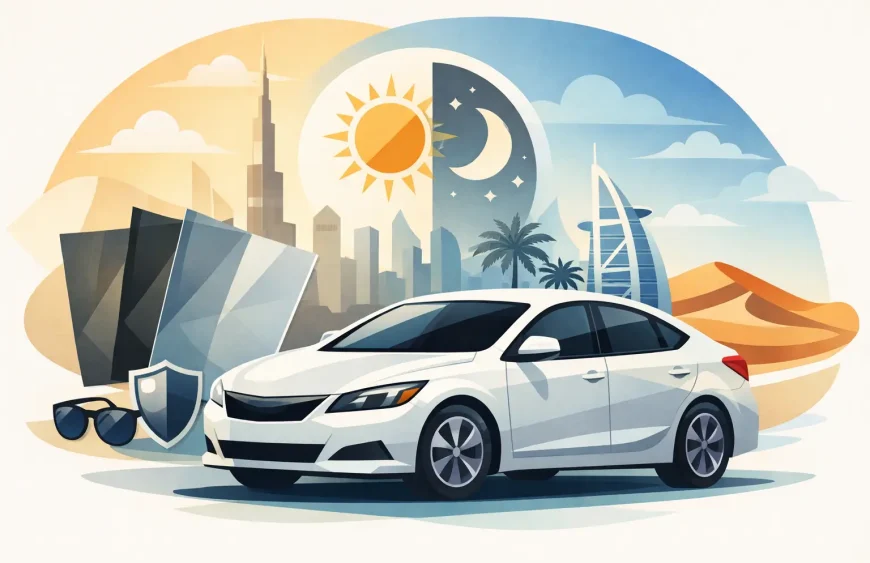
A car that has been parked outside in Dubai for an hour can feel like a different vehicle by the time you return to it. This vehicle tint guide is built for that reality: helping UAE drivers choose film based on cabin heat, glare, visibility, appearance, and legal requirements rather than simply choosing the darkest shade.
Good automotive tint is not one specification. A film that looks dark may provide modest heat control, while a light ceramic film can make a meaningful difference to solar comfort without changing the vehicle’s original look dramatically. The right choice depends on how you use the car, where it is parked, the glass already fitted, and what you want to improve.
Start With the Problem You Want Tint to Solve
Most drivers want tint for more than privacy. In the UAE, the usual priority is reducing the sharp solar load that builds up through side and rear glass. Others are trying to reduce glare during early-morning and late-afternoon driving, protect interiors from UV exposure, or make rear passengers more comfortable.
Clarifying the priority makes the recommendation more accurate. If your main concern is heat, focus on solar and infrared rejection rather than shade alone. If you regularly drive at night or use the vehicle in poorly lit parking areas, overly dark film may become a visibility trade-off. If the goal is a cleaner factory-style appearance, a lighter premium film may be more suitable than a dark budget option.
The vehicle itself matters too. A panoramic roof, large windshield area, light-colored interior, and frequent outdoor parking can all increase perceived heat. A compact sedan with privacy glass has different needs from a family SUV with a full glass roof or a luxury vehicle with sensitive electronics and complex rear-window defroster lines.
Vehicle Tint Guide: Understand UAE Rules First
Tinting should always be selected and installed with current UAE traffic requirements in mind. Regulations, permitted visible-light-transmission levels, exemptions, and enforcement practices can change, so it is sensible to confirm the applicable rules for your vehicle and emirate before installation.
Avoid treating a film percentage printed on a box as proof of compliance. The final appearance and light transmission depend on the combination of film and factory glass. Many vehicles already have shaded or privacy glass at the rear, meaning the installed result can be darker than the film’s stated figure suggests.
Front windshields require particular caution. They are critical to safe visibility, camera systems, and road legality. A reputable installer should explain what can and cannot be applied to the windshield and should not encourage a solution that compromises clear driving vision or creates a compliance issue.
Shade Is Not the Same as Heat Rejection
The most common tinting mistake is selecting film by darkness alone. Shade is generally described through visible light transmission, or VLT. A lower VLT means less visible light passes through the glass and the film combination, so it appears darker from both sides of the window.
That tells you about appearance and privacy, but it does not fully explain thermal performance. To assess heat control, ask about the film’s solar-performance figures, including total solar energy rejected, infrared rejection, and UV rejection. These figures must also be interpreted carefully because manufacturers may measure them differently.
What the Main Specifications Mean
Visible light transmission indicates how much visible light reaches the cabin. This affects daytime privacy and night visibility.
Total solar energy rejected, often called TSER, is a broader indicator of how much solar energy a film blocks or reflects. It is useful when comparing similar film types, although the glass used in testing can affect the result.
Infrared rejection refers to performance against infrared wavelengths associated with heat. It can be a valuable part of a film’s performance profile, but an impressive infrared percentage alone should not be treated as the whole story.
UV rejection matters for occupant exposure and can help reduce fading of leather, trim, and other interior materials. It is worthwhile, but it will not replace proper sunshades, covered parking, or air-conditioning during the hottest part of the day.
A live meter demonstration can help make comparisons more tangible. At Dr SunShield, solar-meter demonstrations are used to show relative transmission through sample glass and film. They are useful for comparing samples under the same conditions, not as a guarantee that a cabin will reach a specific temperature on a specific day.
Why Ceramic Film Is Often the Better Choice
Dyed film can provide a darker appearance at a lower price, but it is not always the best answer for UAE conditions. Its heat performance may be limited, and lower-grade products can be more likely to fade, discolor, or deteriorate over time.
Ceramic tint uses non-metallic ceramic particles to control solar energy while maintaining clearer optical performance. A quality ceramic film can deliver strong heat rejection at lighter shades, which is particularly useful for drivers who want comfort without making the cabin feel too dark.
Non-metallic construction also avoids the signal-interference concerns associated with some metallic films. That can matter for drivers relying on mobile signal, navigation, keyless entry, toll tags, and other connected features. Compatibility should still be assessed vehicle by vehicle, especially where glass contains antennas, sensors, or embedded heating elements.
Ceramic film costs more than basic tint because the material and performance are different. The practical question is whether that difference solves a problem you feel every day. For an occasionally used car kept in covered parking, a mid-level option may be entirely appropriate. For a daily-driven SUV parked outdoors, a higher-performing ceramic tier often makes more sense.
Choose a Tier Based on Use, Not Upselling
A clear tier structure makes comparisons easier. Dr SunShield’s ceramic options are organized as DS-ONE, DS-PRO, and DS-MAX, with increasing infrared heat-rejection performance and warranties of three, six, and ten years respectively.
DS-ONE can suit drivers who want a credible ceramic upgrade and balanced daily comfort. DS-PRO is often a sensible middle ground for regular UAE driving, where stronger heat management and a longer warranty are priorities. DS-MAX is aimed at owners who spend long periods on the road, park outdoors frequently, or simply want the strongest available thermal performance and longest coverage.
The most expensive film is not automatically the correct recommendation. A good consultation should explain the visible difference between tiers, compare the relevant performance data, and account for your budget, shade preference, and expected ownership period.
Installation Quality Protects the Result
Even premium film can disappoint if the preparation and fitting are rushed. Automotive glass needs to be cleaned carefully, including window edges, seals, and areas where dust can be drawn into the working space. The film then needs accurate cutting, careful positioning, and proper water removal to minimize contamination and allow clean adhesion.
Some vehicle windows present extra considerations. Frameless doors, tight window seals, curved rear glass, panoramic roofs, and integrated defrosters all require appropriate technique. Rear-window installation should be handled carefully to avoid damage to defroster lines. If an existing tint needs removal, the adhesive condition and glass features should be checked before promising a simple turnaround.
Mobile installation can be convenient, but conditions matter. A shaded, clean, sheltered space is much more suitable than an exposed, dusty parking area. A responsible installer should be prepared to advise when the location is not appropriate for a quality result.
What to Expect After Tint Installation
Freshly installed tint needs time to cure. Small water pockets or a lightly hazy appearance can occur during this period and usually settle as the moisture evaporates. The timeframe varies with film type, glass, weather, and exposure to sunlight.
Do not roll down treated windows until the installer’s recommended curing period has passed. For cleaning, use a soft microfiber cloth and a tint-safe cleaner. Avoid abrasive pads, harsh chemicals, and sharp tools around the film edges.
Before work begins, ask what the warranty covers, how long it lasts, and what exclusions apply. Coverage may differ for fading, peeling, bubbling, color change, workmanship, accidental damage, and glass-related issues. A documented warranty is more useful when its terms are explained plainly.
A well-chosen tint should make every drive more comfortable without creating new compromises. Start with the heat and visibility conditions you actually live with, compare films on more than darkness, and choose an installer willing to explain the limits as clearly as the benefits.