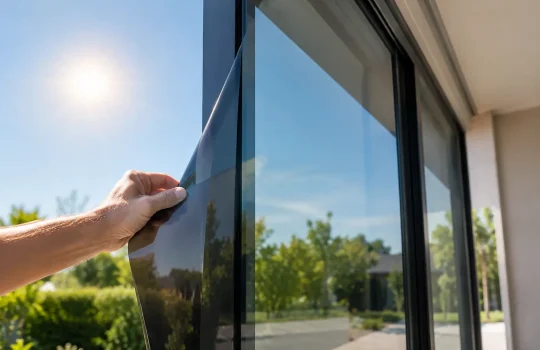
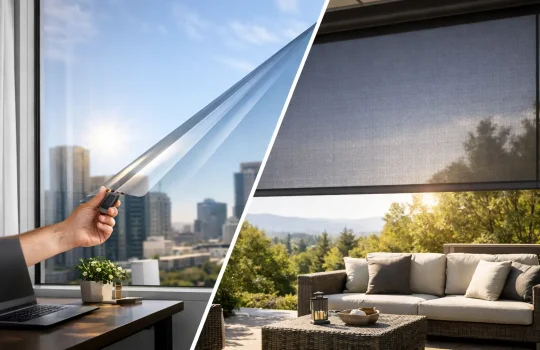
A west-facing meeting room can look impressive at 9 a.m. and become the least usable space in the office by 3 p.m. Screens wash out, people close blinds, and the air-conditioning works harder against a wall of sun-exposed glass. Office tint is often the practical answer, but only when the film, glass type, and workplace priorities have been assessed properly.
For offices in Dubai, Business Bay, DIFC, Downtown Dubai, Dubai Marina, JBR, and similar high-glass locations, the goal is rarely to make every window dark. Most businesses want better comfort and screen visibility while retaining the daylight, open views, and professional appearance that made the space attractive in the first place.
What Office Tint Should Solve
Window film is not one product with one result. A suitable office installation starts by defining the actual problem. Is the main complaint afternoon heat near perimeter desks? Is glare affecting monitors in a trading floor, reception, or boardroom? Are furnishings fading near the glass? Or does a ground-floor office need more daytime privacy?
Solar-control office film can reduce solar heat entering through glass, cut glare, and filter a large portion of UV exposure. That can make desks near windows more comfortable and reduce the need to keep blinds closed for much of the day. It can also help protect carpets, furniture, artwork, and display materials from prolonged sun exposure.
Those benefits have trade-offs. A darker or more reflective film may provide stronger glare reduction or privacy, yet it can change the building’s exterior appearance and reduce visible light. A light, high-performing film may preserve a brighter interior, but it may not provide the one-way daytime privacy some clients expect. The right choice depends on the room, orientation, use of the glass, and rules set by the landlord or building management.
Start With the Glass, Not the Film Sample
A film sample held against a window is useful for judging appearance. It is not enough to confirm compatibility or predict the finished result. Before recommending a film, the installer should identify the existing glazing where possible: single-pane, insulated glass unit, laminated glass, tempered glass, or a specialist coated unit.
This matters because glass absorbs and releases heat differently. Adding film can change thermal stress across a pane, particularly where there are partial shadows, existing defects, dark frames, or complex glazing configurations. Certain glass-and-film combinations may not be appropriate. A responsible recommendation sometimes means suggesting a lighter film, limiting the installation to selected elevations, or advising against film on particular panes.
Office towers add further practical questions. Can installers access the internal glass safely? Are there restricted work hours, loading requirements, lift bookings, or permits? Does the property manager require approval of the film’s color, reflectivity, or technical data? A straightforward office tint project can become delayed when these details are left until installation day.
Heat Rejection, Glare, UV, and Privacy Are Different Jobs
It is easy to assume that a darker film always means a cooler office. That is not necessarily true. Film technology, construction, and infrared performance matter. A relatively light solar-control film can offer meaningful heat reduction while keeping the space bright. Conversely, a darker decorative or privacy film may change the view without delivering the heat control a sun-facing office needs.
For screen-heavy workplaces, glare control deserves its own discussion. Direct sun and reflected light can make monitors uncomfortable even when the room temperature feels acceptable. In these spaces, the best result may combine a carefully selected window film with desk positioning, adjustable blinds, or changes to monitor angle. Film reduces the solar load across the glass, but it cannot eliminate every reflection from glossy surfaces or neighboring buildings.
UV filtering is another reason offices choose film. It is particularly relevant in reception areas, showrooms, executive offices, and spaces with premium flooring or furniture near windows. Film helps reduce UV exposure, but fading is also affected by visible light, heat, material quality, and the length of exposure. It should be treated as one layer of protection, not a guarantee that furnishings will never change color.
Privacy requires equally clear expectations. Reflective solar film can create good daytime privacy when the exterior side is brighter than the interior. At night, that effect reverses if the office is illuminated and it is dark outside. For meeting rooms, internal partitions, clinics, or areas requiring dependable privacy at any hour, frosted film or switchable Smart Film may be more suitable than reflective solar tint.
Choosing an Office Tint by Room Use
A single office may need more than one film solution. The south- or west-facing façade can have a different solar problem from a shaded internal partition. Applying the same film everywhere simply for consistency is sometimes sensible, but it should not be automatic.
Reception glazing often needs a clean, welcoming appearance with modest glare control. Open-plan workspaces generally benefit from a light solar-control film that maintains daylight and reduces monitor discomfort. Boardrooms may need stronger glare reduction for presentations, along with privacy for meetings. Ground-floor windows can call for frosted or patterned film where visibility through the glass is the concern.
For offices with glazed meeting room partitions, switchable Smart Film can be worth considering when privacy must change on demand. In its clear state, it supports an open, modern layout. When powered to privacy mode, it obscures the view through the glass. It is a more specialized solution than standard tint and requires suitable electrical planning, so it should be assessed early in a fit-out or renovation.
Safety film is a separate category again. It is designed to help retain broken fragments if glass is impacted or shattered. It does not turn ordinary glass into a security system, and its effectiveness depends on the glass, film specification, attachment method, and installation details. For offices near active public areas or where glass safety is a defined concern, it should be specified around the risk rather than added as an afterthought.
What a Proper Site Assessment Looks Like
An installer-led consultation should be specific. The useful questions are practical: which rooms become uncomfortable, at what times, on which floors, and during which seasons? Are staff closing blinds daily? Are tenants concerned about external appearance? Is the office occupied during installation? Are there old stickers, silicone residue, damaged seals, or access constraints around the glazing?
At Dr SunShield, solar-control recommendations are made around those conditions rather than a default “best” film. Where appropriate, a live solar-meter demonstration can compare sample performance and show how different films affect measured solar transmission. It is valuable evidence, but it is not a promise of an exact room-temperature reduction. Actual results vary with glass type, façade direction, air-conditioning, blinds, room size, and how the space is used.
A clear quotation should identify the film type, covered areas, installation scope, expected appearance, warranty terms, and any exclusions. If a film carries a manufacturer-backed warranty, ask what it covers and whether the glass condition or installation environment affects eligibility. Transparency matters most when a project involves a full façade, a premium office interior, or coordination with a building manager.
Installation Details That Affect the Finish
The quality of office film is only part of the result. Surface preparation determines whether the finished glass looks clean and performs as intended. Installers need to remove dust, residue, adhesive, and contaminants before applying the film. They also need sufficient working space to handle the material without damaging adjacent finishes.
During installation, some moisture remains beneath the film and curing time is normal. Minor haziness or small water pockets can be visible initially, especially with thicker films or in cooler, air-conditioned rooms. These typically reduce as the film cures. The team should provide aftercare guidance, including when the glass can be cleaned and which cleaning materials to avoid.
For occupied offices, scheduling is part of the service. Work may be planned by zone, outside peak hours, or around boardroom availability to limit disruption. Mobile installation can be convenient, but access, parking, building permissions, and suitable on-site conditions still need confirmation before a date is fixed.
A Better Question Than “What Is Your Darkest Film?”
The most useful question is: what must this glass do better? If the answer is cooler workstations and less screen glare, a light high-performance solar film may be the best fit. If the answer is all-day privacy, the recommendation may be frosted or switchable film. If the concern is fragment retention after breakage, safety film requires its own specification.
Good office tint should make the workplace more usable without creating a new problem in the process. Before choosing, stand in the affected room at the time the sun is strongest, look at the glass from both sides, and assess the practical conditions around it. That is usually where the right recommendation begins.