A west-facing room can look exceptional on a floor plan and become difficult to use by 3 p.m. Solar glazing is the broad term for glass systems designed to manage sunlight before it turns into heat, glare, fading, or uncomfortable visibility. For UAE homes, villas, offices, and marine spaces, the right answer is rarely just “darker glass.” It is a considered balance between solar control, daylight, appearance, privacy, and the type of glass already installed.
What solar glazing actually means
Solar glazing may refer to purpose-made solar-control glass, insulated glass units with specialist coatings, laminated glass, or a high-performance window film installed on existing glazing. All aim to reduce the effect of solar radiation, but they work differently and suit different stages of a project.
In a new build or full façade replacement, solar-control glass can be specified as part of the glazing package. Many products use coatings that selectively reduce solar energy while retaining useful daylight. Insulated glass units can also improve thermal performance by combining panes with a sealed air or gas-filled cavity.
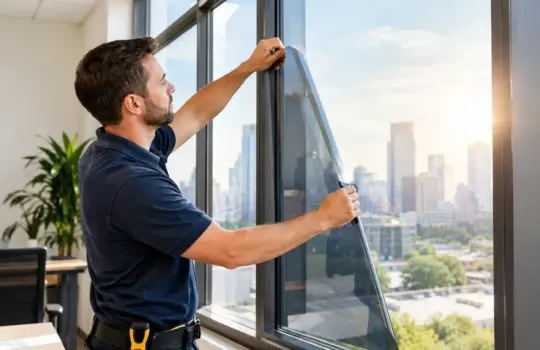
For an occupied villa, office, retail unit, or yacht, replacing glass is often disruptive and expensive. Professionally installed solar-control film is usually the more practical retrofit option. It can improve comfort and reduce glare without removing frames, rebuilding finishes, or closing a space for an extended period.
The category matters less than the outcome. A room that is hot but already dark needs a different solution from an office with strong screen glare, or a bedroom where daytime privacy is the main concern.
The performance terms worth understanding
Glazing specifications can become technical quickly. A few measures provide a useful starting point, provided they are read together rather than in isolation.
Visible light transmission, often called VLT, describes how much visible light passes through the glass or glass-and-film combination. A lower VLT usually creates a darker appearance and can reduce glare, but it may also change how a room feels after sunset or on overcast days.
Solar heat gain coefficient, or SHGC, is a measure of how much solar heat passes through a glazing system. Lower values generally mean less solar heat entering the space. Total solar energy rejected, commonly shown as TSER, expresses the share of solar energy rejected by the combined glass and film system. These figures can be useful, but results depend on the existing glass, the installation, and the testing method behind the claim.
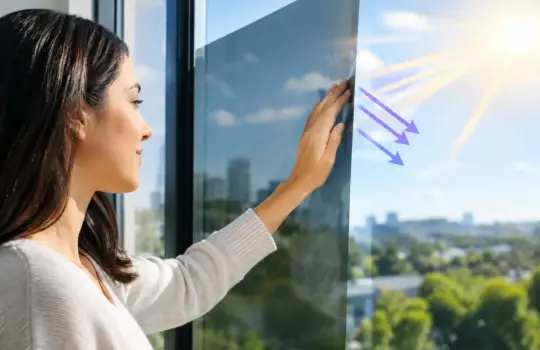
Ultraviolet rejection is also relevant where flooring, artwork, fabrics, and furnishings receive direct sun. Quality solar films can reduce a very high proportion of UV transmission. That helps protect interiors, though it cannot stop every form of fading. Visible light, heat, material quality, and the age of a finish also play a part.
Infrared rejection is often advertised heavily. It can be a meaningful feature, especially with ceramic film, but it should not be treated as the whole story. A product can reject a strong portion of infrared energy in a particular range and still deliver a result that feels different from another product once installed on real glass. Overall solar performance, visible light, and the customer’s actual exposure matter more than one headline number.
Why solar glazing choices differ across a property
A single film throughout a villa is not always the best specification. South- and west-facing elevations typically receive the harshest afternoon exposure, while a shaded side may need only glare control or privacy. Floor-to-ceiling glass in a living area may call for a light, neutral ceramic film that preserves the view. A media room could accept a lower light transmission if reflection on screens is the recurring problem.
Offices have their own priorities. Teams near perimeter windows may be dealing with monitor glare, hot desks, and uneven temperatures even when the central air conditioning is operating normally. A film that makes the glass too dark can create a different issue: staff switch on lights earlier, or the space feels closed in. The better choice is often the lightest film that delivers a noticeable improvement in glare and solar load.
For street-facing spaces, privacy needs a careful conversation. Reflective or darker solar film can limit daytime views into a property when the exterior is brighter than the interior. At night, that relationship reverses. If lights are on inside, solar film alone does not provide reliable nighttime privacy. Curtains, blinds, or switchable Smart Film may be the more suitable complement where privacy is non-negotiable.
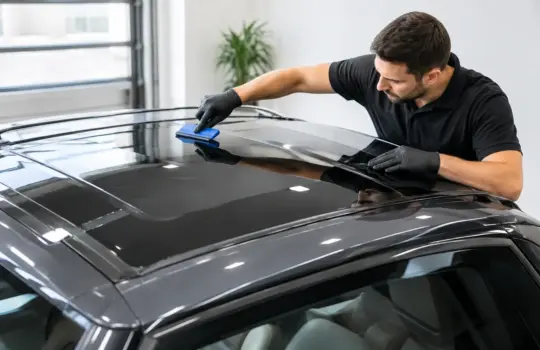
Yacht glazing requires another layer of assessment. Curved panels, marine exposure, edge condition, viewing requirements, and access can all affect suitability. The desired result may be heat and glare reduction without compromising the clarity needed for navigation or the appearance of premium glass.
Solar-control glass versus retrofit window film
Solar-control glass is a strong long-term choice when glazing is being designed, replaced, or upgraded for broader façade performance. It can be integrated into the architectural specification and paired with insulation, acoustic requirements, safety glazing, and frame design. However, it is not a small intervention. Replacement brings cost, lead times, access requirements, and the risk of disruption to finished interiors.
Window film gives existing glass a second chance. It is particularly useful when the glass is structurally sound but performs poorly under direct sun. A quality ceramic film can remain relatively clear while improving heat rejection and reducing glare. Other films prioritize daytime privacy, a more reflective exterior look, or a deeper tint.
Film is not a substitute for every glazing issue. If there are failed seals in insulated units, damaged panes, water ingress, serious frame problems, or a requirement for a specific fire, acoustic, or structural rating, those conditions need separate attention. Solar film can improve solar behavior, but it does not repair failed glazing.
Glass compatibility is not a box to skip
Before applying any solar-control film, an installer should identify the glass type, pane size, orientation, existing coatings, and condition. This is not unnecessary caution. Some films absorb a portion of solar energy, which can increase heat stress in glass. Large panes, partial shading, dark frames, and certain glass types can alter that risk.
Tempered, laminated, annealed, and insulated glass units each need to be approached differently. Existing low-E coatings and older films can also affect the recommended product. A responsible assessment may lead to a lighter film, a particular film construction, or a recommendation not to proceed until the glass is better understood.
This is one reason an installation-led consultation is more useful than choosing from a color chart online. The best film on paper is not automatically the best film for a specific pane of glass.
What a sensible solar glazing consultation should cover
A proper recommendation begins with the problem, not the most expensive tier. The installer should ask which rooms are uncomfortable, when the problem occurs, whether the issue is heat or glare, and how much natural light the customer wants to retain. Appearance matters too. Some owners want a nearly invisible finish, while others prefer a more private or reflective façade.
At Dr SunShield, the assessment also considers access, glass condition, installation environment, and the practicality of mobile work where eligible. For larger homes, offices, and specialty glass, measuring the glazing and reviewing the exposure often prevents disappointment later.
A live solar-meter demonstration can be useful when comparing films, particularly for showing transmission differences through sample material. It is a practical visual aid, not a promise that a room will cool by a specific number of degrees. Room temperature is affected by glass area, orientation, air conditioning, shading, insulation, occupancy, and how often doors open.
For customers comparing ceramic options, it is reasonable to ask how each tier differs in solar performance, appearance, and warranty. A clear tier structure makes it easier to pay for the benefit you need rather than simply selecting the darkest or highest-priced option. Warranty terms should be explained in plain language, including what is covered and the conditions that apply.
Installation quality affects the finished result
Even a well-chosen film can disappoint if installation is rushed. Glass needs careful cleaning and preparation so that dust, adhesive residue, and surface contamination do not compromise the finish. The work area should be managed realistically, especially in occupied homes and active offices where furniture, access, and drying conditions affect the schedule.
After installation, film needs time to cure. Mild haze or small water pockets can be normal during this period, depending on the product and conditions. Scrubbing the glass immediately or applying harsh chemicals can damage the finish before it has settled. Clear aftercare guidance matters as much as the installation itself.
The most useful solar glazing decision is often the least dramatic one: a compatible, neutral-looking solution that makes the room comfortable enough to use without sacrificing the light and view that made the glass valuable in the first place.