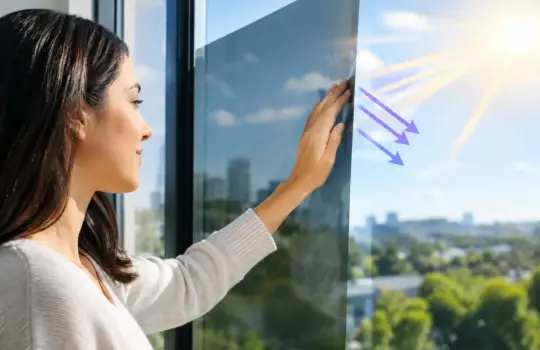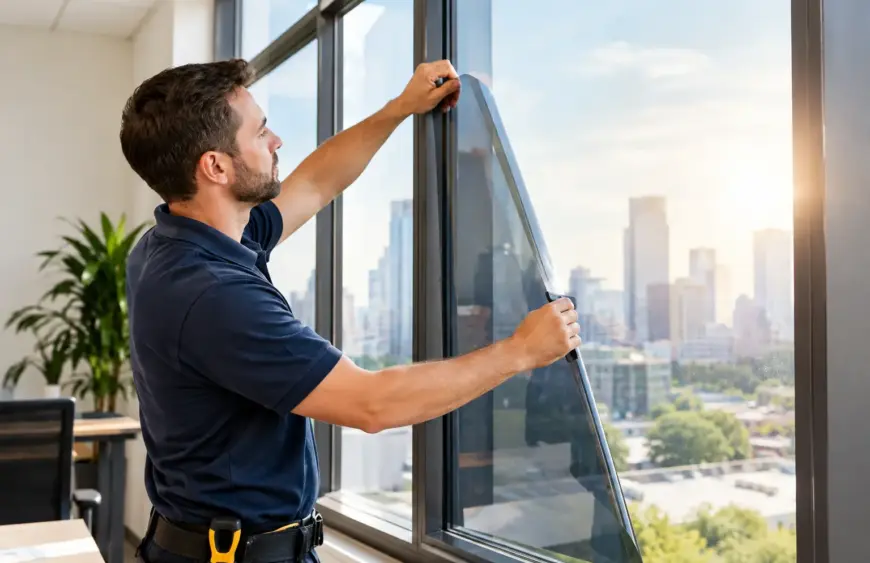
A west-facing conference room can look impressive at 9 a.m. and become the least usable room in the office by 3 p.m. Screens wash out, people lower blinds, and the air-conditioning works harder against a wall of hot glass. Knowing how to retrofit office windows starts with defining that actual problem. The right solution may be solar-control film, privacy film, safety film, or a more involved glazing upgrade. It is rarely a matter of choosing the darkest film available.
For many occupied offices, window film is the most practical retrofit because it can improve comfort without replacing the existing frames or disrupting the building envelope. But it needs to be specified for the glass, exposure, and workplace use. A film that looks good in a sample can be the wrong choice if it creates unwanted reflectivity, makes rooms too dark, or is incompatible with the existing glazing.
Start with the office problem, not the product
Before comparing film grades, walk through the office at different times of day. Heat and glare are often localized. A row of desks near the facade may be uncomfortable while the rest of the floor is fine. A receptionist may need daytime privacy, while an executive office needs clear views and natural light.
The most useful questions are straightforward: Which rooms overheat? When does glare affect screens? Are employees closing blinds during working hours? Is fading a concern for furniture, finishes, or merchandise? Does the office need more daytime privacy from neighboring buildings? Is there a safety requirement for vulnerable glass or public-facing areas?
These answers shape the retrofit. A low-reflective solar-control film may be suitable for a client-facing office that wants to preserve a neutral exterior appearance. A more reflective option may make sense for a heavily sun-exposed facade where heat reduction is the primary concern. For meeting rooms, switchable Smart Film can provide privacy on demand, although it involves electrical planning and serves a different purpose from solar control.
Assess the existing glass before choosing a film
Every window retrofit should begin with a glazing assessment. The installer needs to identify whether the office has single-pane, insulated, tempered, laminated, coated, tinted, or double-glazed units. The age and condition of seals, visible damage, previous films, and accessibility also matter.
This step is not paperwork. Applying film changes how glass absorbs and releases solar energy. Some glass-and-film combinations can carry a higher thermal-stress risk, particularly where there are large temperature differences across the pane, edge damage, deep external shading, or certain coated glass types. A professional recommendation accounts for those factors instead of treating all windows as interchangeable.
For leased offices, there is another check: landlord and building-management approval. Exterior appearance rules, facade warranties, access restrictions, and permitted working hours can affect the project. In towers across areas such as DIFC, Business Bay, and Downtown Dubai, the installation method may be simple, but scheduling, access, and building documentation often determine how smoothly the job runs.
Measure the performance that matters
Film specifications can be useful, but only when they are read in context. Visible light transmission indicates how much visible light passes through the glass and film. Lower numbers generally mean a darker result. Solar heat rejection and infrared rejection can help compare products, but they do not mean every room will feel identical after installation.
The office layout still affects results. Internal blinds, server equipment, ceiling height, air-conditioning capacity, and the angle of direct sun all influence comfort. A live solar-meter demonstration can show relative transmission through a film sample, which is helpful when comparing options. It should not be presented as a promise of a specific indoor temperature reduction.
Choose the right retrofit approach for each zone
A single film across every window is sometimes appropriate, but not always. Offices often benefit from a zone-by-zone approach, especially when one elevation receives strong afternoon sun and another faces a neighboring building.
Solar-control film for heat, glare, and UV exposure
Solar-control window film is usually the first option for offices dealing with hot glass, uncomfortable desks, and screen glare. It can reduce the amount of solar energy entering through the glass while retaining a useful level of daylight.
The trade-off is appearance and light. Higher heat rejection can involve a darker tint or more exterior reflectivity, depending on the product. That may be acceptable in a back-office area but less suitable for a design studio, showroom, or office with strict facade rules. The best choice is the one that improves comfort without making the workplace feel enclosed.
UV filtering is another valuable benefit, particularly near windows with carpets, upholstery, wood finishes, artwork, or display materials. It helps reduce UV exposure through the glass, though no film should be treated as a complete solution for every type of fading. Visible light and heat also contribute to material degradation over time.
Privacy film where visibility is the issue
Privacy is different from solar control. Frosted, patterned, or opaque film is useful for glass partitions, street-level offices, clinic rooms, and meeting spaces where visibility needs to be reduced. It can maintain light transfer while obscuring direct views.
For exterior windows, daytime privacy film needs careful explanation. Reflective film can make it harder to see into a brighter office from outside during the day, but the effect changes at night when interior lights are brighter. If permanent privacy is required after dark, consider blinds, curtains, frosted film, or a switchable privacy solution instead of relying on reflective film alone.
Safety film for glass retention
Safety and explosion-protection film has a separate role. It is designed to help hold broken glass fragments together following impact or breakage. It may be appropriate for certain ground-floor areas, entrances, partitions, or security-conscious commercial settings.
It does not make ordinary glass unbreakable, and its performance depends on the glass, film construction, attachment method, and application. Where a specific security or blast-mitigation standard is required, the system should be assessed against that requirement rather than selected based on a general description.
Plan installation around the working office
A good office retrofit should not become a disruptive construction project. Before installation, confirm which rooms will be treated, who can authorize access, where furniture can be moved, and whether work must happen outside business hours. Large panes, high-level glazing, fixed furniture, and restricted parking can all affect timing.
The preparation stage matters as much as the film itself. Glass must be cleaned thoroughly, and frames, seals, and edges should be inspected before application. Dust, old adhesive, silicone contamination, and damaged seals can affect the final finish. Film is then installed using a controlled wet-application method and carefully squeegeed into place.
After installation, the film needs time to cure. Some temporary haze, small water pockets, or a slightly mottled appearance can occur while moisture evaporates. The curing period varies with film type, glass, weather, and indoor conditions. Staff should avoid touching edges or cleaning the film until the installer’s aftercare guidance says it is ready.
Compare proposals beyond the headline heat-rejection number
When reviewing quotes, ask what film is being specified, why it suits the glass, and what the finished appearance will be. Confirm the visible-light level, whether the product is suited to the existing glazing, the warranty duration, and whether labor is included. A clear proposal should also identify exclusions, such as repairs to failed window seals or access equipment required by the building.
The cheapest film is not automatically poor, and the highest-tier film is not automatically necessary. A reception area with moderate morning sun may need a different solution than a top-floor office with prolonged western exposure. Dr SunShield approaches this by matching the recommendation to the heat, glare, privacy, appearance, and access conditions of the actual site, rather than defaulting every office to the same tier.
For larger projects, it can be sensible to install a small sample area first. This gives decision-makers a chance to see daytime appearance, screen visibility, and reflected light before committing across an entire facade.
Maintain the result and review what changed
Once cured, most professionally installed films can be cleaned with a soft cloth or sponge, clean water, and a mild non-abrasive cleaner. Avoid blades, rough pads, and harsh chemicals that can scratch the film or lift edges. Building cleaning teams should be told that the glass has been filmed so the correct method is used.
Then revisit the original complaints. Are blinds staying open more often? Are the affected desks more comfortable in the afternoon? Can staff see screens without constantly repositioning? Those practical outcomes matter more than a specification sheet alone.
A well-planned window retrofit should make an office easier to work in without calling attention to itself. Start with the rooms people avoid at the hottest or brightest point of the day, assess the glass properly, and choose the film or glazing solution that solves that specific problem.