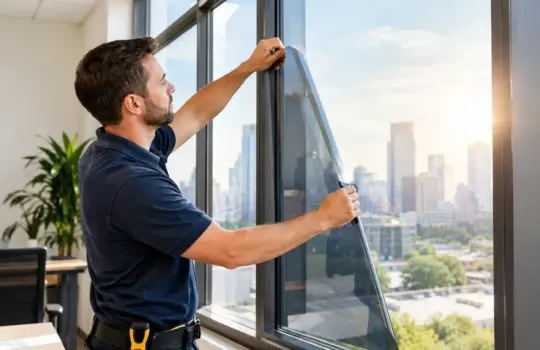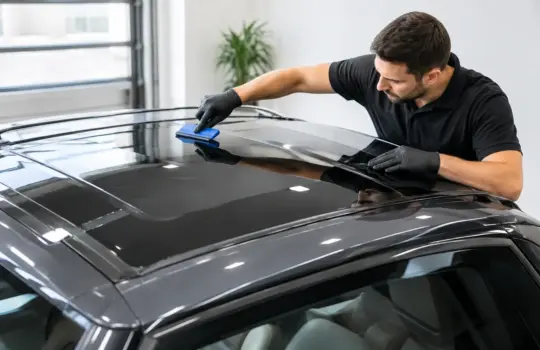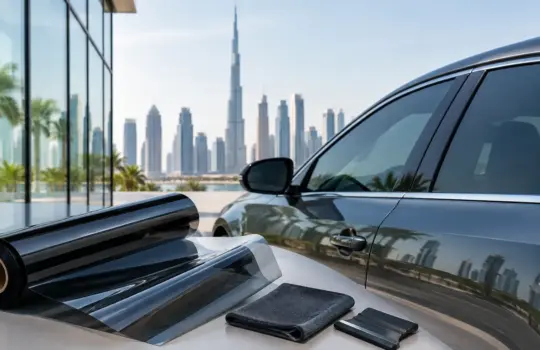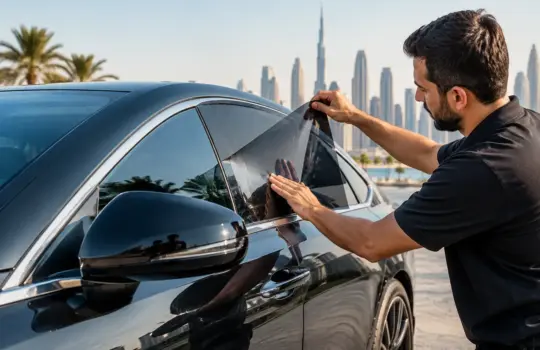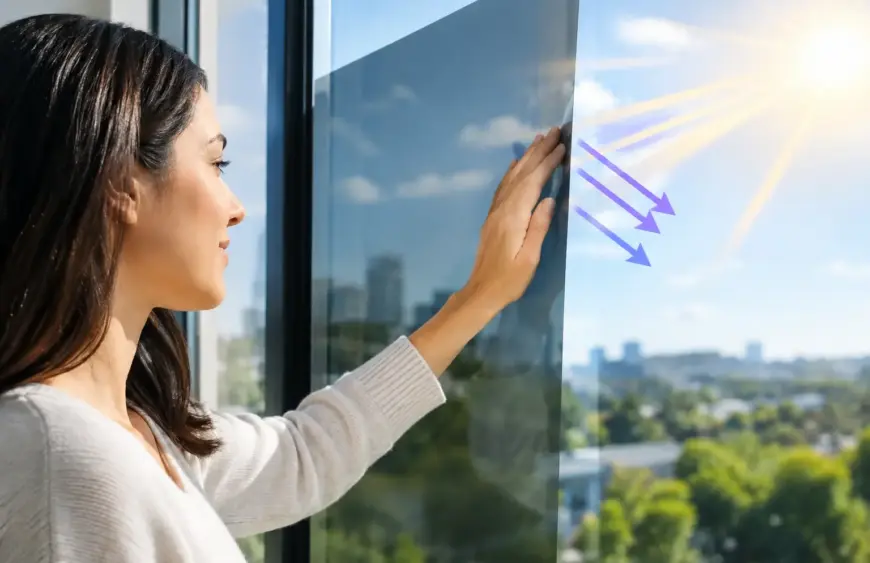
A sunny room can look harmless while quietly fading a rug beside the window, bleaching artwork, and exposing the people nearest the glass to UVA. That is why homeowners, drivers, and property managers often ask: can solar film block UV? Yes – a quality solar-control film can reject up to 99% of UV radiation, depending on the product and how that figure is measured.
The useful question is not simply whether a film blocks UV. It is whether the selected film provides verified UV protection while also solving the real problem: harsh heat, glare on screens, fading interiors, lack of daytime privacy, or an uncomfortable driving experience. Those are related issues, but they are not the same specification.
Can Solar Film Block UV at Useful Levels?
Most professionally specified window films are designed to filter nearly all ultraviolet radiation that reaches the glass. Many quality films state UV rejection of 99% or higher across the UV spectrum. Applied correctly to the interior surface of suitable glass, the film creates an additional protective layer between the sunlight and your interior.
That matters in Dubai and across the UAE, where strong year-round sun can put constant pressure on exposed rooms, vehicle cabins, display areas, and yacht interiors. Leather, wood finishes, flooring, fabric, photographs, and merchandise near glazing can all show the effects of prolonged exposure.
Still, 99% UV rejection should be understood accurately. It does not mean sunlight has been eliminated, and it does not make a window a substitute for sunscreen outdoors. Visible light and heat can still enter depending on the film selected. Some fading also comes from visible light, heat, humidity, and the material itself, not UV alone. A pale fabric in direct sun may last far longer with film, but it is not invulnerable.
UV Protection Is Different From Heat Rejection
A common misunderstanding is that the darkest film must offer the best UV protection. In practice, UV rejection and darkness are separate properties. A clear or lightly tinted high-quality film may provide excellent UV filtering, while a darker, lower-grade film may offer little useful heat control or carry unclear performance data.
This distinction is especially relevant for villas and offices that want to preserve natural light. You may need strong UV protection and reduced glare without turning a bright living room or workspace noticeably dark. Ceramic and spectrally selective films are often considered for that balance because they can reduce solar load while maintaining a more open appearance.
Heat performance is usually discussed through measures such as infrared rejection and total solar energy rejection. These figures help explain why one film makes a sun-facing room or vehicle feel more comfortable than another. They do not replace the UV-rejection figure. When comparing options, ask to see each value separately rather than relying on a broad claim that a film is “heat proof.”
What Existing Glass Does – and Does Not – Filter
Standard window glass already blocks much of UVB, the wavelength most associated with sunburn. UVA is the more persistent concern behind ordinary glass because it can penetrate more readily and contributes to skin aging and fading damage over time.
That is why the window type matters. A modern laminated, coated, or insulated glass unit may already offer a degree of UV control. Older single-pane glass, clear shopfront glass, vehicle side windows, skylights, and large unprotected sliding doors can perform very differently. The film recommendation should begin with an assessment of the existing glazing, not an assumption based on the room alone.
For automotive applications, factory glass performance also varies by location. A windshield, side window, panoramic roof, and rear glass do not necessarily have the same construction or solar performance. The appropriate solution also has to account for local tint rules, driver visibility, electronic equipment, and the specific glass surface being filmed.
UV Film Helps Protect More Than Furnishings
UV reduction is often the first reason people call, particularly after noticing faded flooring or a damaged dashboard. But the day-to-day benefit can be broader.
For a home, the film can make a favorite window seat more pleasant and help protect furniture placement that would otherwise be limited by the sun. In an office, reduced glare and solar load can make desks near the façade more usable. In a retail space, it can help protect product displays without forcing the business to keep blinds closed all day. On a yacht, where sunlight reflects off the water and interior materials are often premium, glazing assessment becomes particularly important before any film is selected.
There is also a personal-comfort element. Reducing UVA through side windows and large glazed areas is sensible for people who spend long periods driving, working beside windows, or relaxing in a sun-exposed room. It is a layer of protection, not a medical claim and not a reason to ignore other sun-safety habits.
Choosing a Solar Film for UV Protection
The right film depends on what is behind the glass, what direction it faces, and what you are trying to preserve. A west-facing villa window with heat and glare problems needs a different conversation from a shaded office partition where the priority is fade reduction and daytime privacy.
A proper recommendation should consider the glass type, pane size, frame condition, access, interior finishes, and whether the glazing is single-pane, tempered, laminated, double-pane, or low-E. This is not unnecessary complexity. Some films can increase thermal stress on certain glass configurations, and compatibility should be checked before installation.
Appearance should be considered early as well. Reflective film can improve daytime privacy and solar control but changes the exterior look. Neutral films preserve a more natural view but may not deliver the same level of glare reduction as a darker option. A clear UV-focused film can be appropriate where the appearance must remain unchanged, although it will not produce the same heat-rejection result as a dedicated solar-control film.
For customers comparing performance tiers, the useful approach is to identify the main priority first. If the issue is fading, confirm UV rejection. If the issue is cabin or room heat, compare solar and infrared performance. If screens are difficult to see, evaluate visible light transmission and glare control. If privacy is the priority, discuss both daytime and nighttime visibility honestly: most daytime privacy films do not stop people seeing in when the interior is brighter than outside after dark.
How to Verify a UV Claim
A film should be chosen from documented specifications, not from a tint sample held against a sunny window. Ask for the manufacturer data sheet and look for the stated UV-rejection figure, visible light transmission, glare reduction, and solar-performance values. The test standard and wavelength range can affect how a figure is presented, so like-for-like comparisons matter.
A live solar-meter demonstration can be useful when comparing films side by side. It gives customers a practical view of how different samples affect transmitted light and heat-related readings. It is not, however, a complete prediction of how every room will feel at every hour of the year. Window orientation, exterior shading, air conditioning, glass construction, and the size of the glazing all influence the final result.
Installation quality matters, too. The glass must be cleaned and prepared carefully so the film can bond properly without contamination. Edges, seals, curved glass, existing damage, and access conditions deserve attention. A reputable installer will also explain curing time, cleaning guidance, and what the warranty covers rather than treating installation as a quick add-on.
When Solar Film May Not Be the Whole Answer
Solar film is highly effective for many glazed areas, but it is not always the complete answer. If a room overheats because of an uninsulated roof, gaps around doors, or a very large expanse of direct glazing, film may improve comfort significantly without removing the need for shading, curtains, or HVAC adjustments.
Likewise, severe fading may call for a layered approach. UV film, sensible furniture placement, lined window treatments, and protection for irreplaceable art or textiles work better together than any one measure. For safety concerns, such as retaining fragments after accidental breakage, a properly specified safety film is a separate product category and should not be assumed to come with ordinary solar film.
For vehicles, residential glass, commercial façades, and marine glazing, the best result comes from matching the film to the glass and the problem you actually have. Dr SunShield approaches that conversation from the installation side: assess the surface, review the priorities, compare the relevant performance figures, and recommend a suitable tier rather than assuming the darkest or most expensive film is automatically right.
If UV is your main concern, start with the documented UV-rejection rating. Then decide how much heat reduction, glare control, visibility, and privacy you want alongside it. That is how solar film becomes a practical long-term improvement, not just a darker piece of glass.