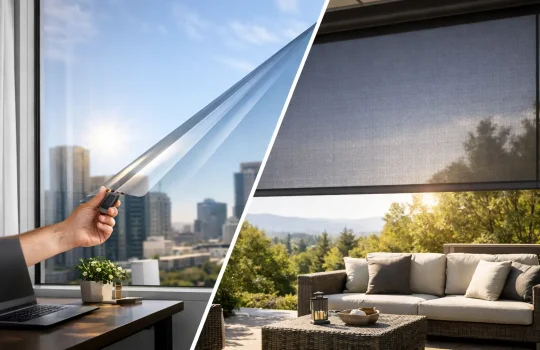
A vehicle cabin that feels hot within minutes of parking, a living room with sun-heavy seating, and an office where screens wash out by midmorning all have the same underlying issue: solar energy is passing through glass. Heat rejection is the term used to describe how effectively window film helps limit that energy before it turns into uncomfortable interior heat.
For UAE properties, vehicles, and yachts, the number matters. But it is not the only number that matters. A film with strong heat performance may be the right answer for a west-facing villa window, while a different shade or construction may better suit a windshield, a showroom façade, or yacht glazing. The useful question is not simply, “Which film rejects the most heat?” It is, “Which film solves the actual problem without creating a new one?”
What Heat Rejection Actually Measures
Solar heat comes through glass in more than one form. Some arrives as visible light, some as infrared energy, and some as ultraviolet radiation. Once that energy enters a cabin or room, it is absorbed by seats, flooring, furniture, dashboards, and interior finishes. Those surfaces then release heat back into the space.
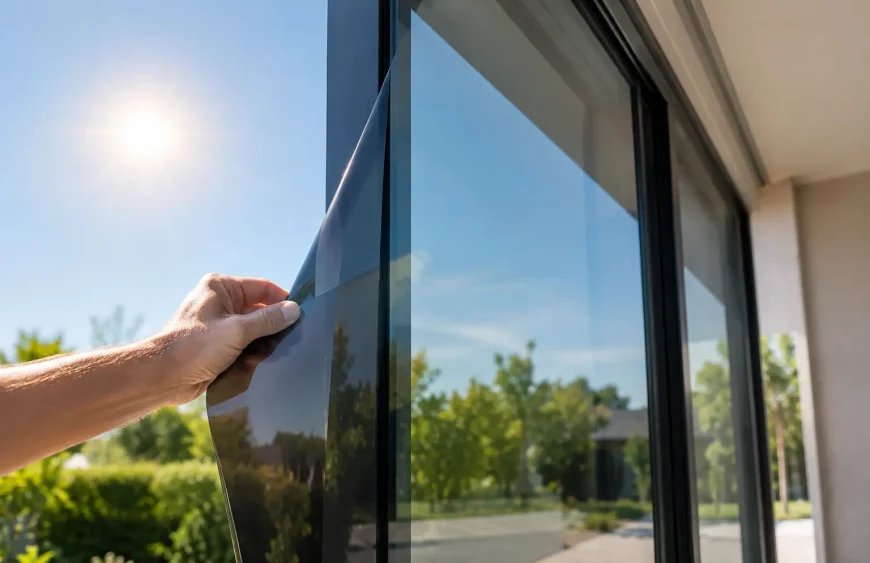
Window film reduces the amount of solar energy transmitted through the glass. Depending on the film, it can absorb or reflect part of that energy while still allowing useful natural light and outward visibility. This is why two films that look similarly clear can feel very different in direct sun.
The broadest figure is usually total solar energy rejected, often called TSER. It considers the overall solar load being kept out, including visible light, infrared, and ultraviolet portions of the spectrum. For comfort behind glass, TSER is generally more meaningful than an infrared figure on its own.
Infrared rejection still has value, particularly when comparing ceramic automotive films. Infrared energy is strongly associated with the radiant warmth occupants feel on their skin. However, a very high infrared rejection claim may apply only to a selected part of the infrared spectrum. It should not be treated as a direct substitute for total solar performance.
Why a High Percentage Does Not Tell the Whole Story
Heat rejection figures can sound straightforward until you compare different brands, shades, and test methods. A stated percentage is only useful when you know what it refers to and how it was measured.
A film may advertise high infrared heat rejection while having more moderate overall solar rejection. Another may have excellent total solar rejection but noticeably reduce visible light. Neither is automatically better. The right choice depends on whether your priority is cabin comfort, room cooling, glare reduction, privacy, daylight, or exterior appearance.
The glass itself also changes the result. A film specification is often measured on a standard type of clear glass. Your actual installation could involve factory automotive glass, double glazing, laminated safety glass, low-emissivity units, curved yacht glass, or a façade with an existing coating. The completed glass-and-film system is what matters, not a film figure viewed in isolation.
For residential and commercial glass, compatibility deserves careful attention. Certain films can increase thermal stress in some glazing configurations, especially where there is partial shade, edge damage, pre-existing stress, or particular coated units. A responsible recommendation starts with identifying the glass and its exposure, not with selecting the darkest available film.
Heat Rejection and Visible Light: Finding the Right Balance
Darkness is not the same as heat performance. Traditional dyed tint can make a cabin look darker and cut glare, but it may not provide the same solar control as a quality ceramic film. Ceramic construction allows many modern films to reject meaningful heat while remaining relatively light in appearance.
That distinction is valuable when a customer wants to preserve visibility. In a vehicle, a lighter ceramic tint may improve comfort without making the glass look heavily tinted. In a villa, a near-clear solar-control film can reduce solar load and UV exposure while keeping the room bright. For offices in Business Bay, DIFC, or Dubai Marina, the aim may be to reduce screen glare without giving the workspace a closed-in feel.
There is still a trade-off. Stronger solar-control performance often comes with a change in tint, reflectivity, or daylight transmission. A highly reflective film may be appropriate for a particular commercial façade but unsuitable for a home where the owner wants a natural view. Privacy-focused film may be useful by day, but it does not automatically provide privacy at night when interior lights are brighter than outside.
A consultation should put these priorities in order. If glare is the main complaint, visible light transmission and the direction of sunlight may matter most. If the room overheats in the afternoon, overall solar rejection and glass exposure become central. If fading of furnishings is a concern, UV reduction and the full solar load should be considered together.
Automotive Heat Rejection: Comfort Without Guesswork
In a car, heat rejection affects more than the first few minutes after opening the door. It can reduce the intensity of direct radiant heat while driving and help the air-conditioning system work against a lower solar load. It will not make a car parked in peak sun instantly cool, and no film eliminates the need for air conditioning. That is not a realistic promise in the UAE climate.
What it can do is make the cabin less punishing and more manageable. The difference is often most noticeable on large side windows, panoramic roofs, and rear glass, where sunlight has a broad path into the cabin.
At Dr SunShield, ceramic automotive film is offered in DS-ONE, DS-PRO, and DS-MAX tiers. The tiers are designed around escalating infrared heat rejection and include three-, six-, and ten-year warranties respectively. The best tier is not automatically the most expensive one. A driver who spends long hours on the road or regularly parks outdoors may value the higher level of heat performance and longer warranty. Someone focused on a modest improvement in glare and cabin comfort may be better served by a lower tier that meets the need.
Local tint regulations and safe visibility also need to be part of the conversation. Glass location, film shade, vehicle use, and legal requirements should be checked before installation. A comfortable cabin is not worth compromising practical night driving or creating an avoidable compliance issue.
Residential, Office, and Yacht Glass Need a Different Assessment
Buildings hold heat differently from vehicles. A room with floor-to-ceiling west-facing glass may gain solar heat for several hours each afternoon. An office can have a glare problem even when its air conditioning keeps the temperature acceptable. A villa may need protection for flooring, artwork, and upholstery as much as it needs cooler seating near the windows.
For these installations, the assessment should include window orientation, glass size, existing glazing type, interior use, access, and the look of the façade. A bedroom, kitchen, boardroom, retail display, and marine saloon will not necessarily need the same film.
Yacht glazing requires particular care because curved glass, marine exposure, visibility, and the construction of the glazing all influence film suitability. It is sensible to inspect the glass before recommending a product rather than assuming a standard architectural film will perform or adhere appropriately in every marine application.
Smart Film solves a different problem. It is primarily an on-demand privacy solution, shifting between clear and opaque states when powered. It may be part of a broader glass strategy, but customers should not confuse privacy switching with dedicated solar-control heat rejection. Safety film is also designed for a separate role: helping retain broken glass fragments after impact. One film can sometimes offer more than one benefit, but every benefit should be verified for the selected product.
How to Compare Film Performance Properly
When comparing options, ask for the figures that relate to your use case. For solar comfort, look at total solar energy rejected alongside visible light transmission. For glare, consider how much visible light is reduced. For interior protection, ask about UV performance. For an automotive product, review the stated infrared performance, but also ask how it sits within the film’s overall solar-control specification.
A live solar-meter demonstration can be useful because it lets you compare samples under the same conditions. Dr SunShield uses an EDTM SP2065 solar transmission meter where applicable to demonstrate relative transmission through film samples. It is practical evidence, not a promise that a small meter test can reproduce the temperature of your exact car, room, or yacht cabin. Real-world comfort is also affected by glass type, cabin or room size, air flow, insulation, air conditioning, sun angle, and how long the surface has been exposed.
The most reliable process is straightforward: identify the glass, describe when and where the heat or glare occurs, compare suitable samples, confirm compatibility, and choose a film with a clear warranty. Good surface preparation and careful installation matter just as much as the product specification. Dust, contamination, poor edge finishing, and rushed curing can undermine an otherwise excellent film.
A well-chosen film should feel like a practical improvement, not a compromise you notice every day. The right heat rejection level is the one that takes the pressure off the sun while preserving the visibility, appearance, and function you value in the glass.