
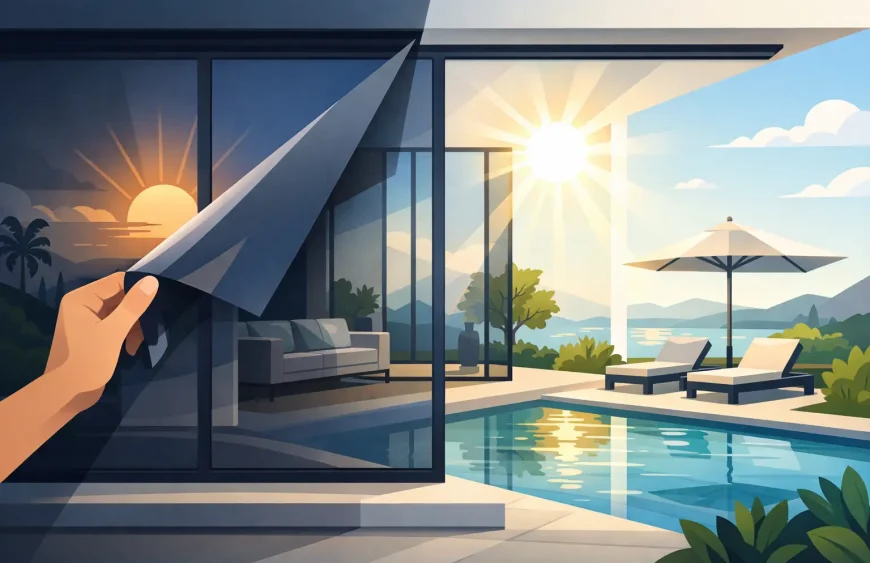
A west-facing villa living room can look perfect at 9 a.m. and become difficult to use by midafternoon. Floors warm up, television screens reflect the sun, and furniture near the glass receives daily UV exposure. Knowing how to tint villa windows starts with identifying that specific problem, not simply choosing the darkest film available.
For most UAE villas, the right window film should reduce solar heat and glare while preserving the daylight, views, and exterior appearance that made the room attractive in the first place. That balance changes from one elevation to another. A film that works well on a bright master-bedroom window may be unnecessary, or visually too dark, for shaded glass facing an internal garden.
Start With the Glass and the Room
Before selecting a tint, assess where the discomfort is coming from. Is the room hot only during a few afternoon hours? Is glare the main issue when working, watching television, or using a tablet? Are you looking for daytime privacy from a neighboring villa, or are fading rugs, artwork, and upholstery the larger concern?
The direction of the glass matters. West- and southwest-facing facades often receive the hardest afternoon sun in Dubai and across the UAE. Large sliding doors, double-height glazing, skylights, and glass corners can also create concentrated heat and glare. North-facing glass may need little more than UV protection or a subtle visual adjustment, while an exposed upper-floor bedroom may justify a higher-performing solar-control film.
The glass itself needs checking too. Single-pane, double-pane, tempered, laminated, coated, and specialty glass do not all respond the same way to film. Applying the wrong product to unsuitable glass can increase thermal stress and, in some circumstances, raise the risk of glass cracking. Existing window seals, edge condition, cracks, old film residue, and access around the frame should be reviewed before work is booked.
A professional assessment is not unnecessary formality. It is how you avoid paying for a film that looks right on a sample but does not suit your villa’s glazing or sun exposure.
How to Tint Villa Windows for the Actual Problem
Window tint is often used as a catch-all term, but different films solve different problems. Solar-control films are typically chosen for heat, glare, UV reduction, and a more comfortable interior. Privacy films can limit daytime visibility into certain rooms, but they do not create privacy at night when interior lights are on. Decorative films can soften visibility or add a frosted finish to bathrooms, entry sidelights, and internal partitions, though their heat-control benefit may be limited.
For a sun-exposed villa, ceramic solar film is frequently the most balanced option. It can reject a meaningful share of infrared heat while maintaining clearer glass and a more natural appearance than heavily reflective or very dark films. The performance level required depends on the window, not the size of the property.
For example, a family room with wide west-facing doors may need stronger heat and glare control. A kitchen that already has overhangs and blinds may only require a lighter film to reduce UV exposure. A street-facing ground-floor study may benefit from a privacy-oriented finish, while a sea-view villa on Palm Jumeirah may prioritize maintaining a clean, low-reflectivity view.
The most expensive film is not automatically the best recommendation. A good installer should explain what each tier changes in practical terms: infrared rejection, visible light transmission, glare reduction, appearance, and warranty coverage.
Do Not Choose by Darkness Alone
Darker glass can reduce visible light and glare, but darkness alone does not tell you how effectively a film manages solar heat. Two films with a similar appearance can perform very differently. One may make a room dimmer without delivering the level of infrared reduction you expected; another may remain relatively light while providing stronger heat control.
Ask to compare the film’s visible light transmission, total solar energy rejection, glare reduction, UV performance, and manufacturer-backed warranty. These figures should be read together, not used as isolated sales claims. Conditions such as glass type, installation quality, window size, orientation, curtains, and air-conditioning use will all affect how a room feels after installation.
A live solar-meter demonstration can help show differences between film grades under a controlled light source. It is useful for comparing transmission and heat-related performance, but it does not replicate every condition on your facade or guarantee an exact indoor temperature drop. That distinction matters.
Decide What You Can See From Inside and Outside
The appearance of villa window film deserves as much attention as the specification sheet. A highly reflective exterior film can offer strong solar performance, but it may change the character of a modern facade, especially on street-facing elevations or homes with architectural glass. Some communities, landlords, or property-management teams may also have appearance requirements.
Neutral ceramic films are often preferred where homeowners want a discreet result. They can reduce harsh light while keeping the facade closer to its original look. Reflective options may suit a particularly exposed facade, but they should be viewed on the actual glass and in daylight before a final decision.
Consider the interior effect as well. A cooler-toned or darker film can alter the way white walls, stone finishes, wood, and artwork appear. In rooms designed around daylight, a light neutral film may be the better compromise. In a media room, home office, or master suite with persistent glare, a deeper shade may be worth the reduction in daylight.
Prepare the Villa Before Installation
Professional window-film installation is usually straightforward, but villa access conditions affect the work. Clear furniture away from the glass where possible, remove delicate objects from window ledges, and make installers aware of alarms, window sensors, motorized blinds, fragile finishes, and any restricted-access areas.
Large panels, high stairwell glass, double-height windows, and exterior access can require additional planning. Some windows can be filmed from inside, while others may need safe external access or specialized equipment. Mobile installation may be suitable for many homes, but site conditions should be confirmed in advance rather than assumed.
The glass must be thoroughly cleaned and prepared. Dust, silicone residue, paint overspray, hard-water marks, and old adhesive can affect the final finish. During application, installers use a mounting solution and squeegee the film into place, so some moisture around frames is normal. A careful team protects nearby surfaces and works methodically, particularly around timber frames, wallpaper, electronics, and custom joinery.
Expect a Curing Period, Not an Instant Final Look
Freshly installed film can show temporary haze, small water pockets, or a slightly uneven appearance while moisture evaporates. This is part of the curing process. In the UAE’s climate, curing time varies with film type, weather, glass position, and ventilation, but larger panes and shaded areas may take longer to clear completely.
Do not use abrasive cleaners, blades, or rough cloths on newly filmed glass. Once the installer confirms the film has cured, clean it with a soft cloth and a mild, ammonia-free cleaner. Avoid attaching stickers, suction-mounted accessories, or adhesive strips directly to the film unless the product is known to be compatible.
If you notice edge lifting, persistent contamination, or a mark that does not improve after the stated curing period, raise it promptly. A clear warranty should explain what is covered, how long coverage lasts, and what conditions may affect it.
Know When Film Is Not the Only Answer
Window film is highly effective for many solar-control problems, but it cannot correct every cause of discomfort. If warm air enters through damaged seals, a room has inadequate air-conditioning capacity, or an unshaded skylight receives extreme direct sun, film may be one part of the solution rather than the whole solution.
External shading, curtains, blinds, improved seals, and air-conditioning adjustments may still have a role. Film is especially valuable because it works at the glass, before a large portion of solar energy enters the room, while preserving a much cleaner look than permanently closed curtains.
For rooms needing privacy on demand rather than fixed tinting, switchable smart film may be worth considering. It can change from clear to opaque with power, although it serves a different purpose from solar-control film and should be specified according to the glass, electrical access, and privacy requirement.
Get a Recommendation Based on Your Facade
The best way to tint villa windows is to compare options against your actual glass, not against a generic product photo. At Dr SunShield, the assessment focuses on sun exposure, glass compatibility, access, privacy expectations, desired appearance, and the level of heat and glare control each room genuinely needs.
Bring photos of the affected windows, note the time of day the problem is worst, and identify whether heat, glare, UV protection, or privacy is the priority. That gives you a far better starting point than asking for the darkest tint. The right film should let your villa remain bright, comfortable, and recognizably yours long after the afternoon sun reaches the glass.
Related Articles

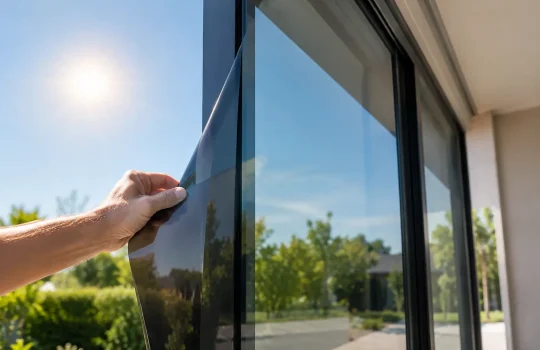


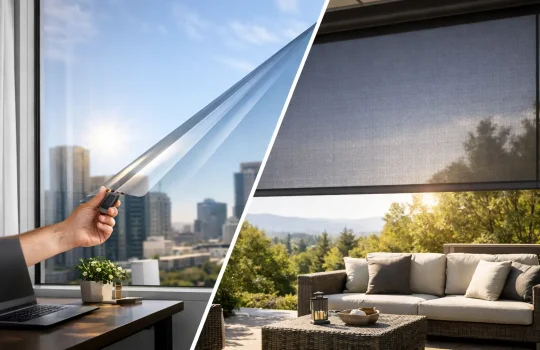
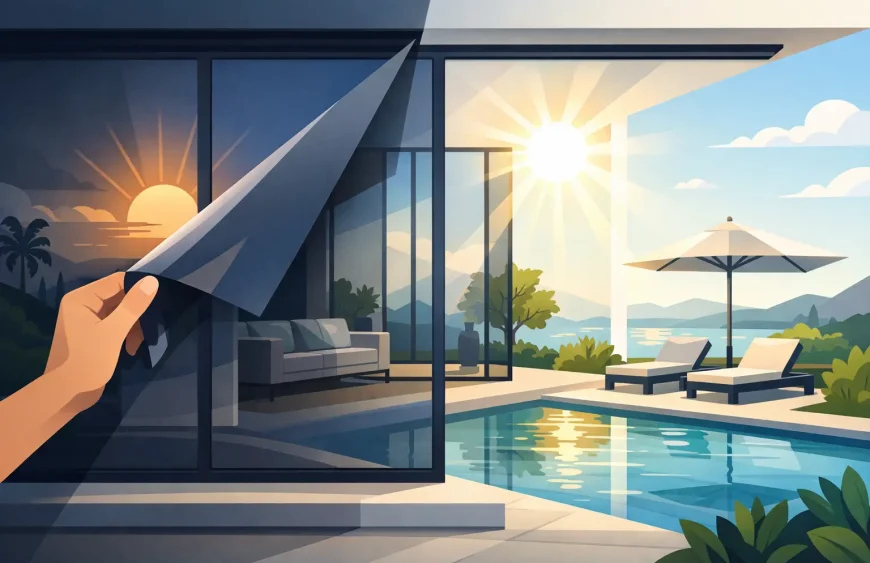
A west-facing villa living room can look perfect at 9 a.m. and become difficult to use by midafternoon. Floors warm up, television screens reflect the sun, and furniture near the glass receives daily UV exposure. Knowing how to tint villa windows starts with identifying that specific problem, not simply choosing the darkest film available.
For most UAE villas, the right window film should reduce solar heat and glare while preserving the daylight, views, and exterior appearance that made the room attractive in the first place. That balance changes from one elevation to another. A film that works well on a bright master-bedroom window may be unnecessary, or visually too dark, for shaded glass facing an internal garden.
Start With the Glass and the Room
Before selecting a tint, assess where the discomfort is coming from. Is the room hot only during a few afternoon hours? Is glare the main issue when working, watching television, or using a tablet? Are you looking for daytime privacy from a neighboring villa, or are fading rugs, artwork, and upholstery the larger concern?
The direction of the glass matters. West- and southwest-facing facades often receive the hardest afternoon sun in Dubai and across the UAE. Large sliding doors, double-height glazing, skylights, and glass corners can also create concentrated heat and glare. North-facing glass may need little more than UV protection or a subtle visual adjustment, while an exposed upper-floor bedroom may justify a higher-performing solar-control film.
The glass itself needs checking too. Single-pane, double-pane, tempered, laminated, coated, and specialty glass do not all respond the same way to film. Applying the wrong product to unsuitable glass can increase thermal stress and, in some circumstances, raise the risk of glass cracking. Existing window seals, edge condition, cracks, old film residue, and access around the frame should be reviewed before work is booked.
A professional assessment is not unnecessary formality. It is how you avoid paying for a film that looks right on a sample but does not suit your villa’s glazing or sun exposure.
How to Tint Villa Windows for the Actual Problem
Window tint is often used as a catch-all term, but different films solve different problems. Solar-control films are typically chosen for heat, glare, UV reduction, and a more comfortable interior. Privacy films can limit daytime visibility into certain rooms, but they do not create privacy at night when interior lights are on. Decorative films can soften visibility or add a frosted finish to bathrooms, entry sidelights, and internal partitions, though their heat-control benefit may be limited.
For a sun-exposed villa, ceramic solar film is frequently the most balanced option. It can reject a meaningful share of infrared heat while maintaining clearer glass and a more natural appearance than heavily reflective or very dark films. The performance level required depends on the window, not the size of the property.
For example, a family room with wide west-facing doors may need stronger heat and glare control. A kitchen that already has overhangs and blinds may only require a lighter film to reduce UV exposure. A street-facing ground-floor study may benefit from a privacy-oriented finish, while a sea-view villa on Palm Jumeirah may prioritize maintaining a clean, low-reflectivity view.
The most expensive film is not automatically the best recommendation. A good installer should explain what each tier changes in practical terms: infrared rejection, visible light transmission, glare reduction, appearance, and warranty coverage.
Do Not Choose by Darkness Alone
Darker glass can reduce visible light and glare, but darkness alone does not tell you how effectively a film manages solar heat. Two films with a similar appearance can perform very differently. One may make a room dimmer without delivering the level of infrared reduction you expected; another may remain relatively light while providing stronger heat control.
Ask to compare the film’s visible light transmission, total solar energy rejection, glare reduction, UV performance, and manufacturer-backed warranty. These figures should be read together, not used as isolated sales claims. Conditions such as glass type, installation quality, window size, orientation, curtains, and air-conditioning use will all affect how a room feels after installation.
A live solar-meter demonstration can help show differences between film grades under a controlled light source. It is useful for comparing transmission and heat-related performance, but it does not replicate every condition on your facade or guarantee an exact indoor temperature drop. That distinction matters.
Decide What You Can See From Inside and Outside
The appearance of villa window film deserves as much attention as the specification sheet. A highly reflective exterior film can offer strong solar performance, but it may change the character of a modern facade, especially on street-facing elevations or homes with architectural glass. Some communities, landlords, or property-management teams may also have appearance requirements.
Neutral ceramic films are often preferred where homeowners want a discreet result. They can reduce harsh light while keeping the facade closer to its original look. Reflective options may suit a particularly exposed facade, but they should be viewed on the actual glass and in daylight before a final decision.
Consider the interior effect as well. A cooler-toned or darker film can alter the way white walls, stone finishes, wood, and artwork appear. In rooms designed around daylight, a light neutral film may be the better compromise. In a media room, home office, or master suite with persistent glare, a deeper shade may be worth the reduction in daylight.
Prepare the Villa Before Installation
Professional window-film installation is usually straightforward, but villa access conditions affect the work. Clear furniture away from the glass where possible, remove delicate objects from window ledges, and make installers aware of alarms, window sensors, motorized blinds, fragile finishes, and any restricted-access areas.
Large panels, high stairwell glass, double-height windows, and exterior access can require additional planning. Some windows can be filmed from inside, while others may need safe external access or specialized equipment. Mobile installation may be suitable for many homes, but site conditions should be confirmed in advance rather than assumed.
The glass must be thoroughly cleaned and prepared. Dust, silicone residue, paint overspray, hard-water marks, and old adhesive can affect the final finish. During application, installers use a mounting solution and squeegee the film into place, so some moisture around frames is normal. A careful team protects nearby surfaces and works methodically, particularly around timber frames, wallpaper, electronics, and custom joinery.
Expect a Curing Period, Not an Instant Final Look
Freshly installed film can show temporary haze, small water pockets, or a slightly uneven appearance while moisture evaporates. This is part of the curing process. In the UAE’s climate, curing time varies with film type, weather, glass position, and ventilation, but larger panes and shaded areas may take longer to clear completely.
Do not use abrasive cleaners, blades, or rough cloths on newly filmed glass. Once the installer confirms the film has cured, clean it with a soft cloth and a mild, ammonia-free cleaner. Avoid attaching stickers, suction-mounted accessories, or adhesive strips directly to the film unless the product is known to be compatible.
If you notice edge lifting, persistent contamination, or a mark that does not improve after the stated curing period, raise it promptly. A clear warranty should explain what is covered, how long coverage lasts, and what conditions may affect it.
Know When Film Is Not the Only Answer
Window film is highly effective for many solar-control problems, but it cannot correct every cause of discomfort. If warm air enters through damaged seals, a room has inadequate air-conditioning capacity, or an unshaded skylight receives extreme direct sun, film may be one part of the solution rather than the whole solution.
External shading, curtains, blinds, improved seals, and air-conditioning adjustments may still have a role. Film is especially valuable because it works at the glass, before a large portion of solar energy enters the room, while preserving a much cleaner look than permanently closed curtains.
For rooms needing privacy on demand rather than fixed tinting, switchable smart film may be worth considering. It can change from clear to opaque with power, although it serves a different purpose from solar-control film and should be specified according to the glass, electrical access, and privacy requirement.
Get a Recommendation Based on Your Facade
The best way to tint villa windows is to compare options against your actual glass, not against a generic product photo. At Dr SunShield, the assessment focuses on sun exposure, glass compatibility, access, privacy expectations, desired appearance, and the level of heat and glare control each room genuinely needs.
Bring photos of the affected windows, note the time of day the problem is worst, and identify whether heat, glare, UV protection, or privacy is the priority. That gives you a far better starting point than asking for the darkest tint. The right film should let your villa remain bright, comfortable, and recognizably yours long after the afternoon sun reaches the glass.

