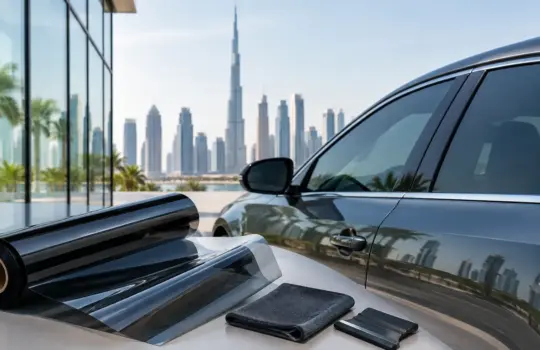
A west-facing living room can look beautiful at 9 a.m. and become difficult to use by midafternoon. The same applies to a glass-fronted office where staff lower blinds just to see their screens, or a car that still feels hot after the air conditioning has started. Knowing how to choose solar film begins with identifying that real problem. The darkest film is not automatically the coolest, and the highest-priced option is not always the right match for the glass, setting, or result you want.
Solar film should be selected as part of the whole glazing system. The type of glass, direction of sunlight, room use, access for installation, and your expectations around privacy and natural light all influence the recommendation. A good consultation narrows those variables before anyone talks about a film shade.
How to Choose Solar Film Based on the Problem
Start by deciding what needs to improve most. Heat, glare, UV exposure, privacy, appearance, and safety can overlap, but they are not the same job.
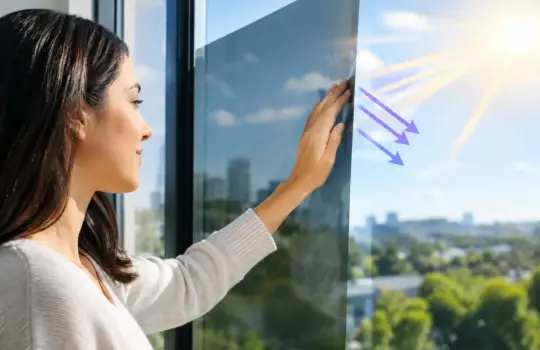
If a villa room becomes hot despite functioning AC, prioritize solar heat control. Look beyond visible darkness and ask how effectively the film rejects infrared energy and total solar energy. A high-performing ceramic film can reject significant heat while remaining relatively light and clear. This matters in homes with views, offices that depend on daylight, and vehicles where a very dark look is not desirable or permitted.
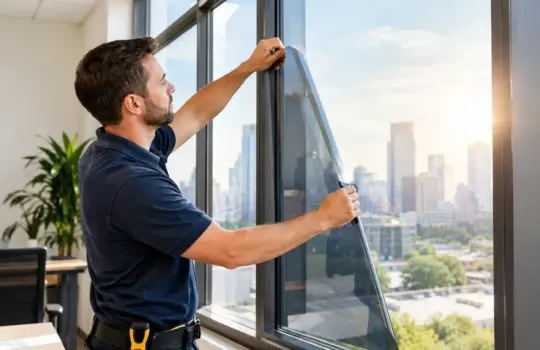
If the main issue is bright sun on screens, TV glare, or uncomfortable reflections, visible light transmission is a more relevant part of the conversation. A slightly darker or more reflective film may reduce glare well, but it will also change the brightness and appearance of the glass. For offices, this can improve screen comfort without making meeting rooms feel closed in. For homes, it may mean balancing afternoon relief against the amount of daylight you want in the morning.
For fading furniture, flooring, artwork, upholstery, and vehicle interiors, ask specifically about UV protection. Quality solar films commonly provide very high UV filtering, but UV is only one part of the heat equation. A film may block UV effectively while offering a different level of infrared rejection, glare reduction, or privacy. Compare the full performance profile rather than choosing from one headline number.
Privacy requires equally careful thinking. Reflective or tinted solar films can provide useful daytime privacy when the exterior is brighter than the interior. At night, the effect can reverse once lights are on inside. If round-the-clock privacy is the priority, solar film alone may not be the complete answer. Frosted film, blinds, curtains, or switchable Smart Film may be more appropriate depending on the window and how the room is used.
Compare Specifications That Actually Affect Comfort
Film specifications can be useful, but only when they are read together. A quotation should make clear what is being installed, not simply promise that a film is “heat resistant.”
Visible light transmission, often called VLT, indicates how much visible light passes through the finished glass-and-film combination. Lower VLT generally means a darker result. It can reduce glare and add privacy, but it also affects visibility, especially after dark. On vehicles, legal requirements may also limit the tint allowed on particular windows.
Infrared rejection is often highlighted because infrared energy contributes strongly to the sensation of radiant heat. It is a valuable metric, particularly for premium ceramic automotive films. Still, compare like with like. Some manufacturers test infrared rejection over different wavelength ranges, so a single percentage should not be treated as the whole story.
Total solar energy rejected, or TSER, is often more useful for architectural glass because it considers a broader range of solar energy. It provides a better indication of how a film may affect overall solar heat gain. The final result still depends on the existing glass, its coating, its thickness, and whether it is single-pane, insulated, laminated, or part of a curtain-wall system.
Also ask about interior and exterior reflectivity. Highly reflective film can be effective in strong sun, but it changes the building’s facade and can create noticeable mirror-like glass. That may suit a commercial elevation or an exposed utility area, while a low-reflective ceramic option may be better for a villa, yacht, or premium office interior where the view and finish matter.
A live meter demonstration can help make the difference between film tiers easier to see. It is useful for comparing solar transmission under the same test conditions, particularly when choosing between ceramic options with different infrared performance. It is not a guarantee of an exact indoor temperature drop. Room temperature is also influenced by glass area, insulation, air leakage, AC capacity, curtains, and the intensity and duration of direct sun.
Check the Glass Before Choosing the Film
The glass is not a blank canvas. This is one of the most overlooked parts of choosing solar film, especially on villas, offices, yachts, and specialty glazing.
Solar film absorbs and reflects energy. On certain glass types, a darker or highly absorbing film can increase thermal stress. That does not mean film is unsuitable, but it does mean the installer should assess the glazing before recommending a shade or product category. Existing cracks, edge damage, poorly fitted panes, old seals, and prior film residue should also be identified before work begins.
Double-glazed units, tempered panels, laminated glass, low-E glass, decorative glass, and marine glazing each require a different level of care. With insulated glass units, compatibility and warranty conditions are particularly relevant. With yachts, salt exposure, curved glass, access, and the need to preserve outward visibility can change the practical recommendation. A film that works well on a flat office partition may not be the best choice for a marine windshield or a large sun-facing facade.
This is why a photograph alone is sometimes not enough for an accurate quote. Measurements, glass type, access conditions, and the direction each elevation faces give a clearer basis for a recommendation. For large or high-access panels, installation planning is as important as choosing the film itself.
Choose the Right Film Type for the Application
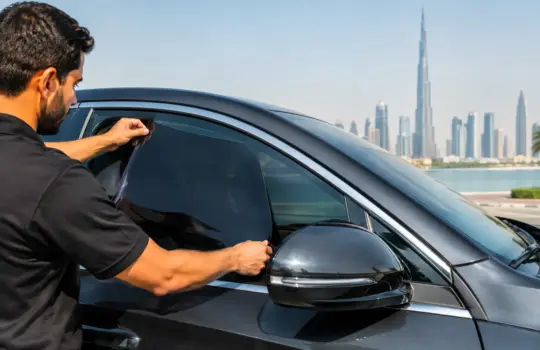
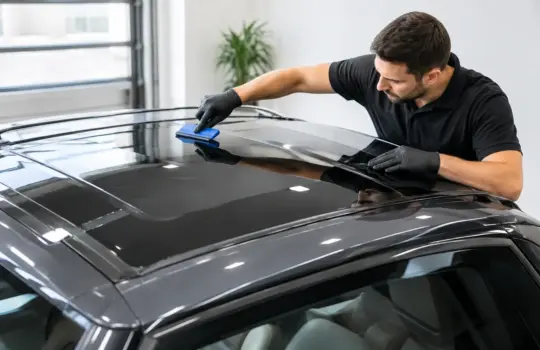
Ceramic film is often the preferred choice when heat rejection and a refined appearance matter. It is especially useful for automotive tinting because it can provide strong infrared reduction without relying on heavy metal content. That can help preserve connectivity and electronic signal performance compared with some metallic films, although the actual result depends on the vehicle and product.
Dyed or basic tinted film may suit a customer whose priority is a darker appearance or modest glare reduction at a lower cost. The trade-off is usually lower heat performance and potentially shorter warranty coverage. It can be a sensible choice for the right vehicle or low-demand application, but it should not be presented as equivalent to a high-performance ceramic film.
For homes and commercial spaces, solar-control film may be clear, lightly tinted, neutral, or reflective. A clear option can be suitable when protecting interiors and reducing some solar impact matters more than changing the facade. A neutral tone often works well in premium residential settings. Reflective film can deliver stronger daytime privacy and glare control, but needs to be chosen with the building appearance in mind.
Safety film is a separate category. Its purpose is to help retain broken glass fragments after impact, reducing the danger from flying shards. It should not be selected purely for solar control, and solar film should not be assumed to provide the same safety performance. Where both solar comfort and fragment retention are required, the product and installation approach need to be specified for both goals.
Balance Performance Against Appearance and Warranty
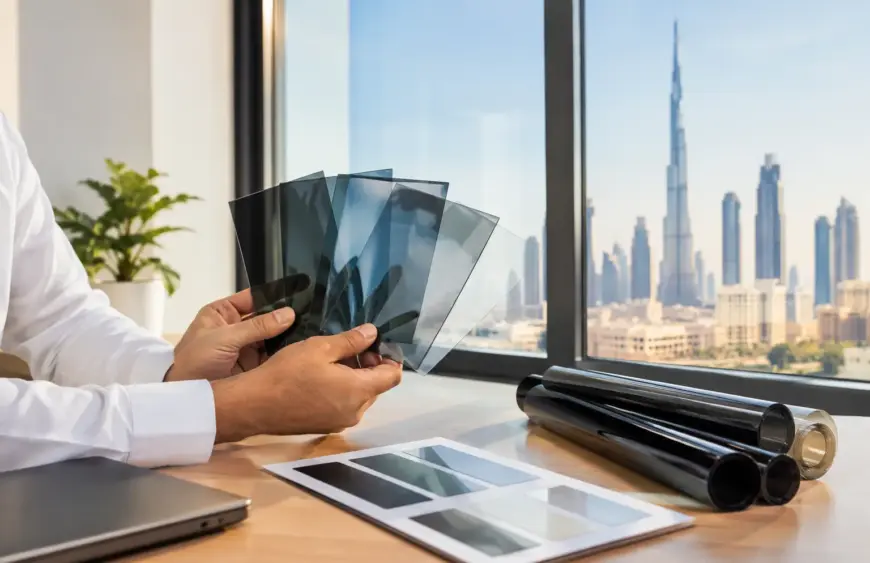
A film can look almost invisible, give the glass a subtle neutral finish, or create a distinct tinted or reflective appearance. Ask to see a physical sample against your own glass where possible. A sample held in the hand is helpful, but viewing it on the actual window shows how it interacts with interior finishes, outdoor light, and the surrounding facade.
For vehicles, view samples from both inside and outside, in daylight and low light. Darker rear glass may be practical for privacy, while lighter front-side film can preserve nighttime visibility. The right balance also depends on the vehicle’s factory glass tint and applicable local regulations.
Warranty should be clear and specific. Check the duration, what defects it covers, whether it applies to the particular glass type, and whether the warranty is for the film, installation, or both. A longer warranty can reflect a more durable product tier, but it does not remove the need for correct glass assessment and careful preparation. Clean surfaces, proper edge finishing, and appropriate curing time all affect the final result.
Dr SunShield approaches this as an installer-led decision: assess the glass and use case first, then compare appropriate tiers openly. That may mean a lighter ceramic option for a view-facing villa, a more glare-focused film for an office, or a safety-focused solution where glass-breakage risk is the concern.
Questions to Ask Before You Approve a Quote
Before booking, ask what film is being proposed, what its VLT and solar-control performance are, and why it suits your existing glass. Confirm the expected visual finish from inside and outside, the warranty terms, installation access requirements, and aftercare instructions. If the work is mobile, verify that the location provides a clean, suitable environment and enough time for correct preparation.
For a larger property or a yacht, ask whether an on-site assessment is needed before finalizing the scope. This is not unnecessary delay. It is how you avoid selecting film based on a generic specification sheet that does not reflect the actual glazing.
The best solar film is the one that solves the discomfort you notice every day without creating a new problem in visibility, appearance, glass compatibility, or warranty coverage. Start with the room, vehicle, or vessel in front of you, and let the film specification follow from that.