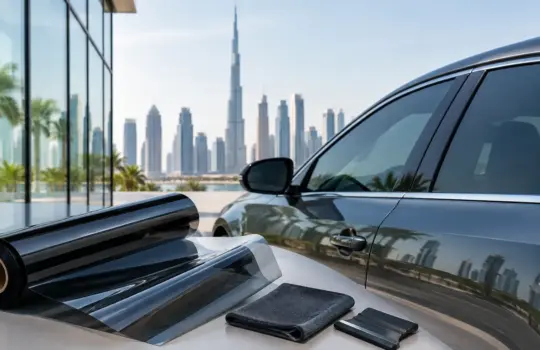
A window that looks bright and open at 9 a.m. can become the hottest, most distracting part of a room, vehicle, or yacht by early afternoon. That is why a useful window film comparison starts with the problem you are trying to solve, not the darkest film or the largest percentage on a brochure. In the UAE, intense sun often creates several issues at once: radiant heat, screen glare, fading interiors, daytime visibility, and discomfort near glass.
The right answer may be a clear ceramic film, a more private solar-control finish, a safety film, or switchable Smart Film. Each performs a different job. A good recommendation also has to account for the glass itself, the direction it faces, access for installation, and how much natural light you want to keep.
Start with the problem, not the product name
Film names can be confusing because they often describe a collection, a shade, or a marketing category rather than the outcome you will feel. Before comparing products, decide which issue matters most.
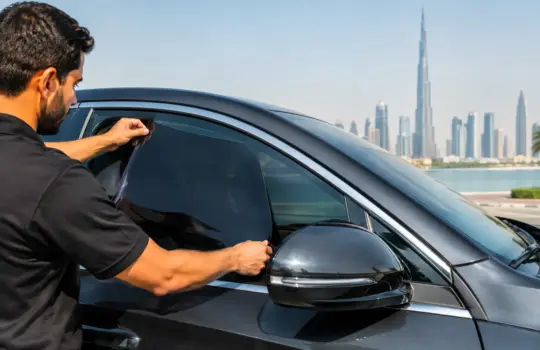
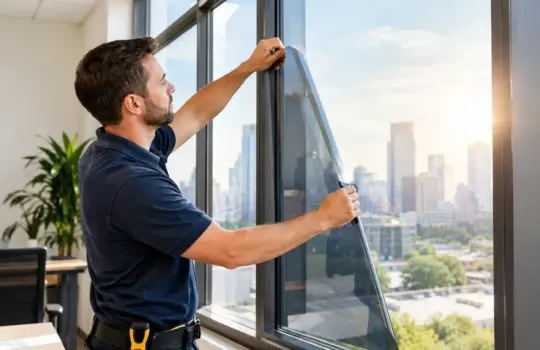
For a car, heat rejection and clear visibility may be the priority, particularly if you spend long periods driving or park outdoors. In a villa, the goal may be to reduce heat and glare without making a living area feel closed in. Offices often need better screen comfort and a more consistent working environment near perimeter glazing. For yachts, the film must suit the glazing construction as well as the marine environment. In a meeting room or bathroom, privacy may outweigh solar performance.
There is usually a trade-off. A darker film can reduce visible light and give stronger daytime privacy, but it may not be the best route to heat control. A high-performance ceramic film can remain relatively light while improving comfort, but it will not create the same privacy effect as a frosted or switchable solution. The best choice is the one that solves the actual problem without introducing a new one.
Window film comparison: the numbers worth asking about
Specifications are useful, but only when they are read together. One claim on its own rarely tells the full story.
Visible light transmission, often called VLT, indicates how much visible light passes through the glass and film. A lower VLT means a darker appearance. This affects daytime brightness, outward visibility, nighttime conditions, and, for vehicles, legal tint requirements. Do not assume that a low VLT automatically means the highest heat rejection.
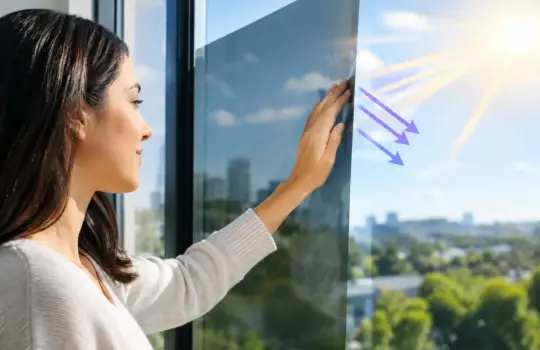
Total solar energy rejected, or TSER, is one of the more helpful figures for solar-control decisions because it addresses a broader portion of the sun’s energy. It gives a better comparison point than infrared rejection alone. Infrared performance still matters because infrared energy contributes to the feeling of radiant heat, but brands may measure or present that figure differently. Ask what range is being measured and how the stated number relates to the full installed system.
UV rejection is another valuable benefit. Quality window films typically block a high proportion of ultraviolet radiation, helping protect furnishings, flooring, upholstery, displays, and skin. It is not a guarantee that fading will stop entirely. Visible light, heat, material quality, and the age of the furnishing also affect how colors change over time.
Glare reduction deserves its own conversation. A film can substantially improve screen visibility in an office, yet a very reflective exterior finish may not suit a residential façade or a building with appearance restrictions. Performance, aesthetics, and local conditions should be considered together.
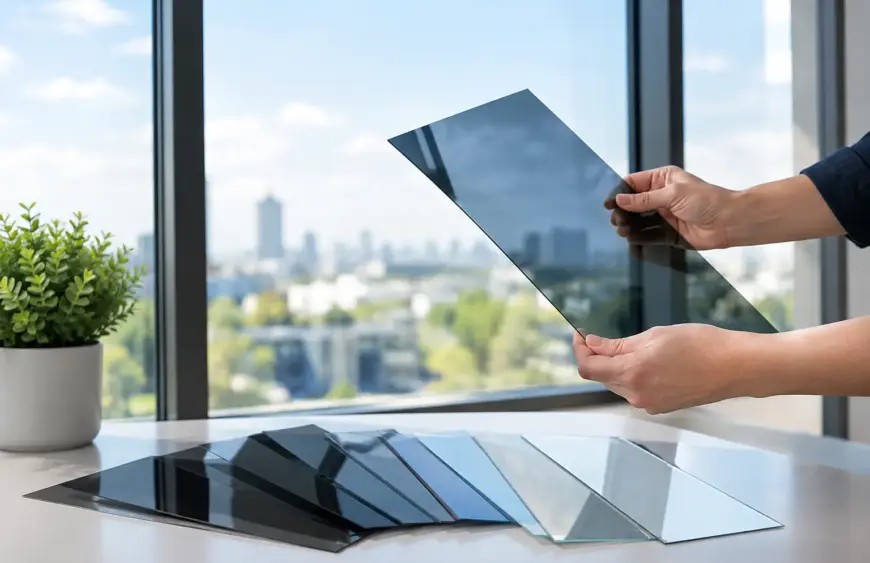
A live solar-meter demonstration can be a useful way to compare samples and understand relative transmission performance. It should be treated as a product comparison, not a prediction of the exact temperature in every room or vehicle. Orientation, glass size, air conditioning, curtains, insulation, and occupancy all influence real-world comfort.
Comparing the main film categories
Ceramic solar-control film
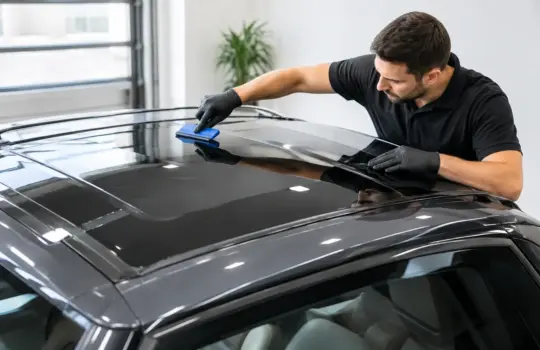
Ceramic film is often the best starting point when you want strong heat control with a clean appearance. It is particularly suited to automotive applications and can also be appropriate for homes and commercial spaces where maintaining natural light matters. Unlike basic dyed films, a quality ceramic construction is designed for lasting solar performance and can be available in lighter shades.
For automotive customers, Dr SunShield compares its DS-ONE, DS-PRO, and DS-MAX ceramic tiers according to the balance of infrared heat rejection and warranty coverage. The tiers carry three-, six-, and ten-year warranties respectively, with higher tiers intended for customers who place greater value on enhanced heat performance and longer coverage. The most expensive tier is not automatically necessary for every vehicle. A lightly used car that is garaged most days has different needs from a daily-driven vehicle parked in direct sun.
Dyed and basic tinted films
Basic tinted films can improve appearance and reduce some brightness at a lower upfront cost. They may suit situations where appearance is the primary concern and the solar load is modest. However, they are generally not the first recommendation when strong heat rejection, clarity, color stability, and long-term performance are the priorities.
The comparison should be candid: a darker basic tint can look effective while delivering a different level of solar control than a lighter ceramic option. If your concern is a hot steering wheel, uncomfortable rear seats, or constant glare, compare measured solar performance rather than judging only by shade.
Privacy, decorative, and frosted film
Privacy films solve a visibility problem. Frosted and decorative finishes are useful for bathroom glass, office partitions, treatment rooms, entry sidelights, and internal meeting spaces. They can preserve light while obscuring views, but they are not designed to provide the same solar-control performance as a dedicated heat-rejection film.
Reflective solar films can create daytime privacy where the exterior is brighter than the interior. At night, the effect reverses when interior lights are on. This limitation is frequently overlooked. If privacy is needed at all hours, frosted film, blinds, curtains, or switchable Smart Film may be more appropriate.
Switchable Smart Film
Smart Film changes from clear to opaque on demand, making it well suited to spaces where privacy must be available instantly without permanently blocking light. It is a specialist installation rather than a simple substitute for standard solar film. Electrical requirements, edge detailing, control method, glass layout, and site access all need to be assessed before it is specified.
This makes Smart Film a strong fit for select office partitions, villas, clinics, hospitality areas, and specialty-glass projects. It is chosen for controllable privacy first. Any solar-control expectation should be discussed separately and based on the specific product and glazing arrangement.
Safety and explosion-protection film
Safety film is designed to help retain broken glass fragments after impact or breakage. It can be appropriate for vulnerable glazing, security-conscious locations, and areas where broken shards present a particular risk. It does not make every glass pane unbreakable, and the level of protection depends on film thickness, attachment method, glass type, frame condition, and the nature of the impact.
Safety specifications need more than a visual inspection. The glass, frame, edge clearance, and intended risk scenario should be reviewed before making a recommendation. In some cases, film is suitable; in others, a broader glazing or security solution may be necessary.
Glass compatibility is part of the decision
Architectural film should never be selected by shade alone. Applying film changes how glass absorbs and releases solar energy. On certain units, especially insulated glass, laminated glass, patterned glass, or panes with existing coatings, the wrong product can increase thermal stress and raise the risk of glass damage.
A proper assessment considers the glass type, pane size, existing treatment, frame, shading, orientation, and whether the glass is single-pane or insulated. Yacht glazing also requires its own assessment because curved panels, marine-grade materials, seals, and access conditions can affect both product suitability and installation method.
Surface preparation matters just as much. Dust, silicone residue, damaged seals, paint overspray, and hard-water marks can affect the finish. A professional installer should explain any limitations before work begins rather than promising a perfect result on compromised glass.
Make the final choice practical
Once the film category is clear, the final decision comes down to priorities and conditions. Ask to compare samples on your actual glass where possible. View them from inside and outside, in daylight and under interior lighting if privacy is a concern. Confirm the warranty duration, what it covers, and any care requirements after installation.
For vehicles, check that the selected shade complies with applicable regulations and does not compromise the visibility you need. For villas and offices, think about the rooms you use most during peak sun, rather than treating every window the same. A west-facing family room, a sun-facing office façade, and a shaded bedroom may each justify a different solution.
The most useful comparison is not between the darkest film and the clearest film. It is between the comfort, privacy, appearance, safety, and long-term confidence you need from that particular piece of glass.