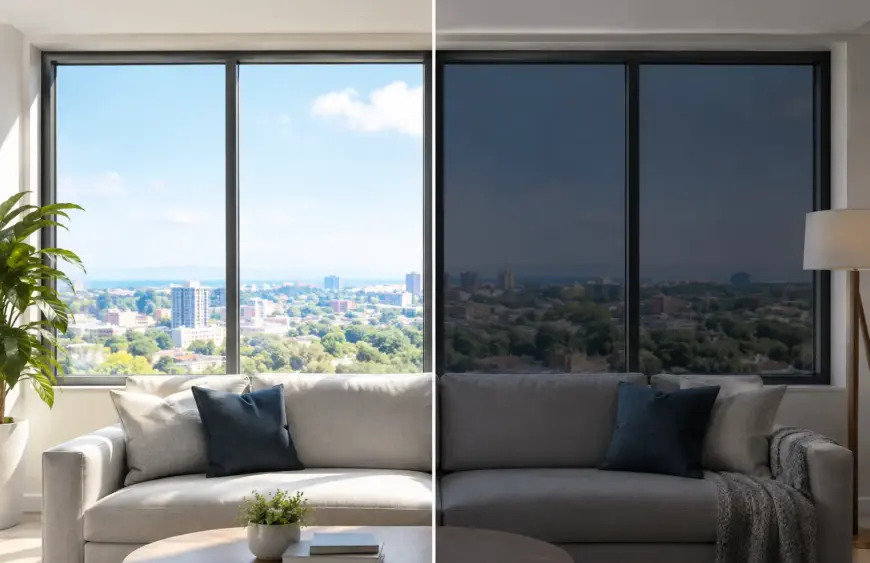
A west-facing living room in Dubai can feel bright enough to make a television difficult to watch, yet still feel hot and uncomfortable by midafternoon. That is why the question, “does window film darken rooms,” deserves more than a yes-or-no answer. The right film can reduce harsh glare and solar heat while preserving a surprisingly natural level of daylight. The wrong one can make a room feel shaded, change the appearance of the glass, or solve a heat issue at the expense of the open, light-filled look you value.
The outcome depends on the film’s visible light transmission, the existing glass, the direction the windows face, and how the room is used. A bedroom, a home office, a marina-facing apartment, and a glass-walled office in Business Bay do not need the same solution.
Does window film darken rooms?
Window film can darken a room, but it does not always darken it noticeably. Every solar-control film blocks some visible light, because it sits between daylight and the room. How much light you lose is determined mainly by the film’s visible light transmission, usually called VLT.
A higher VLT lets more visible daylight pass through the glass. A lower VLT creates a darker, more tinted appearance and generally provides more daytime privacy and glare control. But VLT alone does not tell the full story. A modern, high-performing ceramic or spectrally selective film can reject a meaningful amount of solar energy without needing the deeply dark look people often associate with traditional tint.
For many residential and commercial applications, the aim is not to make the room darker. It is to remove the uncomfortable parts of sunlight: sharp reflections on screens, bright patches on floors, excessive heat near the glass, and UV exposure that can contribute to fading of furnishings. The room may feel calmer even when it remains visibly bright.
Why a brighter room can still feel more comfortable
There is a difference between daylight and glare. Daylight helps a room feel open and usable. Glare is concentrated brightness that causes squinting, washes out a laptop screen, or makes a sofa beside a window unpleasant at certain hours.
This distinction matters in UAE properties with large glazing areas. Floor-to-ceiling windows can bring excellent views and natural light, but the same glass may create strong glare and heat gain, particularly on east- and west-facing elevations. Reducing glare often makes a room feel easier on the eyes without making it feel closed in.
Film may also improve visual comfort by reducing contrast. Instead of a very bright window beside a comparatively dark interior, the light entering the room becomes more balanced. Your eyes do less work adapting between the view outside and the room inside.
That said, if a space already has limited natural light, even a medium-tint film may be more noticeable. Interior finishes make a difference too. Dark wood, charcoal walls, deep curtains, and shaded balconies can compound the effect. A lighter film is often the more sensible starting point in these rooms.
The specifications that affect how light a room feels
When comparing window films, visible light transmission is the first specification to discuss. It indicates the percentage of visible light that passes through the finished glass-and-film system. A film with a higher VLT will generally look lighter from inside and outside than one with a lower VLT.
However, visible light reflectance also matters. Some films have a more reflective exterior appearance, particularly in daylight. This can support daytime privacy and reduce glare, but it can alter the look of the facade or villa windows. At night, when interior lighting is brighter than outdoors, reflective film does not provide the same privacy effect. Curtains, blinds, or another privacy measure may still be needed.
Solar heat rejection is a separate consideration. Customers sometimes assume the darkest film must be the coolest, but that is not always true. Higher-quality ceramic and spectrally selective films are designed to manage solar energy efficiently while maintaining a lighter appearance. This is why comparing a few film options on the actual glass is more useful than selecting by shade alone.
At Dr SunShield, a live solar-meter demonstration can help show how different samples transmit solar energy. It is a useful comparison tool, not a complete prediction of how an entire room will feel. Window size, orientation, air conditioning, curtains, surrounding buildings, and the existing glass all influence real-world comfort.
Choosing film by room, not by a single shade
A good recommendation begins with the room’s actual problem. If the priority is reducing laptop glare in a bright office, a light-to-medium solar-control film may be enough. If a bedroom faces neighboring properties and needs stronger daytime privacy, a darker or more reflective option may be appropriate, provided the light loss is acceptable.
For living rooms with expansive views, many homeowners prefer a film that keeps the view clear and the interior bright. In these cases, the best choice is often a higher-VLT performance film that reduces heat and glare without giving the glass a heavy tinted appearance.
For media rooms, sunrooms, and rooms with large south- or west-facing glass, stronger glare management may be worth a modest reduction in daylight. The key is to assess when the problem occurs. A room that is difficult only between 3 p.m. and sunset may need a different approach from one that receives direct sun all day.
Commercial spaces need the same practical thinking. A team working near perimeter windows may benefit from glare reduction on specific elevations, while meeting rooms and reception areas may need to stay as bright and neutral-looking as possible. Applying the same film to every pane is not always the best answer.
What existing glass changes
Film is installed on glass that already has its own tint, coating, thickness, and performance characteristics. Clear single-pane glass, double glazing, low-E glass, laminated safety glass, and specialty glazing can all respond differently once film is applied.
A light film on clear glass can look quite natural. The same film on factory-tinted or coated glass may appear darker or slightly more reflective. This is one reason samples should be viewed against your own windows, ideally at different times of day.
Glass compatibility also needs professional attention. Solar-control film changes how the glass absorbs and releases heat. On certain glass types, in specific sizes, or where there are existing edge defects, the installation team should assess thermal-stress suitability before recommending a product. A responsible installer will not treat every window as interchangeable simply because the visible shade looks right.
How to avoid making a room feel too dark
The most reliable approach is to begin with the lightest film that addresses the main problem. If your priority is heat reduction while preserving views, ask to compare high-VLT solar-control options first. If glare is the concern, look at samples during the time of day when glare is worst rather than making a decision from a showroom sample alone.
It also helps to consider how the room is furnished. If you plan to use blackout curtains, heavy drapes, or exterior shading, a dark film may be unnecessary. If the room has pale walls, reflective surfaces, and broad openings to other spaces, it can typically accommodate a lower VLT more comfortably.
Do not judge only from outside. Stand inside the room and look toward the view, then turn away from the window and assess the interior brightness. Check screen reflections, the color of walls and flooring, and whether the film changes the appearance of artwork or finishes near the glass. A practical consultation should account for all of these details.
The better question to ask before installation
Rather than asking whether window film makes rooms dark, ask how much light you are willing to trade for heat control, glare reduction, privacy, and appearance. There is no universally correct percentage. A bright villa lounge with a sea view may need a different balance than a sun-exposed office, a nursery, or a ground-floor room facing nearby homes.
A well-selected film should make the space more usable at the hours you currently avoid it. If preserving daylight is non-negotiable, say so at the start. The right installer can then recommend a film tier and shade based on the glass, the sun exposure, and what you actually want to improve – not simply the darkest option available.