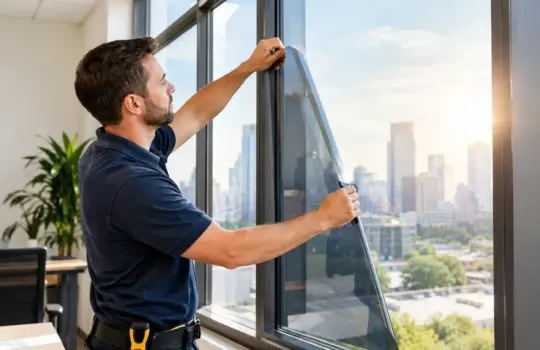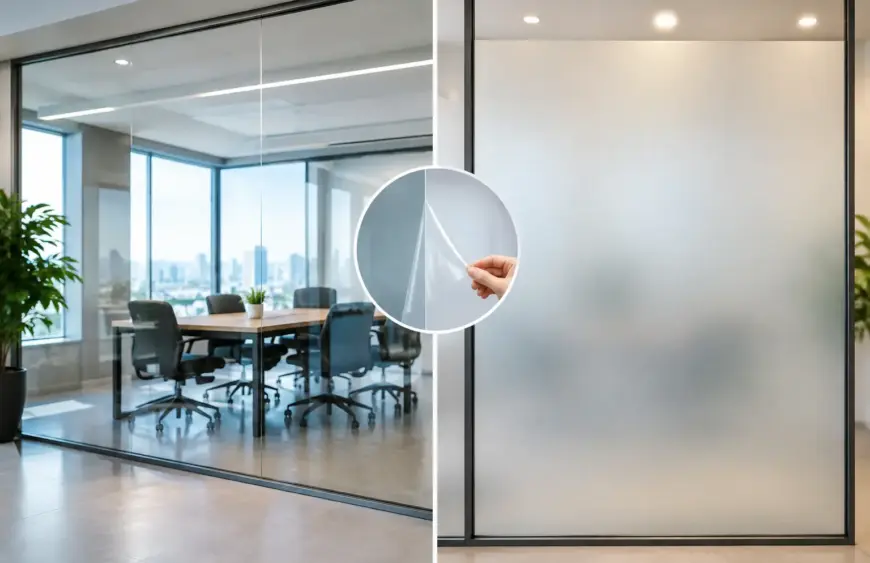
A meeting room that needs privacy at 10 a.m. may need full transparency again at 10:15. A villa bathroom window may simply need permanent coverage without losing daylight. That practical difference sits at the center of the smart film versus frosted glass decision. Both solutions obscure views through glass, but they solve very different problems once daily use, electrical access, appearance, and budget are considered.
For UAE homes and commercial spaces, the right choice is rarely about which option is more advanced. It is about whether privacy needs to change throughout the day, how the existing glass is constructed, and whether the glass also needs help with heat, glare, or UV exposure.
Smart Film Versus Frosted Glass: The Core Difference
Frosted glass provides permanent privacy. Its surface or internal layer scatters light, so people can no longer see clearly through it. It remains private whether the room is occupied, empty, powered, or unattended.
Smart film, commonly based on PDLC technology, changes state when electricity is applied. In its private setting, the film appears opaque or milky and blocks clear visibility through the glass. When powered on, it becomes transparent enough to see through. This makes it useful where a single glazed partition must serve two purposes: open and visible at one moment, private at the next.
The distinction sounds simple, but it changes the whole specification. Frosted glass is a fixed finish. Smart film is an electrical privacy system installed on glass, with wiring, controls, and a power supply that need to be planned properly.
When Frosted Glass Is the Better Choice
Frosted glass is often the more sensible answer when privacy is permanent. Bathroom glazing, internal doors, clinic rooms, storage areas, stairwell windows, and areas facing close neighbors usually do not need to switch between clear and private. In these settings, the simplicity of frosted glass is a real advantage.
It also works well where the desired appearance is consistent. Frosted finishes can feel clean and architectural, especially when applied as factory-frosted, etched, sandblasted, or laminated glass. For existing glass, a quality frosted privacy film can create a similar visual effect without replacing the pane. The exact finish matters: some frosted treatments produce a soft white appearance, while others offer patterns, gradients, or more decorative effects.
There is no control system to operate, no transformer to locate, and no dependence on electrical power. For a property manager or homeowner who wants a straightforward privacy upgrade, that can mean fewer installation variables and a lower overall cost.
Permanent frosting has trade-offs. It cannot be cleared when you want an unobstructed view, and it may reduce the feeling of openness in smaller rooms. It also does not necessarily solve solar heat or glare concerns. A frosted finish diffuses light, but it should not be selected on the assumption that it will deliver the heat rejection of a purpose-designed solar-control film.
Where Smart Film Earns Its Cost
Smart film is most compelling when the room genuinely benefits from adjustable visibility. Boardrooms, executive offices, meeting pods, clinics, treatment rooms, glass-fronted offices, and selected villa interiors are common examples. It allows glass partitions to maintain an open, premium feel when clear, then provide privacy without curtains, blinds, or a permanent opaque panel.
For an office in Business Bay, DIFC, or Dubai Marina, this can be particularly useful where glazed meeting rooms make a floorplate feel larger but create confidentiality concerns. A switch changes the room from visible to private without altering the layout or blocking daylight all day.
In a home, smart film can suit a bathroom screen, dressing area, internal partition, or a window where a changing view is part of the appeal. It is also useful for hospitality and specialty-glass projects where the visual effect supports the design concept, rather than merely covering a window.
However, smart film should be selected with realistic expectations. In its privacy mode, it obscures detailed views, but it is not the same as a blackout blind. Strong backlighting can still reveal movement or silhouettes. In clear mode, it provides no meaningful privacy. If a room requires complete nighttime privacy, the design may still need a blind, curtain, or another layer of coverage.
Light, Heat, and Glare Are Separate Questions
One of the most common specification mistakes is treating privacy, solar control, and glare reduction as if they are the same requirement. They are not.
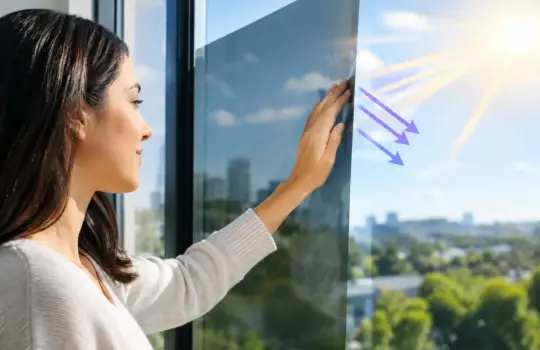
Frosted glass and smart film both alter visibility. Neither should automatically be assumed to provide the right solar performance for a sun-exposed villa facade or an office with intense afternoon glare. If heat entering through the glass is the main concern, a dedicated solar-control window film may be the more relevant product. If screen glare is the issue, the direction of the glass, time of day, room use, and desired exterior appearance all need to be assessed.
This is especially relevant in the UAE, where a beautiful clear glass wall can create substantial heat and glare at certain orientations. A room may need both adjustable privacy and solar management, but that does not mean every film combination is suitable. Glass type, existing coatings, warranty conditions, electrical layout, and compatibility must be checked before a recommendation is made.
A proper site assessment separates these priorities. First establish whether the issue is privacy, heat, glare, UV exposure, appearance, or safety. Then choose a solution that addresses the actual problem rather than adding a premium feature that does not improve comfort.
Installation Changes the Decision
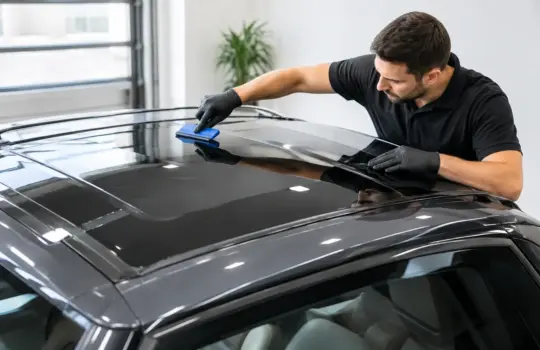
Frosted glass can be straightforward when it is specified before construction. For existing glass, frosted film is often a practical retrofit because it can be installed with limited disruption. Surface preparation still matters. The glass must be clean, sound, and accessible, and any defects, old adhesive, damaged seals, or difficult edges should be identified before work begins.
Smart film installation requires more coordination. The glass surface must be suitable, but the project also needs a safe route for wiring, a correctly located power source, and a plan for switches, remote controls, or automation. Cable visibility and edge finishing should be considered before installation, particularly on premium interior glass where the details are easy to notice.
Retrofitting smart film can be an excellent option, but it is not appropriate for every pane or every site condition. Large panels, unusual shapes, humid spaces, exposed edges, and difficult access can all affect the proposed solution. For new builds or major renovations, planning smart film early generally produces a cleaner result because power and controls can be integrated into the design.
Cost, Maintenance, and Long-Term Use
Frosted glass is generally the lower-cost route when fixed privacy is enough. It has fewer components and less operational complexity. Cleaning requirements depend on the finish, but most interior frosted surfaces or films can be maintained with appropriate non-abrasive cleaning methods.
Smart film has a higher upfront cost because it includes the film itself, electrical components, controls, and more involved installation planning. It also requires users to accept its visual characteristics. In privacy mode, the finish is usually more translucent than an elegant etched-glass panel. In clear mode, it may not look identical to factory-clear glass under every lighting condition.
That does not make smart film a poor choice. It means the value comes from flexibility, not from being a universal replacement for frosted glass. If the switchable function will be used every day, it can justify the investment. If it will remain private almost all the time, fixed frosting may deliver the better outcome for less.
A Practical Way to Choose
Ask one question first: does this glass need to be clear and private at different times? If the answer is no, frosted glass or frosted privacy film is usually the more direct solution. If the answer is yes, smart film deserves serious consideration.
Then confirm the details that decide whether the result will work well: how private the room must be at night, whether silhouettes are acceptable, whether heat or glare is also a concern, where power can be taken from, and how the finished edges and controls will look. For large villas, offices, and specialty-glass projects, an installer-led assessment is more reliable than choosing from photos alone.
Dr SunShield approaches switchable privacy projects by checking the glass, intended use, access conditions, and electrical requirements before recommending a route. The best finish is not necessarily the most expensive one. It is the one that gives the room the right level of privacy without compromising the way the space needs to function.