A west-facing living room in Dubai can look perfect on a floor plan and still become the room everyone avoids by midafternoon. The glass may be clear, premium, and recently cleaned, yet solar heat, screen glare, and fading pressure on furnishings remain. That is why the question of solar film versus low-e glazing deserves more than a simple “which is better?” answer.
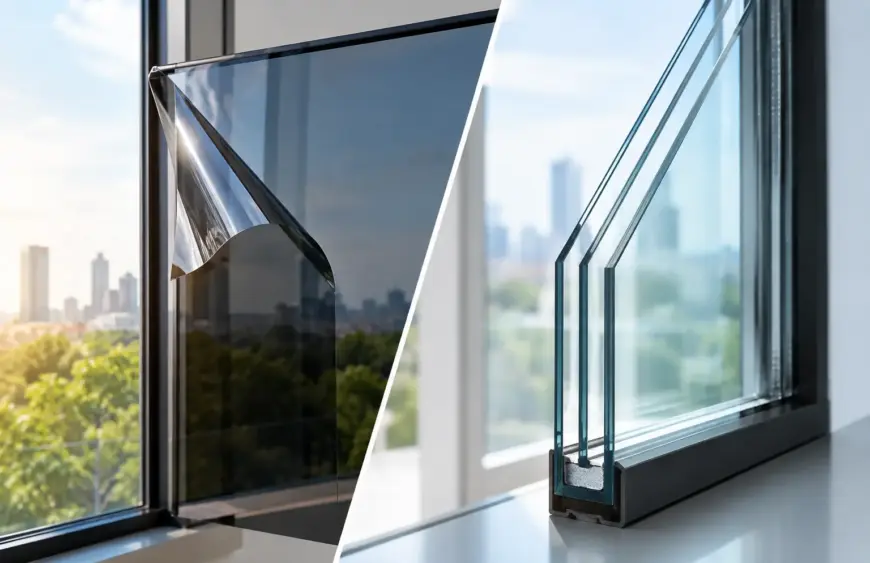
Both can improve comfort, but they solve different project conditions. Low-e glazing is usually a glass-selection decision made during construction, a façade replacement, or a major renovation. Solar-control film is generally a retrofit decision for glass already in place. The right choice depends on the existing glass, the direction it faces, the level of heat and glare, the appearance you want, and whether replacing windows is actually justified.
Solar Film Versus Low-E Glazing: The Core Difference
Low-e, short for low emissivity, refers to a microscopic coating applied to glass. The coating is designed to manage radiant heat transfer while allowing visible light through. In insulated glass units, low-e coatings can help reduce heat moving through the glazing system and may support better overall insulation performance. The exact result depends on the coating type, glass build-up, air or gas space, frame system, and installation quality.
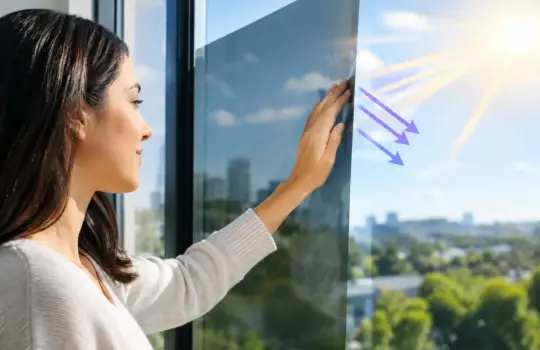
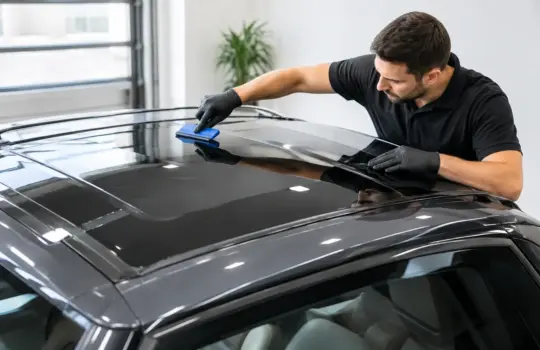
Solar-control film is a thin, professionally applied layer fitted to the interior side of compatible existing glass. It can reduce solar energy entering through the window, cut glare, filter ultraviolet light, and adjust daytime appearance or privacy. Modern ceramic films can remain relatively clear while targeting infrared heat, which matters when a customer wants a cooler-feeling room without making it noticeably dark.
This distinction matters in the UAE. A glazing specification that performs well in a mild climate is not automatically the best answer for intense, prolonged sun exposure. Likewise, a dark film is not automatically a high-performing film. The useful comparison is not film against glass in general. It is the performance of a specific film on your existing glass against the performance of a specific low-e glass unit in the same orientation and use case.
When Low-E Glazing Makes More Sense
Low-e glazing is often the stronger long-term choice when windows are being replaced anyway. If a villa is under construction, a façade is being redesigned, or old windows have failed seals, poor frames, air leakage, or damaged hardware, upgrading the entire glazing system can address more than solar gain alone.
A properly specified insulated low-e unit can improve insulation, reduce some condensation concerns, and create a coordinated finished appearance from day one. It may be particularly worthwhile for large curtain-wall areas, new villas with extensive glass, or projects where the architect is already selecting frame and glass systems together.
However, “low-e” is not a complete specification. Some low-e products are designed mainly to retain interior heat in colder climates. Others are designed for solar control. Their visible light transmission, solar heat gain coefficient, reflectivity, and insulation values vary substantially. A property owner should not assume that a low-e label alone guarantees strong protection from Dubai’s afternoon sun.
There is also the practical issue of disruption and cost. Replacing glazing can involve fabrication lead times, access equipment, permits, frame work, sealant work, interior protection, and a much larger budget than a retrofit. That may be justified on a full renovation. It is rarely the most efficient first response when the current windows are sound and the problem is mainly heat or glare.
Low-E Glazing Is a System, Not Just a Pane
The best glass coating cannot compensate for a poorly performing frame, gaps around the installation, or unsuitable glass selection. In offices, villas, and marine applications, the whole assembly matters. This is why new-build glass decisions should involve the window supplier, consultant, and project team early, rather than being based on a sample held against the sun.
When Solar Film Is the Better Retrofit
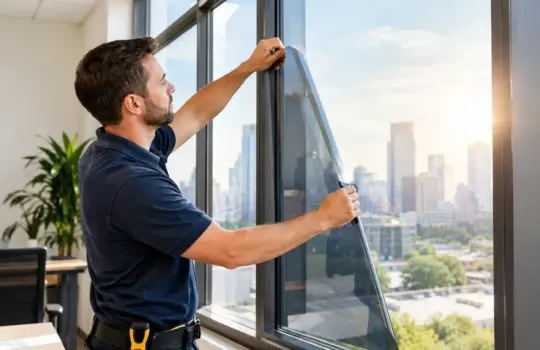
Solar-control film is usually the practical option when the glass and frames are in good condition but the room is uncomfortable. It is commonly chosen for sun-facing villa windows, office meeting rooms, shopfronts, glazed partitions, and apartments where replacing glass would be disruptive or unnecessary.
A suitable film can reduce the intensity of direct solar exposure, improve screen visibility, and help protect interior finishes from ultraviolet exposure. It can also deliver a change in days rather than the longer cycle of manufacturing and replacing glazing. For occupied properties, that difference is significant: furniture can often remain in place with sensible access preparation, and the existing window system stays intact.
Film offers more flexibility in appearance as well. Clear ceramic options suit customers who value daylight and a largely unchanged exterior look. Neutral, reflective, or darker options may suit spaces where glare, daytime privacy, or visual uniformity is the greater priority. The correct choice comes from balancing those requirements, not simply selecting the highest claimed heat-rejection number.
For example, a bright office in Business Bay may need a light, neutral solar-control film that keeps the workspace usable without making the façade look heavily tinted. A west-facing bedroom in a villa may accept a slightly stronger finish in return for greater glare control and daytime privacy. A yacht requires a separate assessment because curved glazing, marine exposure, and glass construction can affect suitability.
Performance Numbers Need Context
Comparing solar film versus low-e glazing can become confusing because product data uses several different measurements. Visible light transmission indicates how much visible daylight passes through. Solar heat gain coefficient indicates how much solar energy enters through the glazing. Ultraviolet rejection addresses the UV portion of sunlight. Infrared rejection figures can be useful, particularly for ceramic films, but they should not be treated as the total amount of heat stopped by a window.
A live solar-meter demonstration can help show the relative transmission behavior of different films under the meter’s test conditions. At Dr SunShield, this can be useful for comparing film tiers and explaining why two similarly clear films may perform differently. It is not a guarantee of a specific indoor temperature drop, because room temperature is also affected by window size, orientation, insulation, air-conditioning capacity, curtains, roof exposure, occupancy, and the rest of the building envelope.
For a fair decision, ask what the data applies to. Is it the film alone, the glass alone, or the combined installed glass-and-film system? Is the low-e unit single-pane or double-pane? Is the visible-light figure acceptable for the room? These questions move the conversation away from headline percentages and toward practical results.
Compatibility and Glass Stress Come First
Not every film should be installed on every glass type. Solar-control film changes the way a pane absorbs and reflects solar energy. On certain glass configurations, especially where there is existing damage, edge issues, unusual thickness, coatings, shading patterns, or partial coverage, the wrong film can increase thermal stress.
This does not mean film is inherently risky. It means the glass needs to be assessed before a recommendation is made. Tempered, laminated, double-glazed, curved, decorative, and specialty glass may each require a different approach. Existing low-e glazing can sometimes be filmed, but the coating position, pane construction, and manufacturer guidance should be checked rather than assumed.
A careful installer should ask about cracks, chips, failed double-glazing seals, blinds close to the glass, external shading, and whether one section receives radically different sun exposure than another. Glass compatibility is not paperwork added after the quote. It is part of selecting a solution that can perform properly over time.
Cost, Timing, and Warranty Expectations
For existing buildings, film generally has a lower initial cost than replacing complete windows or façade glazing. It also avoids much of the noise, dust, access work, and coordination associated with replacement. That makes it attractive for landlords, tenants, office managers, and homeowners who need relief from a specific solar problem without turning it into a construction project.
Low-e glazing may cost more upfront, but it can be the sensible investment when the window system itself needs replacement. If frames leak, seals have failed, glass is damaged, or a renovation is already exposing the openings, it may be false economy to add film to a system nearing the end of its useful life.
Warranties should be read for what they cover. A film warranty commonly relates to issues such as peeling, bubbling, delamination, discoloration, or adhesive failure under stated conditions. It does not make a window immune to impact damage, building movement, pre-existing defects, or every cause of glass breakage. Similarly, a glazing warranty should be checked for seal failure, coating performance, and installation responsibility.
A Practical Way to Decide
Start with the glass you have and the problem you are trying to solve. If the windows are structurally sound and the urgent issue is solar heat, glare, UV exposure, or daytime privacy, a compatible solar-control film is often the direct and cost-conscious answer. If you are building, replacing failed windows, or upgrading the whole façade, low-e glazing should be considered as part of the complete window system.
Before choosing either route, assess the orientation, measure the glazed area, identify when the discomfort occurs, and decide what matters most: maximum daylight, lower glare, a clearer view, a more private look, or stronger solar control. The best result is rarely the most expensive product. It is the one that fits the actual glass, the actual sun exposure, and the way the space is used every day.