A west-facing meeting room can look impressive at 9 a.m. and become difficult to use by midafternoon. Screens wash out, staff close blinds, and the view that justified the glass becomes a source of heat and glare. This commercial glazing guide is designed for property managers, tenants, and fit-out teams who need to make practical decisions about commercial glass – whether they are specifying a new façade, upgrading an existing office, or solving a problem without replacing windows.
Commercial glazing is not one product. It is a system of glass, coatings, framing, seals, shading, and sometimes retrofit film. The right choice depends on what the space needs most: lower solar heat, usable daylight, daytime privacy, safety retention, a cleaner appearance, or a balance of several priorities.
Start With the Problem, Not the Darkest Glass
A common mistake is choosing a darker finish because the office feels hot. Darker glass or film can reduce visible light, but darkness alone does not tell you how effectively it controls solar heat. It can also make interiors feel closed in, change the exterior appearance, and create uneven conditions between rooms.
Begin with the complaint and its location. Is the issue concentrated on a west-facing elevation? Does it affect screen-facing workstations, a reception area, a glass-partitioned boardroom, or merchandise near the window? Is heat the main concern, or is the real problem glare, privacy, fading, or shattered-glass risk?
For commercial spaces in Dubai, Business Bay, DIFC, Downtown Dubai, Dubai Marina, and other glass-heavy districts, the answer is often different from one façade to another. A low-sun morning problem on the east side may call for a different solution than strong afternoon exposure on the west. Treating every pane the same may look consistent, but it is not always the best-performing or most cost-effective approach.
Understand the Main Commercial Glazing Options
New-build and major refurbishment projects usually involve selecting the glazing itself. Existing offices often have another option: applying a professionally specified window film to compatible glass. These routes solve overlapping problems, but they are not interchangeable.
Insulated and solar-control glass
Insulated glass units, often called IGUs or double glazing, use two panes separated by a sealed air or gas space. They are particularly useful where the project needs stronger control of heat transfer, exterior noise, and condensation than a single-pane system can provide.
Solar-control glass uses a coating or tint to limit part of the sun’s energy while admitting a chosen amount of daylight. Low-emissivity, or low-E, coatings can also help manage radiant heat transfer. For a new façade, these products can be built into the specification from the outset, with performance considered alongside frame design, air leakage, waterproofing, and structural requirements.
The trade-off is cost and project complexity. Replacing a curtain wall or large set of office windows involves access planning, permits where applicable, disruption, and coordination with the building management team. It makes sense when the glazing system is reaching the end of its life, is damaged, or cannot meet the wider performance requirements of the building.
Laminated and safety glazing
Laminated glass contains an interlayer that helps hold broken fragments together after impact. It can be relevant for low-level glass, doors, partitions, storefronts, and areas where occupant safety or security is a key concern. Tempered glass is another common safety glass, designed to break into small pieces rather than sharp shards.
Neither material should be selected based on a broad label alone. The required glass type depends on the location, panel size, fixing method, local code requirements, and the specific hazard being addressed. If the goal is fragment retention on existing glass, a safety or explosion-protection film may be a practical retrofit option, but it is not a substitute for a full safety-glazing assessment where code-compliant replacement is required.
Window film as a retrofit solution
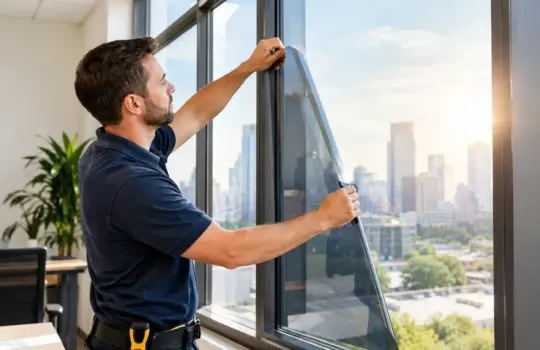
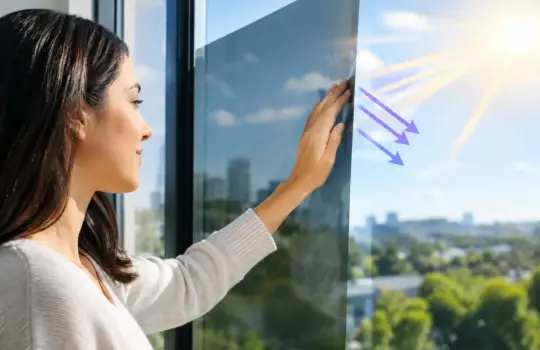
Commercial window film is often the most sensible route when the existing glass is structurally sound but uncomfortable to work beside. A solar-control film can reduce infrared heat, glare, and UV exposure while retaining more natural light than blinds or heavy internal shading. Privacy film can limit views into selected areas, while decorative finishes can define meeting rooms without building solid walls.
Film is not a universal fix. Glass type, pane size, existing coatings, edge condition, framing, and the amount of sun exposure all affect suitability. Applying the wrong film to the wrong glass can increase thermal stress, which is why an installer should assess the existing glazing before recommending a product.
Compare Performance Numbers That Affect Daily Use
Specifications can make one film or glass product look clearly superior when the numbers are not being compared on the same basis. Focus on the metrics that relate directly to the workplace problem.
Visible light transmission, or VLT, describes how much visible light passes through the glazing. Higher VLT generally means a brighter interior and clearer outward view. Lower VLT can improve visual comfort in highly exposed areas, but may require more artificial lighting and can alter the look of the façade.
Solar heat gain performance measures how much solar energy enters through the window. Different suppliers may present this through solar heat gain coefficient, total solar energy rejected, or related calculations. These figures are useful, but they should be read with the full system in mind. Orientation, external shading, interior blinds, HVAC settings, and the existing glass all influence the result experienced inside the room.
UV rejection matters for furnishings, flooring, displays, and artwork near windows. It helps reduce one contributor to fading, though no glazing decision should be presented as a guarantee that furnishings will never change color. Heat, visible light, and material quality also play a role.
If glare is the concern, ask for a practical demonstration rather than relying only on a percentage. A solar transmission meter can compare samples and show differences in transmission under controlled conditions. It is useful evidence, not a promise that every room will feel identical once installed. The sun angle, workstation layout, and the position of screens remain important.
Plan the Installation Around the Building
A good commercial glazing project is as much about planning as the material selected. For film installations, the glass must be cleaned and prepared carefully, and access must be safe. Tall internal panes, restricted parking, security clearances, occupied meeting rooms, and after-hours work can all affect scheduling.
Before approving a proposal, confirm the exact areas to be treated, the finish on each elevation, expected downtime, and whether furniture or blinds need moving. Ask how the installer will protect floors, desks, electronics, and finished surfaces. For larger offices, a phased installation can keep critical departments operating while work progresses.
Exterior appearance deserves attention as well. A reflective or darker product may improve solar control but could conflict with landlord rules, community guidelines, or the visual consistency of a multi-tenant façade. Obtain building approval before work begins rather than assuming an internal comfort upgrade has no external implications.
Match the Solution to Each Space
The best specification is rarely the most expensive film or the highest-performing glass number in isolation. A bright showroom may prioritize daylight and UV reduction. A trading floor may need stronger glare control around screens. A ground-floor meeting room may value daytime privacy. A lobby may require a finish that preserves an open, premium appearance.
In many offices, a mixed approach is appropriate: stronger solar control on exposed elevations, a lighter film on shaded façades, and privacy or decorative film only where sightlines demand it. This approach can preserve the character of the workplace while directing budget toward the areas causing the actual problem.
Dr SunShield approaches commercial work by assessing the glass, access conditions, priorities, and expected result before proposing a tier. Where appropriate, a live solar-meter comparison can help decision-makers see the difference between options, while the final recommendation should still account for glass compatibility and the room’s use.
Questions to Settle Before You Approve a Quote
A clear quote should identify the product, intended performance, coverage area, warranty duration, and any assumptions about access or site readiness. It should also state whether the quoted material is for solar control, privacy, decorative use, or safety retention, because these are different functions.
Ask whether the proposed product is compatible with your existing glass and whether the warranty covers the installed film, labor, or both. For safety film, clarify what level of fragment retention is expected and whether the application requires an attachment system at the frame. For solar-control work, confirm the visible-light change as well as the heat-rejection claim.
A practical commercial glazing decision should make the room easier to use without creating a new problem in lighting, appearance, operations, or glass risk. Start with the troublesome façade, verify what is already installed, and choose the solution that fits the building and the people working inside it.