A west-facing villa window at 3 p.m. presents a very practical problem: the room is bright, the glass is hot, screens are difficult to read, and closing the blinds can make a beautiful space feel shut in. That is where the solar film versus blinds decision becomes more than an interior-design preference. The right answer depends on whether heat, glare, privacy, UV exposure, appearance, or light control is the priority.
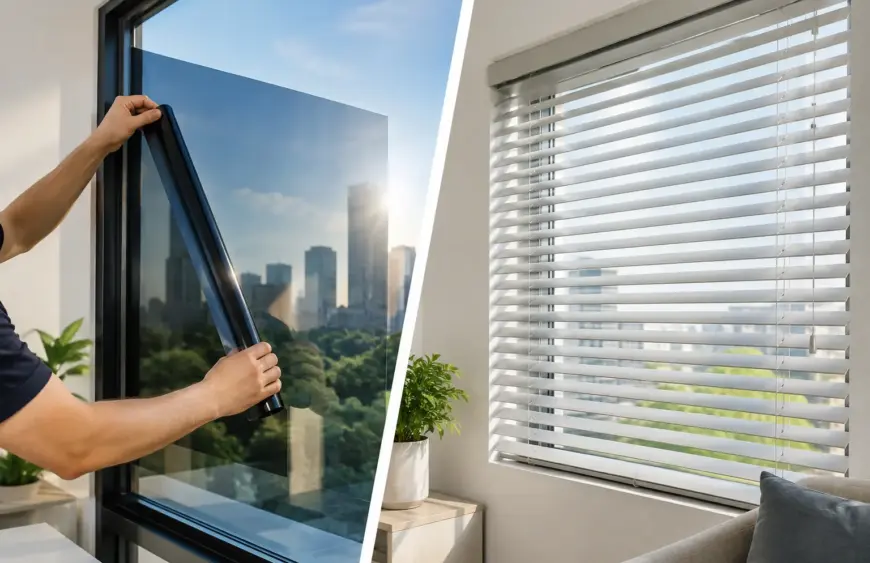
Blinds and solar-control film do different jobs. Blinds are a movable room-side covering that gives you direct control over visibility and daylight. Film is applied to the glass itself, where it manages solar energy before much of it enters the room. In many UAE homes and offices, the strongest solution is not choosing one product over the other. It is using each where it performs best.
Solar Film Versus Blinds: The Core Difference
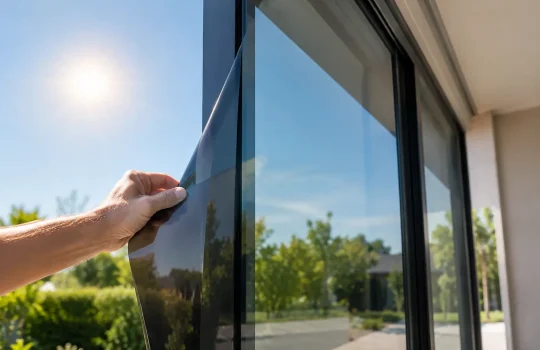
The key distinction is where the sun is stopped. Solar film sits on the glass and rejects a portion of solar energy, including infrared heat and UV radiation, before it becomes part of the indoor environment. It remains in place throughout the day, without asking someone to adjust it.
Blinds work after sunlight has passed through the glass. They can block direct light from reaching furniture, desks, and occupants, but the glass and the air between the glass and blind may already have absorbed heat. This does not make blinds ineffective. It simply means they are primarily a light-management and privacy product, rather than the first line of defense against solar heat gain.
For a room that is consistently uncomfortable near large windows, a suitable solar-control film usually addresses the root of the issue more directly. For a bedroom, meeting room, or media room where occupants need the option to create darkness or complete visual privacy, blinds remain highly useful.
Where Solar Film Has the Advantage
Consistent heat reduction without closing the view
Solar film is especially useful on broad, sun-exposed glazing in villas, apartments, offices, retail spaces, and yachts. A correctly selected film can reduce the intensity of solar heat and glare while preserving a substantial amount of natural light and outward visibility.
That matters in places with views worth keeping. A Palm Jumeirah living room, Dubai Marina apartment, or high-floor office does not necessarily need to be permanently shaded by opaque window coverings just to become more comfortable. Film can make the glass work harder without changing how the room is used.
Film performance varies considerably by product. A lighter, clearer film may prioritize natural appearance and glare reduction. A higher-performance ceramic film can provide stronger infrared heat rejection with minimal visual change. The best choice is not automatically the darkest or most expensive option. Glass type, orientation, room use, and the level of heat discomfort all matter.
UV protection for interiors
Both blinds and film can reduce the amount of direct sunlight reaching furnishings, but solar film offers a broad, continuous layer of UV protection across the glass. This is valuable for floors, artwork, upholstery, wood finishes, merchandise, and other sun-sensitive interiors.
No product can guarantee that fading will never occur. Heat, visible light, material quality, and time also affect fading. Still, reducing UV exposure is a sensible protective measure, particularly for rooms with strong daily sun and expensive finishes.
Lower glare while keeping daylight
Glare is often the issue people notice first in offices. Staff close blinds to see monitors, and the workspace immediately becomes darker and more dependent on artificial lighting. A glare-reducing solar film can soften harsh sunlight across the whole glazed area while keeping the room open and usable.
This is also helpful in living rooms and kitchens where direct sun creates uncomfortable bright patches, yet homeowners do not want to lose their daytime view. Film does not provide the on-demand blackout of a blind, but it can reduce the need to close blinds during ordinary daytime use.
Less daily maintenance
Film does not collect dust, need straightening, or have cords, tracks, slats, or motors to maintain. Once professionally installed and cured, it becomes part of the glazing system from a day-to-day standpoint.
Blinds are not difficult to own, but they do need cleaning and occasional repair. In coastal homes and yachts, salt air, humidity, and fine dust can make this more noticeable. Large motorized blind systems also add electrical and mechanical considerations that should be factored into the specification.
Where Blinds Are the Better Choice
Blinds offer something film cannot: immediate, adjustable control. You can raise them for a clear view, tilt them for partial shade, or close them for privacy. That flexibility is essential in some spaces.
Bedrooms are the obvious example. Even a dark solar film still allows daylight through, so it is not a substitute for blackout blinds or curtains when sleep quality is the goal. The same applies to presentation rooms, home cinemas, and spaces where total light control is required at specific times.
Blinds also provide stronger nighttime privacy. Solar film can offer daytime privacy when the outside is brighter than the interior, depending on the film and viewing angles. At night, that relationship often reverses. If interior lights are on, people outside may still see in. Anyone expecting a reflective film to create 24-hour privacy should be clear about this limitation before installation.
Appearance can be another reason to select blinds. Fabric, timber-look finishes, roller shades, and Roman blinds contribute texture and softness that window film is not intended to provide. For design-led interiors, blinds may be part of the visual scheme regardless of solar performance.
Solar Film Versus Blinds for Privacy
Privacy deserves its own conversation because it is frequently treated as a simple yes-or-no feature. It is not.
Blinds provide privacy when they are closed. The trade-off is reduced view and daylight. Sheer or screen blinds can preserve some daylight and outward visibility, but privacy levels vary by fabric openness and lighting conditions.
Solar film provides a more permanent daytime privacy effect, particularly with reflective or darker finishes. It can be useful for street-facing glazing, ground-floor offices, and rooms overlooked by nearby buildings. But it should not be presented as a blackout privacy solution after dark.
For spaces that need privacy on demand while keeping a clean glass appearance, switchable Smart Film may be more suitable. It changes from clear to opaque when activated, though it is a different investment category and requires proper electrical planning. It is often considered for meeting rooms, bathrooms, clinics, and high-end interior partitions rather than every exterior window.
Compatibility Matters More Than Most People Expect
Not every film belongs on every piece of glass. Modern buildings may use insulated glass units, laminated glass, tempered glass, low-emissivity coatings, patterned glass, skylight glazing, or specialty marine glazing. Applying the wrong product can create thermal stress concerns, affect appearance, or conflict with manufacturer guidance.
This is why a site assessment should come before a recommendation. The installer needs to identify the glass where possible, understand how much sun the window receives, inspect existing seals and access conditions, and ask how the room is actually used. A film that performs well on a shaded office elevation may not be the right answer for an exposed skylight or a large west-facing pane.
For solar film, the installation quality is also part of the result. Careful surface preparation, clean edges, appropriate curing expectations, and practical aftercare guidance all matter. A low-quality installation can make even a good film look disappointing.
When Combining Film and Blinds Makes Sense
For many properties, combining solar film with blinds is the most balanced option. Film handles the everyday heat, UV exposure, and glare that come through the glass. Blinds then provide privacy, decorative finish, and room-darkening when needed.
This approach is particularly effective for large living areas, glazed offices, and bedrooms with strong morning or afternoon sun. Rather than keeping blinds closed for most of the day, occupants can leave them open more often and use them selectively.
The combination should be planned carefully. Very dark film plus heavy blinds may make a room feel unnecessarily dim. Conversely, a clear high-performance film paired with a light-filtering roller blind can preserve an airy look while improving comfort. The target is a better-performing room, not the maximum possible tint on every window.
A Practical Way to Decide
Start with the problem you want to solve. If the room is hot even when blinds are open, film deserves serious consideration. If privacy changes hour by hour, blinds are likely necessary. If the issue is screen glare without wanting to lose daylight, a lighter solar-control film may be enough. If you need complete darkness, choose blackout blinds and consider film as an additional comfort measure.
Before deciding, look at the glass at the hottest time of day and consider what happens at night as well. Ask for a clear explanation of the film tier, visible-light impact, expected heat and glare improvement, compatibility with your glazing, and warranty coverage. A live solar-meter demonstration can help compare transmission through sample films, but it does not replace assessing the actual room, glass, orientation, and installation conditions.
The best window treatment is the one that solves the real complaint without creating a new one. If you value the view but dislike the heat, start with the glass. If you need darkness or adjustable privacy, add the control that blinds provide.