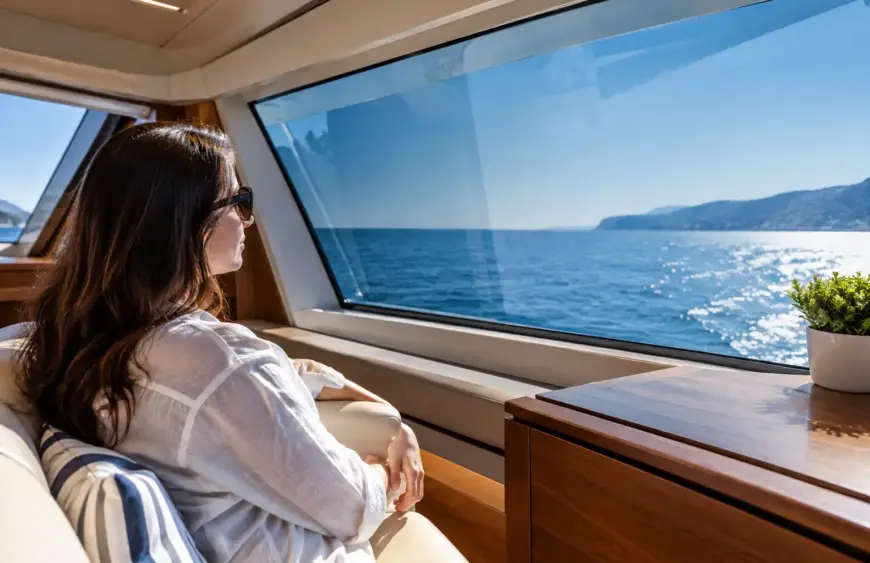
A yacht cabin can look bright and inviting at the marina, then become uncomfortable within minutes once strong sun hits the glass. Marine glazing is not just about improving the appearance of yacht windows. The right glazing film can reduce solar heat, soften glare off the water, help protect interior finishes from UV exposure, and make time onboard more comfortable without unnecessarily closing off the view.
The key word is right. Yacht glass varies widely in thickness, shape, coating, age, and condition. A film that performs well on one vessel may be unsuitable for another, particularly where large curved panels, laminated glass, or already-tinted glazing are involved. That is why a proper assessment should come before choosing a shade or comparing a headline heat-rejection figure.
What marine glazing film is designed to solve
Solar exposure on the water has a different feel from solar exposure in a car or a building. Light comes from above, but it is also reflected from the sea, nearby yachts, docks, and pale deck surfaces. The result is often intense glare at the helm, around seating areas, and through forward-facing cabin glass.
A professionally selected marine glazing film can address several priorities at once. It can reduce the amount of solar energy entering the cabin, filter a high percentage of UV radiation, and make screens, navigation displays, and interior spaces easier to use in bright conditions. Depending on the film selected, it can also add daytime privacy or give the glass a more consistent finish.
There are trade-offs. A darker film may reduce visible light and improve privacy, but it can also affect outward visibility at dusk or in poor weather. A highly reflective film may offer a particular look during the day, but that appearance is not suitable for every yacht design or owner preference. The best recommendation is usually the one that solves the actual heat and glare issue while retaining the visibility and appearance you want.
Why yacht glass needs its own assessment
Marine glazing film should not be chosen as if all glass is the same. The glass itself absorbs part of the sun’s energy. When film changes how much energy the panel absorbs or reflects, the temperature difference across the glass can change as well. On unsuitable glazing, that additional thermal stress may create a risk that needs to be considered before installation.
This does not mean yacht film is inherently risky. It means compatibility matters. A careful installer will look at the glass construction, panel size, edge condition, existing damage, mounting system, and whether the glass has a factory coating or tint. Curved windows, large windshields, skylights, and older panels deserve particular attention.
Laminated, tempered, and curved panels
Many yachts use laminated safety glass, tempered glass, or a combination of materials across different areas of the vessel. Some panels may be straightforward to film, while others require a more conservative specification. Curved glass also adds an installation consideration because the film must conform cleanly without excessive distortion, tension, or visible handling marks.
The condition of the glass matters too. Chips, cracks, delaminating edges, failed seals, and damaged coatings should be identified before any work begins. Film cannot repair compromised glass, and applying it over an existing issue is not a substitute for correcting the underlying problem.
Visibility from the helm
Helm windows need a different conversation from a cabin side window. Reduced glare can make a real difference for comfort and display visibility, but the selected film must still support safe outward vision in the vessel’s expected operating conditions. Darker is not automatically better.
For that reason, a yacht owner may choose a lighter, high-performance ceramic film for forward glass and a different shade or specification for cabin sides, galley windows, or private sleeping areas. Matching every panel with one film can create a uniform appearance, but it is not always the most practical choice.
Heat rejection figures need context
Film specifications can be useful, but they can also be misleading when viewed in isolation. Infrared rejection, for example, can describe performance within a defined infrared range, but it does not tell the full story of how much total solar energy enters through the glass. Visible light transmission, total solar energy rejection, UV filtering, glass type, and installation location all affect the result you feel inside the yacht.
This is why live meter demonstrations can be helpful during a consultation. A solar transmission meter can show differences between film samples and help explain how a ceramic film compares with a basic dyed option. It is useful evidence, especially when selecting between performance tiers.
It is not a promise that the cabin will reach a precise temperature or that every glass panel will perform identically. Cabin temperature also depends on vessel orientation, air conditioning capacity, window area, insulation, shade structures, occupancy, and how long the yacht has been sitting in direct sun.
Choosing the right balance of performance and appearance
For many yacht owners in Dubai and across the UAE, the primary concern is heat. Long periods at the marina, high summer sun, and expansive glass can put a heavy load on the air conditioning system. In that situation, a premium ceramic film is often worth considering because it can provide stronger solar control without requiring the darkest possible shade.
Other owners are more concerned with glare. A film with moderate visible light reduction may make a seating area far more usable in the afternoon while keeping the cabin open and natural. Where privacy is the priority, the recommendation may depend on whether the owner wants daytime privacy only or expects privacy after dark as well. Standard solar-control film cannot create one-way privacy at night when interior lights are brighter than outside.
Appearance should be discussed openly. Some films have a neutral look, while others lean slightly warmer, cooler, darker, or more reflective. On a premium yacht, a small color shift can be noticeable beside untreated glass, stainless trim, white gelcoat, and interior finishes. Sample viewing on the vessel is more reliable than choosing from a brochure alone.
Installation details matter on the water
Good marine glazing installation is as much about preparation as it is about the film. Salt residue, airborne dust, silicone contamination, waxes, and cleaning-product buildup can affect adhesion and finish. The glass needs careful cleaning and inspection before the film is fitted.
Access conditions also influence the job. Some glass can be handled easily at berth, while other panels may require a controlled indoor location, clear working space, or additional time around hardware and interior fittings. Mobile installation may be possible for eligible vessels and locations, but it should be confirmed after reviewing the yacht, not assumed in advance.
After installation, the film needs time to cure. Small water pockets or a light haze can be normal during the early curing period, particularly in thicker safety or ceramic films. The timeframe varies with weather, glass thickness, and film type. A professional installer should explain what is normal, how to clean the finished glass, and when to raise a concern.
When safety film may be a better fit
Not every marine glass project is mainly about solar control. Some yacht owners want added protection from shattered fragments if a panel breaks. In those cases, a clear safety film may be more appropriate than a tinted solar film, or it may be considered alongside a solar-control solution where glass compatibility allows.
Safety film is designed to help retain broken glass fragments together after impact. It does not make glass unbreakable, and it should not be described as a replacement for purpose-built security glazing. Its value lies in reducing loose glass hazards and helping manage breakage events, particularly around occupied areas.
Questions worth asking before approving the job
A useful marine glazing consultation should leave you with clear answers, not just a price. Ask which film is being recommended for each glass area and why. Confirm the visible light level, expected solar-control benefit, warranty coverage, and whether the film is suitable for your specific glass construction.
It is also reasonable to ask how the installer will handle curved panels, existing coatings, damaged edges, and access on the vessel. If heat reduction is your main goal, ask to compare samples with a solar meter, while remembering that sample readings are comparative rather than a guarantee of onboard temperature.
The best yacht film installation is rarely the darkest option or the most expensive option by default. It is the one selected after looking closely at the glass, how the yacht is used, when glare is worst, and how much natural light you want to keep. A measured recommendation protects both the view and the investment behind it.